Verjus
Also known as: verjuice
Verjus (also spelled verjuice) is the highly acidic juice pressed from unripe grapes, and sometimes from crab apples or other sour fruit. Sharp and tart but without alcohol or the harshness of vinegar, it has long served as a souring agent in both cooking and drink-making, and in the modern era it has become a favored base for non-alcoholic and low-alcohol beverages that aim for a vinous, wine-like character.
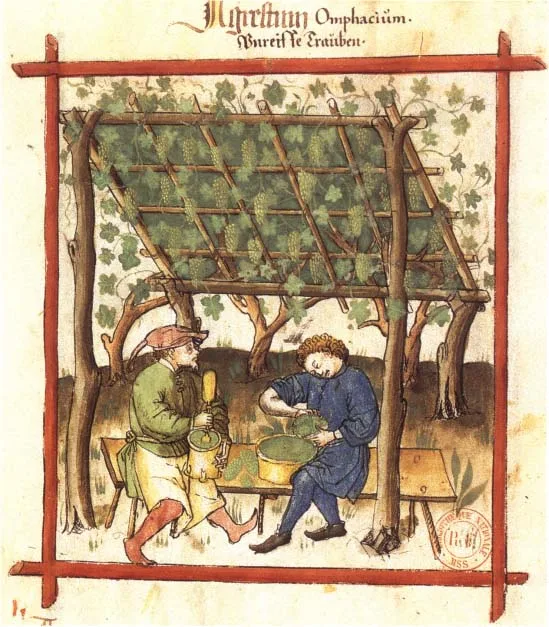
How verjus is prepared
Used as a wine-like acidic base in non-alcoholic and low-alcohol drinks, as a spritz mixed with sparkling water, as a souring element in cocktails and mocktails in place of citrus, and as a flavoring component in craft brewing.
Other preparations
In depth
Medieval and Renaissance Europe
The drink-making story of verjus begins in the kitchens and cellars of medieval Western Europe, where the tart juice of unripe grapes—its name derived from the Old French for "green juice"—was a household acid used much as later cooks would reach for wine or vinegar. From the Middle Ages through the Renaissance it spread across the continent as a souring agent for sauces, condiments, and deglazing. Because it was so closely bound to the wine-growing regions that produced it, verjus carried a vinous quality that distinguished it from sharper vinegars, a trait that would much later make it attractive to drink-makers seeking wine-like acidity without alcohol. Its prominence faded as wines and an expanding range of flavored vinegars became cheaper and easier to obtain, but it never entirely disappeared from European larders.[1]
Middle Eastern traditions
Parallel to its European use, verjus has a deep and continuous presence in the Middle East, where it remains far more common in everyday cooking and drink than in the West. Known as husroum in Arabic and ab-ghooreh in Persian, it features extensively in Lebanese, Syrian, and Persian foodways. In Iranian traditional medicine it was regarded as having medicinal value, a belief that links it to the broader regional family of sour-sweet preparations consumed for health. That same medical-culinary logic underlies related Persian beverages such as sekanjabin, a sweet-and-sour drink built on the marriage of acid and sweetness, situating verjus within a long tradition of tart fruit acids used to refresh and to balance the body.[1]
A relative of medieval spiced and honeyed drinks
Verjus belongs to a wider medieval world of acidic and sweetened preparations that doubled as drinks and remedies. The honey-and-vinegar mixture known as oxymel, recorded since antiquity, had a close cousin called omphacomel, made by combining the juice of unripe, sour grapes with honey—essentially a sweetened verjus. Spiced wines of the period, such as hippocras and its honey-sweetened variant clarry, show how readily medieval Europeans transformed grape-based liquids into flavored, restorative beverages. Within this landscape verjus offered the sourness of unripe fruit without fermentation, making it a natural building block for drinks that prized the balance of sweet against sharp.[2]
Kinship with shrubs and drinking vinegars
The way verjus functions in modern drinks closely echoes the older tradition of the shrub, the family of acidulated beverages built on a sweet-and-sour base. In its colonial American form, a shrub was a vinegared fruit syrup mixed with water, soda water, or spirits to make a tangy soft drink or cocktail; the early English version was a fruit cordial. Like a shrub, verjus supplies bright acidity and a fruit-forward backbone, and it can stand in for citrus or bitters in mixed drinks. The revival of shrubs in bars and restaurants from around 2011, alongside the rise of kombucha and other fermented drinks offered as low-sugar alternatives to soda, created exactly the kind of acid-curious drinking culture in which verjus could flourish.[3]
Modern commercial revival
Verjus returned to wider attention in the late 20th century through a deliberate revival rooted in winemaking regions. Beginning in the 1980s, producers in Australia and subsequently in France and other wine-producing countries began bringing the ingredient back to commercial markets, responding to growing chef and consumer interest in alternatives to vinegar and citrus. Today verjus comes in white and red styles and is again sold by specialty grocers and regional producers worldwide. Its non-alcoholic, non-fermented nature and its quiet, wine-friendly acidity have made it a natural ally of the contemporary no- and low-alcohol movement, where it is poured over ice with sparkling water for a lemonade-like refresher and used as a wine-substitute acid in mocktails and lighter cocktails.[1]
Verjus in brewing
Verjus has also found a place in craft brewing, where its grape acidity can stand in for or complement the souring achieved through fermentation. Farmhouse ales are an ancient European family of beers, historically brewed by farmers from their own grain and varying widely in ingredients and method; the modern craft revival has encouraged exactly this kind of experimentation, including the incorporation of locally sourced fruit and grape-derived ingredients. In wine-growing regions, brewers have drawn on the proximity of vineyards to introduce verjus into farmhouse-style ales, marrying rustic brewing traditions with regional viticulture. Using verjus as a brewing ingredient lets brewers introduce a tart, vinous brightness that bridges the worlds of beer and wine.[4]
References
- [1]EncyclopediaVerjuice — Wikipedia↑§1↑§2↑§5
- [2]EncyclopediaOxymel — Wikipedia↑§3
- [3]EncyclopediaShrub (drink) — Wikipedia↑§4
- [4]EncyclopediaFarmhouse ale — Wikipedia↑§6