Roasted Green Tea
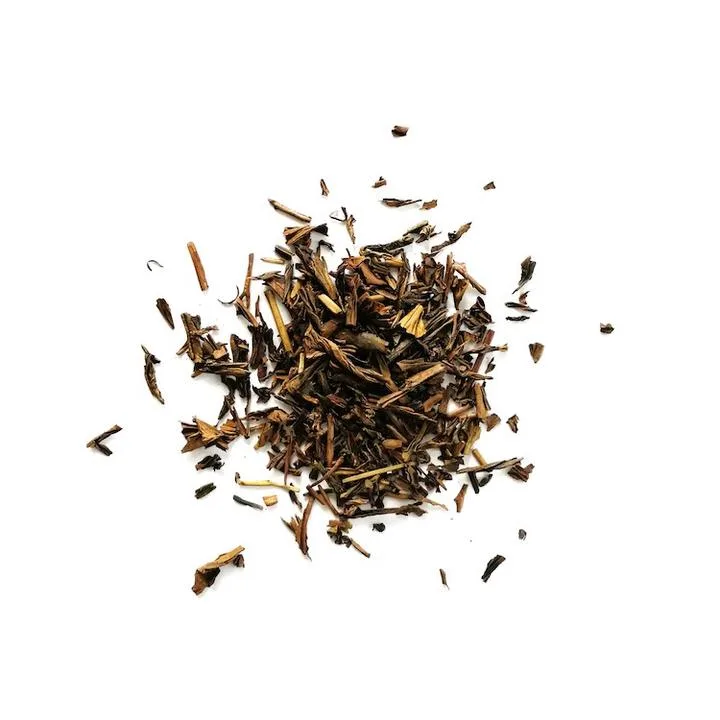
Roasted green tea is green tea whose leaves, stems, or twigs have been fired at high temperature, transforming the typically grassy, astringent character of unroasted leaf into a warm, toasty, low-bitterness brew. In the Japanese tradition this style is best known as hōjicha, made by roasting bancha, kukicha, or sencha over charcoal or in a pan until the leaf turns reddish brown. The roasting both deepens the flavor and reduces the catechins and caffeine that drive astringency.
Usage in beverages
Roasted green tea is brewed as a hot or iced infusion at moderate temperatures and steeped briefly. It is sold in leaf and powdered forms; the powder is whisked or blended into steamed-milk drinks, lattes, and sweetened café beverages. It also appears blended with roasted rice or matcha and is used as the base for bottled and canned ready-to-drink teas.
In depth
Origins in Chinese green tea and the rise of firing
Roasted green tea descends from the wider world of green tea, which took shape in China in the late first millennium BC and spread across East Asia. Green tea is distinguished by leaves that are heated soon after picking to halt oxidation, preserving their green character. While the earliest Chinese green teas were steamed, by the early Ming period the dominant method became pan-firing in a dry wok, and Chinese producers later employed oven-firing, basket-firing, tumble-drying, and sun-drying as well. These firing techniques laid the groundwork for teas in which the heat of processing itself contributes flavor, and they remain central to how much of the world's green tea is made and brewed today.[1]
Bancha: the everyday leaf that became a roasting base
In Japan, where green tea is steamed rather than pan-fired, the late-season harvest known as bancha provided the raw material for much of the country's roasted tea. Bancha is plucked from the same bushes as sencha but later in the year, giving it a lower grade and a bolder, more rustic character. Its flavor can range across smoke, roasted nut, grassy, and earthy notes depending on type, and it is sold in numerous forms including roasted, smoked, and aged. Because it was inexpensive and plentiful, bancha was a natural candidate for further processing into roasted tea, and it remains the classic foundation for that style.[2]
The accidental birth of hōjicha
The signature Japanese roasted green tea, hōjicha, is said to have emerged in Kyoto around 1920, when a merchant left with unsellable bancha roasted it and produced an entirely new drink. Unlike most Japanese green teas, hōjicha is fired at high temperature in a porcelain vessel over charcoal, which turns the leaf from green to reddish brown and yields an infusion of clear red-gold color with a nutty fragrance. The roasting drives off much of the leaf's vegetal quality and its catechins, leaving a toasty, faintly caramel-like, sweet cup with little bitterness and reduced caffeine. Steeped for under a minute up to a few minutes in water around 80 degrees Celsius, it became a popular after-dinner and bedtime tea well suited to children and older drinkers.[3]
Twig tea and the use of stems in roasted blends
Roasted Japanese tea is not always made from whole leaves. Kukicha, or twig tea, is built from the stems, stalks, and twigs of the tea plant left over from sencha and matcha production, and it carries a mild, slightly creamy, nutty sweetness distinct from leaf teas. Stem material is also commonly roasted, and hōjicha is frequently made by firing sencha or bancha leaves together with kukicha twigs. Kukicha is brewed gently—steeped briefly at around 70 to 80 degrees Celsius and often re-infused several times—and its low-key, soothing profile has made it a favored drink within the macrobiotic diet.[4]
Genmaicha and roasted-grain green tea drinks
A closely related Japanese drink combines green tea with roasted, popped brown rice to make genmaicha, sometimes nicknamed popcorn tea because a few grains burst during roasting. The rice originally served as a filler that lowered the cost of tea, making it more affordable to poorer households and useful for those fasting or between meals; today it is enjoyed across all of society. The roasted rice lends a warm, full, nutty sweetness to the light yellow infusion, balancing the fresh, grassy notes of the green tea. A version with matcha stirred in, called matcha-iri genmaicha, gives a stronger flavor and greener color, and a comparable brown rice green tea is drunk in South Korea.[5]
Korean roasting and blended infusions
Korea developed its own strong tradition of roasting green tea leaf. Pan-firing, called deokkeum-cha or bucho-cha, is the most common and traditional Korean processing method, producing teas considered richer in flavor than the less common steamed style. Korean drinkers also blend green tea with other ingredients, including a brown rice green tea that pairs nokcha with roasted brown rice, echoing the Japanese genmaicha and reflecting a shared East Asian taste for the toasty character that roasting brings to an infusion. Korean green tea is graded largely by harvest time and brewed at carefully chosen temperatures to suit each grade.[1]
Modern uses: lattes, powders, and ready-to-drink teas
Today roasted green tea has moved well beyond the plain brewed cup. Hōjicha is sold in powdered form and whisked into steamed-milk drinks and sweetened café-style lattes, where its caramel-toasty notes and low bitterness make it an easy partner for dairy. Because the roasting reduces caffeine, these drinks appeal to people seeking a gentler alternative to coffee or stronger teas, and they fit naturally into the no- and low-alcohol specialty beverage market. Roasted green teas and roasted-grain blends like genmaicha are also widely bottled and canned as unsweetened or lightly sweetened ready-to-drink infusions, served both hot and iced across East Asia and increasingly worldwide.[3]
Styles
Part of Green Tea