Rhododendron
Also known as: labrador tea, greenland lemon
Wild harvested in northern forests of Quebec
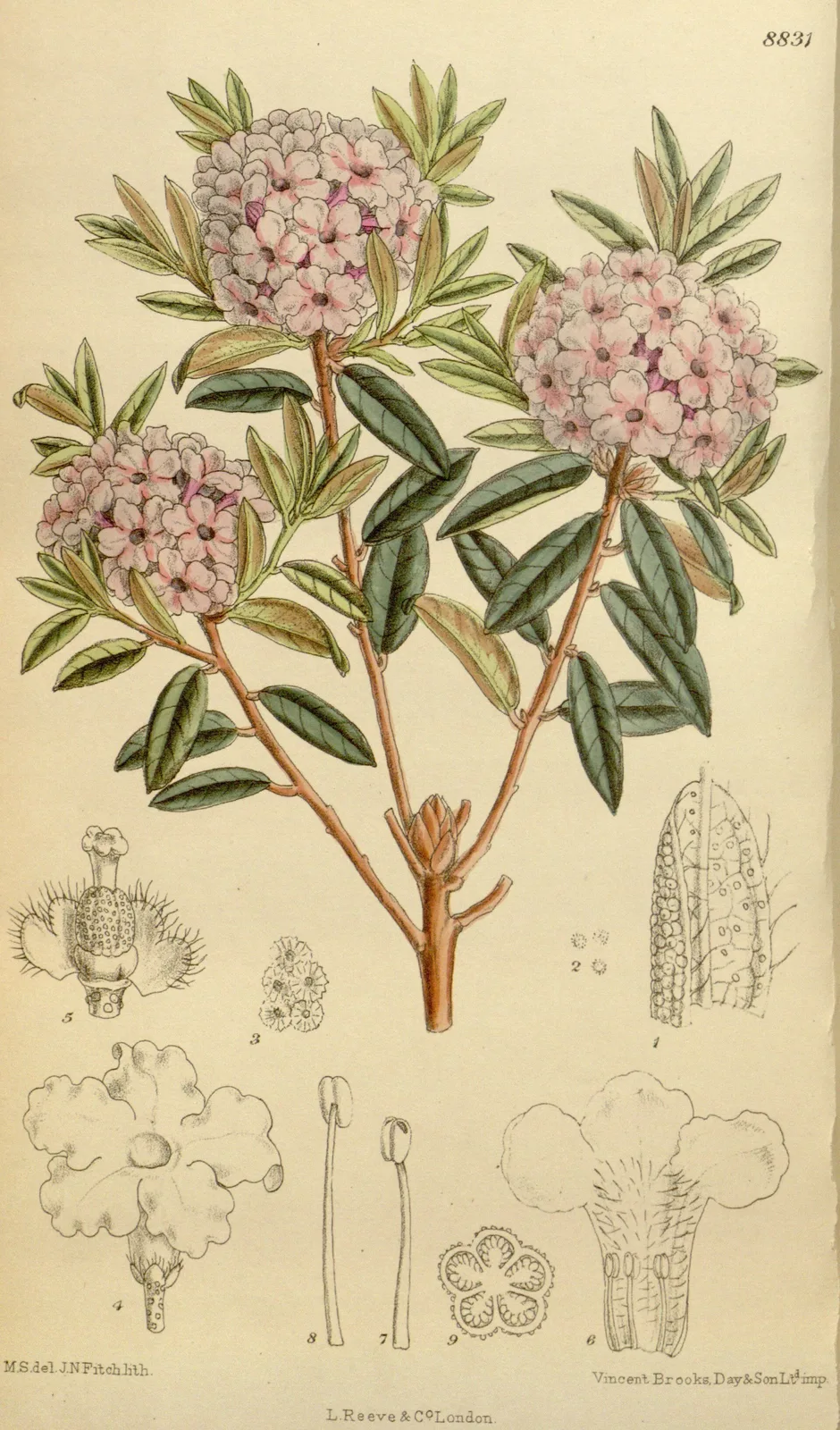
Rhododendron is a large genus of woody flowering shrubs and small trees in the heath family (Ericaceae), comprising roughly a thousand species (including the plants once classed as azaleas and as Ledum). In beverages it figures in two very different ways: as the floral source of the notorious grayanotoxin-bearing 'mad honey,' which has historically been added to fermented and brewed drinks for extra potency, and as a leaf used directly to flavor brewed and infused drinks, most familiarly in the boreal herbal infusion known as Labrador tea.
How rhododendron is prepared
Rhododendron reaches drinks chiefly through its honey, which for centuries was stirred into mead, beer, and other alcoholic drinks to amplify their effect, and through its leaves, which are steeped to make Labrador tea and were once used as a gruit to bitter and strengthen ale. Because grayanotoxins are potent neurotoxins, these uses carry real risk, and modern low- and no-alcohol practice treats rhododendron flavorings with great caution.
Tea Fermentation
The controlled microbial or enzymatic transformation of tea leaves, an experimental R&D direction for developing complex flavors beyond distillation alone.
In depth
Classical accounts of intoxicating honey
The earliest beverage-related fame of Rhododendron comes not from the plant itself but from the honey bees make from its nectar. Several species, especially Rhododendron ponticum and Rhododendron luteum around the Black Sea, yield 'mad honey' laced with grayanotoxins, neurotoxic compounds that can disorient, sicken, or incapacitate those who eat it. Greek and Roman writers recorded its effects: Xenophon described soldiers near Trabzon in 401 BCE who ate local honeycombs and collapsed, vomiting and unable to stand before recovering a day or two later, while Pliny the Elder linked the dangerous honey to rhododendron and related plants. These accounts establish the long-standing association between rhododendron nectar and altered states that later shaped how the honey was deliberately put into drinks.[1]
Mad honey as a weapon and additive in fermented drinks
From early on, rhododendron honey was understood as something that could be slipped into food and drink to potent effect. In 65 BCE, during the Third Mithridatic War, withdrawing forces reportedly left combs of toxic honey in the path of Roman soldiers, who were incapacitated after eating it. Honey poisonings tied to fermented drinks recur in later chronicles of the Black Sea and Russian regions, including episodes in which large quantities of mead made with tainted honey felled drinking armies. These cases show rhododendron honey functioning as more than a sweetener: because its grayanotoxins survive fermentation, a mead or honey-based drink made from such honey carried the plant's intoxicating, and sometimes dangerous, character.[1]
Rhododendron honey in European beer, mead, and spirits
By the eighteenth century rhododendron honey from the Black Sea region was a traded commodity, with sizeable quantities shipped to Europe each year. There it was known in France as 'crazy honey' and was added to beer and other alcoholic drinks specifically to boost their potency, exploiting the same grayanotoxin effect the ancients had feared. A parallel North American episode was recorded when beekeepers were observed becoming intoxicated by such honey and mixing it into liquor, then selling the result under the old name for mead. These practices place rhododendron squarely within the history of strengthened fermented beverages, where its honey served as a natural, if hazardous, intensifier.[1]
The Himalayan honey-hunting tradition
In the Hindu Kush Himalayan belt of Nepal and northern India, rhododendron honey is made by Himalayan giant honey bees that forage on rhododendrons and other heath-family plants blooming in spring. The Gurung people have for generations practiced cliffside honey hunting as a sacred tradition, scaling rock faces with rope ladders to harvest combs twice a year. The resulting honey, valued both for its medicinal reputation and its psychoactive kick, is consumed locally and, in modern times, exported. While most often eaten on its own or taken as a tonic, it belongs to the same broad pattern in which rhododendron's flavor and effect enter drinkable preparations, and it underlies the contemporary curiosity around honey-based drinks made from it.[1]
Labrador tea: rhododendron leaves as an infused beverage
A wholly different drink tradition centers on the leaves rather than the honey. Several boreal and subarctic rhododendron shrubs, reclassified from the old genus Ledum, are steeped to make the herbal infusion called Labrador tea. Indigenous peoples of northern North America, including Dene, Inuit, and Athabaskan groups, have brewed the evergreen leaves for centuries as both an everyday and a medicinal drink, often to treat coughs and colds. The brew is aromatic and resinous. Because the leaves contain the terpenoid ledol and moderately narcotic grayanotoxins, traditional and modern guidance stresses restraint, recommending only weak, infrequent infusions to avoid the dizziness, nausea, and worse that overconsumption can bring.[2]
Rhododendron leaf as a brewing gruit
Before hops dominated beer flavoring, the marsh Labrador tea shrub, Rhododendron tomentosum, was among the herbs used as a gruit to season and preserve ale in medieval Europe. Brewers prized it for its strong fragrance and for the way it seemed to strengthen the drink: German brewers reportedly used it to make beer more intoxicating, a practice that was later discouraged or banned out of concern that it provoked aggression, echoing the cautionary thread that runs through every rhododendron beverage use. This places the genus within the wider gruit-ale tradition and explains its appeal to modern brewers exploring historical, pre-hop flavorings, who must weigh its aromatics against the toxicity of its ledol and grayanotoxins.[3]
Rhododendron in modern and Himalayan drink culture
Today rhododendron's beverage roles persist in tension between revival and caution. Honey from rhododendron-rich regions of Turkey and Nepal continues to be sold and, abroad, marketed as an exotic specialty, sometimes added in tiny amounts to drinks for its reputed effects, though grayanotoxin poisoning remains a documented risk and the honey is banned in some markets. In the Himalayan regions where rhododendron grows abundantly, fermented grain drinks such as the millet-based tongba of the Limbu people define local beverage culture, and rhododendron blossoms are also used in syrups and squashes consumed in Nepal and northern India. For no- and low-alcohol makers, rhododendron is best approached as a flavoring of strong tradition and real hazard, used sparingly and with full awareness of its toxic compounds.[4]
References
- [1]EncyclopediaMad honey — Wikipedia↑§1↑§2↑§3↑§4
- [2]EncyclopediaLabrador tea — Wikipedia↑§5
- [3]EncyclopediaRhododendron tomentosum — Wikipedia↑§6
- [4]EncyclopediaGrayanotoxin — Wikipedia↑§7