Lemon Verbena
Also known as: verveine
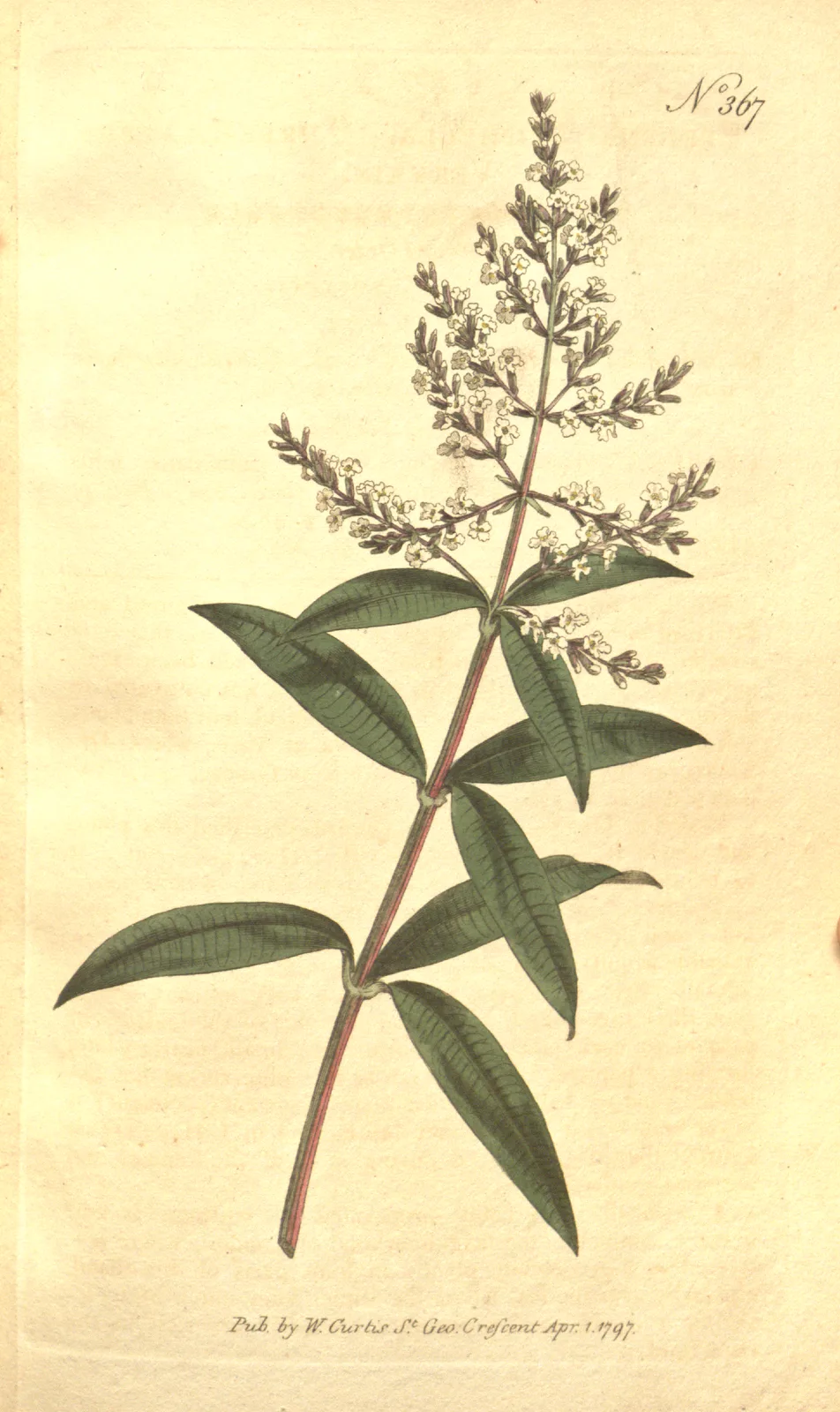
Lemon verbena is a deciduous, lemon-scented shrub whose narrow, glossy leaves carry an intense citrus aroma, making them a favored flavoring for hot and cold infusions, soft drinks, and liqueurs.
How lemon verbena is prepared
Lemon verbena is used chiefly as a single-herb or blended herbal tea, as an aromatic in cold and carbonated drinks, and as a flavoring agent in liqueurs and other infused beverages; it is recognized as safe as a flavoring in the United States.
Steam Distillation
A distillation method where steam is passed through plant material to vaporize volatile aromatic compounds, which are then condensed back into liquid form.
In depth
South American origins and the herbal infusion
Lemon verbena grows wild and cultivated across South America, where its strongly lemon-scented leaves have long been steeped in hot water as a soothing everyday drink and folk remedy. In Spanish-speaking countries it travels under names like hierbaluisa and cedrón, and it remains a familiar fixture of Latin American traditional medicine, valued both for its bright flavor and its reputation as a calming herb. As a non-tea plant brewed by steeping leaves, it belongs squarely to the family of infusions, the same broad category that embraces coffee, mate, and the world's many herbal preparations.[1]
Arrival in Europe and the tisane tradition
Spanish and Portuguese travelers brought the plant from the Americas to Europe in the 17th century, initially prizing it for the fragrant oil that could be distilled from its leaves. Once established in European gardens and greenhouses, lemon verbena was readily absorbed into the long-standing custom of tisanes, the herbal teas brewed from plants other than Camellia sinensis. Naturally caffeine-free and aromatic, it sits comfortably among the leaf-and-flower infusions—lemon balm, lemongrass, chamomile, and the like—that are poured over with hot water and steeped before drinking, often on their own or as part of a blend.[2]
How a lemon verbena infusion is made
As a beverage, lemon verbena is most often prepared by infusion: hot or boiling water is poured over the fresh or dried leaves, which are left to steep for a period before being strained away, leaving an aromatic liquid. Because the leaves are rich in volatile oils, they release their lemony character readily into water, and the resulting drink can be enjoyed hot or chilled. The same principle extends beyond water—the leaves can also be steeped in oil or in alcohol—so that lemon verbena lends itself to flavored syrups, cold infusions, and infused spirits as well as the classic cup of herbal tea.[3]
A flavoring for soft drinks in Peru
In Peru, lemon verbena has long served as a defining flavoring in the country's carbonated soft drink tradition, lending its distinctive citrus character to locally produced colas and flavored sodas that have become emblematic of national taste. Such beverages, built around blends of plant-derived flavors in which lemon verbena plays a central role, have achieved broad cultural resonance across South America and among Peruvian communities abroad. Tasters often describe the sweet, fruity profile that lemon verbena imparts in these drinks as reminiscent of bubblegum or cream soda, and the tradition illustrates how the herb moved from the teacup into the realm of mass-market flavored beverages.[4]
Lemon verbena in liqueurs and infused spirits
Lemon verbena also figures in the world of flavored alcoholic and aromatic drinks as a liqueur flavoring. Liqueurs are historically descended from herbal medicines and are made by infusing botanicals—fruits, herbs, flowers—into a spirit base and sweetening the result, with herb-forward styles long associated with monastic and regional European traditions. The herb's clean, persistent lemon aroma makes it a natural candidate for such infused, herb-flavored liqueurs, where it can carry citrus character without the acidity of fresh fruit; the same aromatic qualities translate readily into the low- and no-alcohol cordials and syrups that mirror those traditions.[5]
Contemporary use across beverages
Today lemon verbena is marketed widely as a culinary and herb-garden plant, and its leaves turn up across the modern beverage spectrum—as a single-note herbal tea, as a component of fragrant tisane blends, as an aromatic accent in cold and sparkling drinks, and as a flavoring in syrups and infused preparations. In the United States its oil is generally recognized as safe for use as a flavoring, supporting its place in commercial drink production, though regulators in the European Union restrict certain verbena essential-oil derivatives in cosmetics, a reminder that beverage use centers on the leaf and its infusion rather than concentrated essential oil.[1]