French Oak
Also known as: oak
French oak is the wood of European white oak species harvested from France's old forests and worked into barrels, staves, and chips for fermenting, maturing, and infusing beverages. Prized for its tight grain and gradual flavor release, it is the benchmark cooperage wood for fine wine and increasingly for non- and low-alcohol drinks seeking structure without spirit.
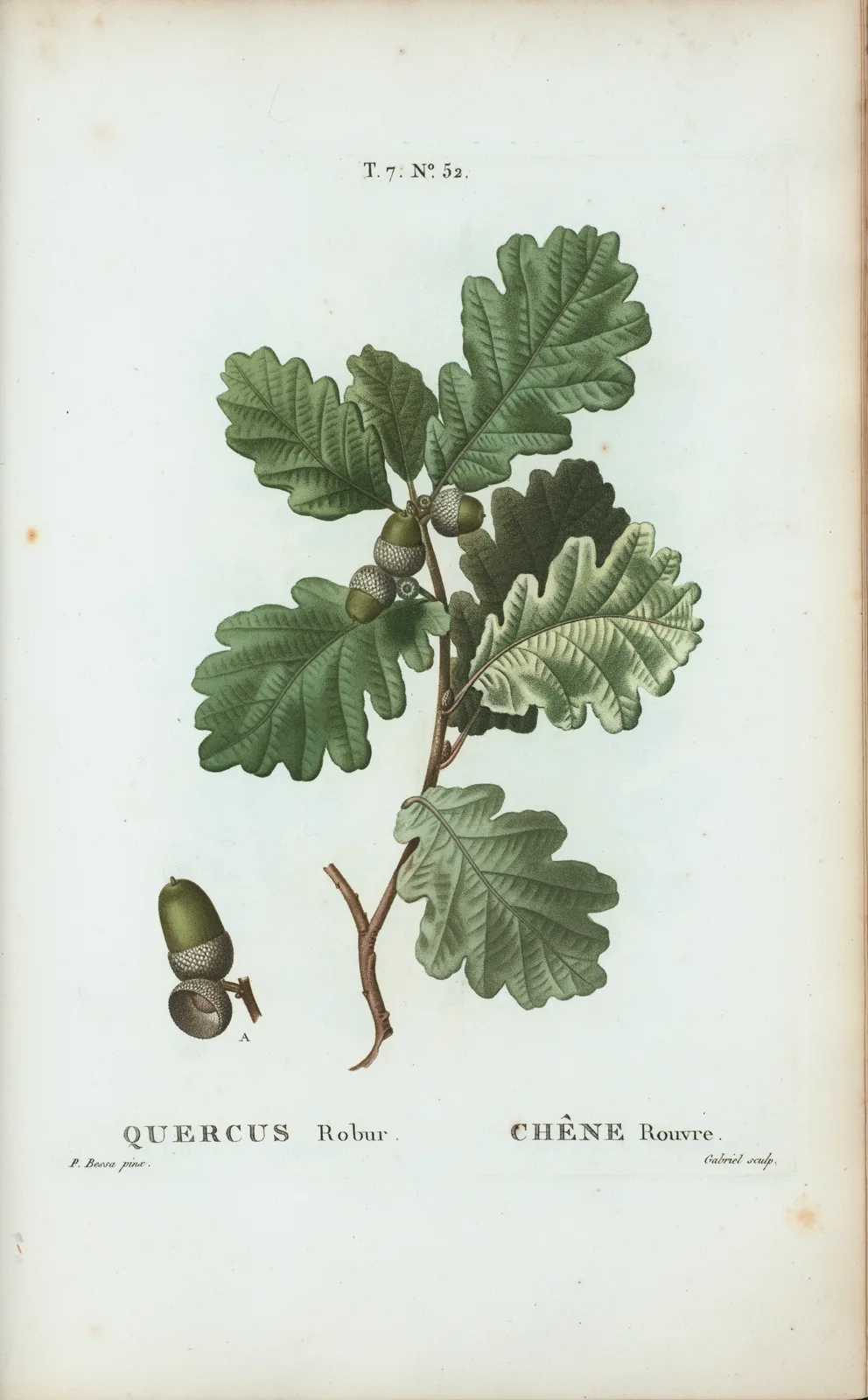
How french oak is prepared
Used as barrels, staves, or toasted chips to age and flavor wine, sherry, and whisky; today it is also employed in non-alcoholic cuvées and infusions to lend toast, spice, and structural complexity without alcohol.
Steam Distillation
A distillation method where steam is passed through plant material to vaporize volatile aromatic compounds, which are then condensed back into liquid form.
In depth
From amphora to barrel: oak's rise in winemaking
For much of the ancient world, wine was stored and shipped in clay amphorae, and early barrels were fashioned from whatever pliable wood was at hand, including palm along the rivers of Mesopotamia. Oak gradually displaced these alternatives, coming into broad use across the Roman world roughly two thousand years ago. Winemakers soon noticed that oak did more than hold liquid: wine kept in these vessels grew softer and often tasted better. The porous wood allows slow evaporation and a trickle of oxygen, concentrating aroma while easing harsh tannins, and the wood itself contributes vanilla-like and spicy notes through its natural phenols. These discoveries laid the groundwork for oak's enduring role in fermented drinks.[1]
The French forests and the character of their wood
In France two species are valued for cooperage, the pedunculate Quercus robur and the sessile Quercus petraea, with the latter especially prized for its fine grain and generous contribution of vanillin, aromatic lactones, tannins, and other delicate compounds. The wood is drawn from a handful of celebrated forests, among them Allier, Limousin, Nevers, Tronçais, and the Vosges, each lending subtly different qualities. Because French oak's tight grain and less watertight structure require the staves to be split rather than sawn, and then seasoned in the open air for two to three years, only a modest fraction of each tree can be used. This open-air seasoning leaches out bitter compounds in a way that kiln drying cannot match, yielding the silky, transparent tannins for which French oak is known.[1]
Burgundy: terroir-driven oak for Pinot noir and Chardonnay
In Burgundy, where monastic vineyards mapped out the region's storied terroirs in medieval times, oak maturation became inseparable from the local Pinot noir and Chardonnay. The Burgundy-style barrel, slightly larger than its Bordeaux counterpart, and a tradition of heavier-toasted wood help frame these wines. Chardonnay in particular takes on vivid character when fermented or aged in oak, gaining notes that recall vanilla, spice, and toast, while malolactic fermentation softens its acidity and rounds the texture. The richest white Burgundies, such as those of Meursault, are famed for a buttery, rounded quality that oak handling helps cultivate, whereas leaner styles show how restraint in oaking preserves minerality.[2]
Bordeaux and the barrique
Bordeaux gave the wine world its signature 225-liter oak barrel, the barrique, in which the region's Cabernet Sauvignon and Merlot blends are typically aged for around a year. Here oak serves a structural purpose as much as a flavoring one: gentle oxidation through the wood mellows the firm tannins of Cabernet Sauvignon and introduces softer wood tannins, while the toast level inside the barrel layers in vanilla, spice, and smoky aromatics. Because new barrels impart the most flavor and lose their potency after several vintages, producers carefully balance new and used wood. The Bordeaux model of blending across grapes and barrels spread worldwide and remains a template for premium red winemaking.[3]
Fortified wines and spirits: a contrast in oak
Not every great oak-aged drink relies on French wood. Sherry, the fortified wine of Andalusia, is traditionally matured in casks of North American oak, chosen because its more porous structure suits the oxidative aging and the development of flor in the solera system. Scotch whisky, too, must by law spend at least three years in oak casks, frequently barrels that previously held sherry or port, which lend the spirit its color and hints of vanilla and dried fruit. The widespread reuse of wine casks for spirits underscores how the wine trade and the cooperage of oak, French and otherwise, are woven together across beverage cultures.[4]
Barrel alternatives and the modern no- and low-alcohol use
As barrels grew costly, winemakers adopted oak chips, staves, and inner staves to bring woody aromas and vanilla notes to wine fermented or aged in neutral vessels such as stainless steel, adding the wood during fermentation or maturation. These same techniques have opened the door to oak in non- and low-alcohol drinks. Toasted French oak, sometimes from organically managed forests, can be used to lend structure, gentle tannin, and layers of toast, spice, and vanilla to alcohol-free cuvées and infused beverages, lending them a sense of complexity and age that echoes the fine wines from which the practice descends.[1]
References
- [1]EncyclopediaOak (wine) — Wikipedia↑§1↑§2↑§6
- [2]EncyclopediaBurgundy wine — Wikipedia↑§3
- [3]EncyclopediaCabernet Sauvignon — Wikipedia↑§4
- [4]EncyclopediaSherry — Wikipedia↑§5