Da Hong Pao
Da Hong Pao, meaning "Big Red Robe," is one of the most celebrated Wuyi rock oolongs (yancha), a semi-oxidized tea made from the cultivar Camellia sinensis var. sinensis cv. Dahongpao grown on the mineral-rich cliffsides of the Wuyi Mountains in northern Fujian, China. Heavily oxidized and charcoal-roasted, it is prized as one of China's most famous and expensive teas, valued by weight more than gold in its rarest forms.
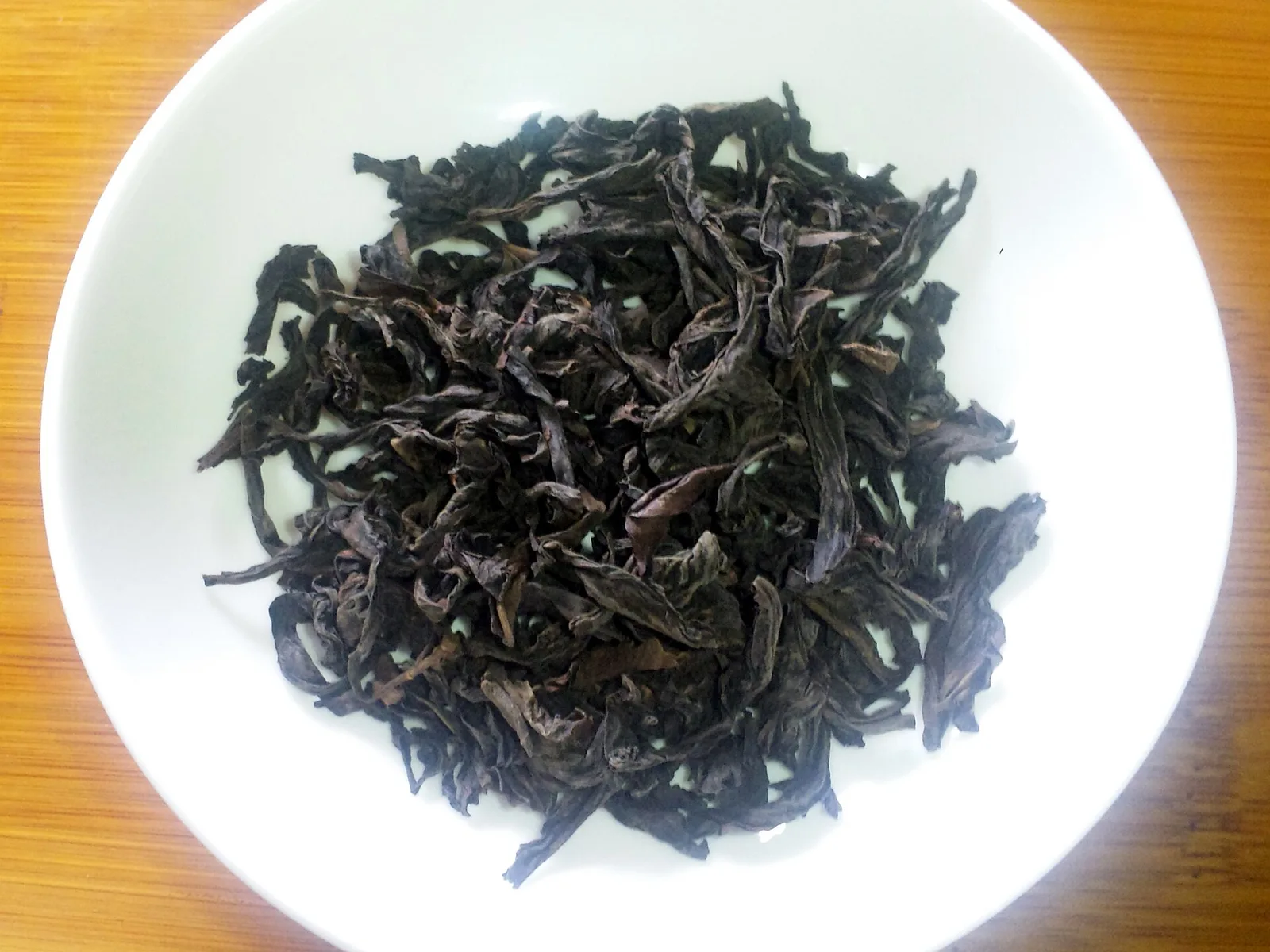
How da hong pao is prepared
Used almost exclusively as a hot infused tea, typically brewed gongfu-style in a small Yixing clay teapot or gaiwan with near-boiling water and multiple short steepings. It is consumed straight, without milk or sugar, to showcase its roast and mineral character, and also appears as a base for blended and flavored oolong specialties and, increasingly, as a flavor in low- and no-alcohol craft drinks.
Tea Fermentation
The controlled microbial or enzymatic transformation of tea leaves, an experimental R&D direction for developing complex flavors beyond distillation alone.
In depth
Origins in the Wuyi rock-tea tradition
Da Hong Pao belongs to the family of Wuyi rock teas (yancha) grown on the cliffsides of the Wuyi Mountains in northern Fujian, a region long regarded as one of the great cradles of Chinese tea. As a partially oxidized oolong, it sits between green and black tea in style: the leaves are withered in sun and breeze, repeatedly shaken and bruised to drive oxidation, pan-fixed, rolled into twisted cords, and then baked over heat. The result is a dark, twisted dry leaf that brews to a bright orange-yellow liquor with an orchid-like fragrance and a lingering sweet finish. Like other Wuyi teas, its character is attributed to the distinctive mineral terroir of the rocky slopes, which yield small but intensely flavored harvests. From the outset, Da Hong Pao was made to be drunk as a hot infusion rather than processed into any other form of beverage.[1]
A famous Wuyi cultivar among the great cliff teas
Within the Wuyi tradition, Da Hong Pao is the most renowned of the so-called "Famous Bush" (ming cong) oolongs, grouped with cliff teas such as Shui Jin Gui, Tieluohan, Bai Jiguan, Rougui, and Shui Xian. The Wuyi region is historically significant as a place where both oolong and black tea were likely first developed, and its teas are characteristically more heavily oxidized and fired than the ball-rolled oolongs of Anxi or Taiwan, giving them a smoky, roasted profile with stone-fruit notes. Da Hong Pao is typically twisted into thin strips rather than curled into beads. Because tea bushes on the steep mountainsides yield relatively little, and because leaf from older bushes is especially scarce, the finest grades command extraordinary prices; tea said to come from the original mother bushes has been reckoned more valuable by weight than gold.[2]
Legend, imperial honor, and the "King of Tea"
Da Hong Pao's name, "Big Red Robe," is bound up with imperial legend. The best-known tale recounts a scholar who fell ill on his way to the capital examinations and was revived by tea brewed from Wuyi leaves by a monk of Tianxin Temple. After placing first in the exam and later using the same tea to cure the emperor, he was rewarded with a red robe that was draped over the tea bushes in tribute, giving the trees their name. The tea's prestige carried into later eras: it ranked first in Qing-dynasty tea competitions and earned the title "King of Tea," and local custom called for ritual offerings before the annual harvest. In the modern period it has served as a high diplomatic gift, and the few surviving mother trees on the Jiulongke cliffs are now protected, insured, and forbidden to private picking, with one of the last harvests from the mother trees preserved in Beijing.[1]
Brewing in the gongfu style
Da Hong Pao is most fully appreciated through gongfu cha, the meticulous Fujian and Chaoshan method of "making tea with skill." Rather than a single long steep, gongfu brewing uses a small vessel and a high ratio of leaf to water, drawing out a series of short, successive infusions that reveal how the tea evolves cup by cup. A well-made Da Hong Pao is prized precisely because it holds its flavor across many steepings. Practitioners pay close attention to water quality and temperature, favoring clean spring water and water used promptly at or near boiling, since over-boiled or long-stored water is held to dull the tea's taste. Because the gongfu approach is designed to extract the best from finer teas, it is the natural setting for a roasted Wuyi oolong of this caliber, and many drinkers find the third and fourth infusions to be the most rewarding.[3]
The role of Yixing clay teaware
The traditional vessel for brewing Da Hong Pao is a small unglazed purple-clay (zisha) teapot from Yixing, in Jiangsu province. Yixing pots are valued for darker, more oxidized and roasted teas such as oolong, black, and pu'er, because their porous clay retains heat well and slowly absorbs trace flavors and oils from each brewing. Over years of use a pot develops its own seasoned interior, which is why connoisseurs often dedicate a single pot to one type of tea so that the accumulated character enhances future infusions rather than muddying them. The small capacity of these pots suits the gongfu manner of brewing Da Hong Pao, with concentrated steepings poured quickly into a sharing pitcher or small cups so that the tea can be enjoyed hot and in rapid succession.[4]
Place within Chinese tea culture and modern use
As a refined oolong, Da Hong Pao reflects the broader arc of Chinese tea culture, in which tea moved from an ancient medicinal and food use toward a beverage drunk for pleasure and ceremony, becoming a defining element of material and spiritual life. Oolong production itself emerged in the Wuyi region, and Da Hong Pao remains one of its most celebrated expressions, consumed today on both casual and formal occasions. In contemporary practice it is still drunk overwhelmingly as a hot, unsweetened infusion that highlights its roast, minerality, and orchid aroma. Beyond the traditional teapot, its distinctive flavor has spread into the wider world of specialty drinks: it appears as a base or accent in blended and flavored oolong offerings, in chilled and iced preparations, and increasingly as an aromatic ingredient in low- and no-alcohol craft beverages that borrow its deep, roasted, fruit-and-mineral character.[5]
Cultivars
Part of Oolong Tea
References
- [1]EncyclopediaDa Hong Pao — Wikipedia↑§1↑§3
- [2]EncyclopediaWuyi tea — Wikipedia↑§2
- [3]EncyclopediaGongfu tea — Wikipedia↑§4
- [4]EncyclopediaYixing clay teapot — Wikipedia↑§5
- [5]EncyclopediaChinese tea culture — Wikipedia↑§6