Citron
Also known as: cedar lemon, cedro
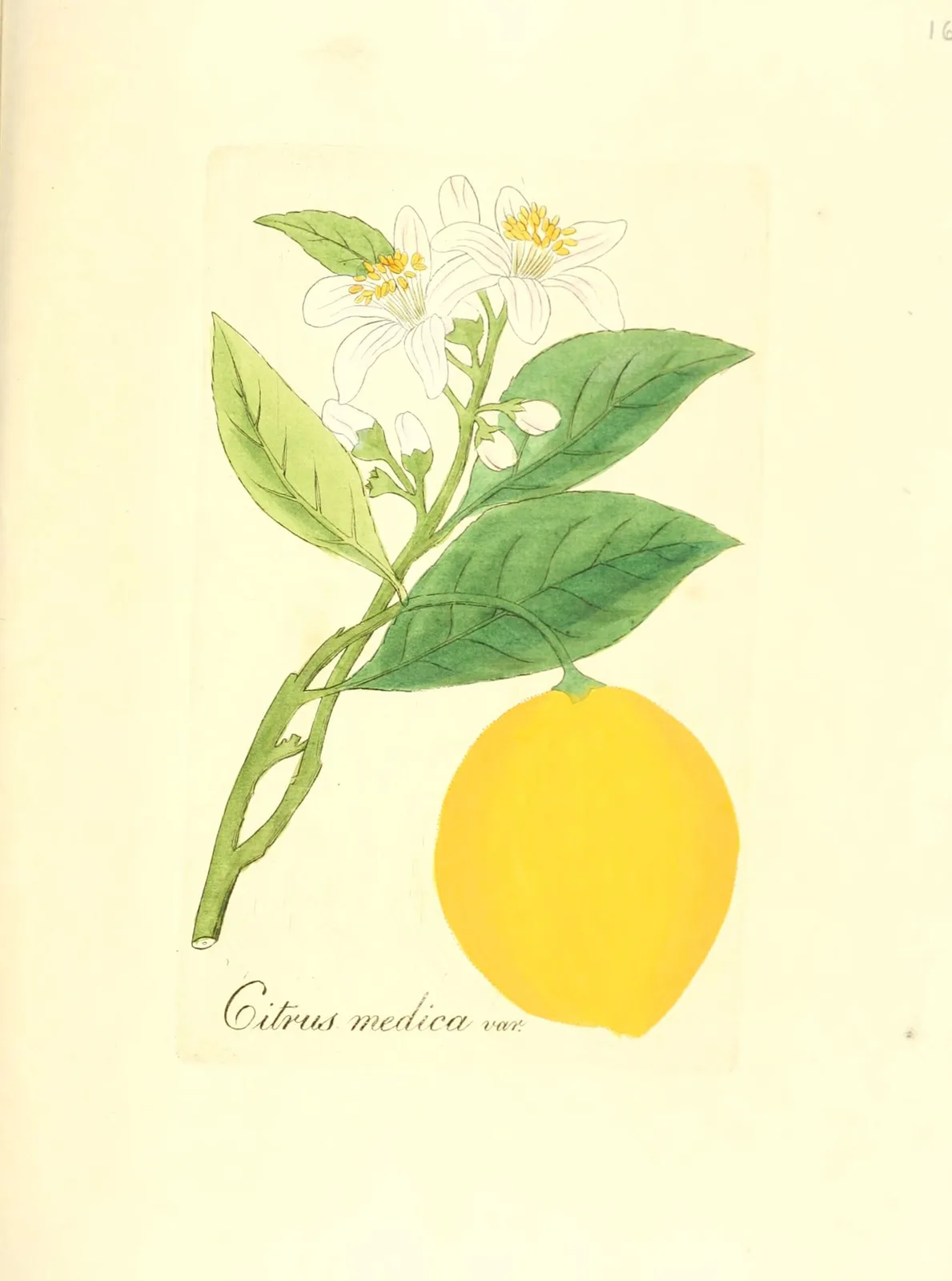
The citron (Citrus medica) is a large, intensely fragrant citrus with a thick, coarse rind and comparatively dry, sometimes acidic pulp. One of the few original citrus species, it is the ancestor of lemons, many limes, and other hybrids, and is prized in drinks primarily for the aromatic oils of its rind rather than for juice.
How citron is prepared
In beverages the citron is used chiefly for its aromatic rind: candied or infused into soft drinks, steeped in spirits to make citron liqueurs, and squeezed into refreshing fruit drinks. Its oils give a complex floral-citrus character to liqueurs such as the Italian cedro and Tunisian-style cedratine, while in some cultures its juice flavors simple cooling drinks.
Steam Distillation
A distillation method where steam is passed through plant material to vaporize volatile aromatic compounds, which are then condensed back into liquid form.
In depth
Ancient origins and early aromatic uses
The citron is one of the oldest cultivated citrus fruits, thought to have spread from the foothills of the Himalayas and northern India westward through Persia toward the Mediterranean in antiquity, a movement often linked in classical accounts to the campaigns of Alexander the Great. Ancient writers including Theophrastus and Pliny the Elder described the fruit's powerful fragrance and noted that it was rarely eaten but was valued medicinally and aromatically. Several of these early accounts specifically describe the citron being taken in wine, where its pulp or seeds were steeped or administered as an antidote to poison and as a remedy to sweeten the breath. This early pairing of citron with wine is among the first recorded connections between the fruit and a drink, even if the purpose was medicinal rather than purely refreshing.[1]
Candied rind and the Italian soft-drink tradition
Because the citron's defining feature is its thick, fragrant rind rather than its scant juice, much of its use in drinks grows out of the tradition of candying the peel into succade. In Italy, where the fruit is known as cedro, this aromatic rind became the basis of a sweet, non-alcoholic soft drink made from the fruit, generally pale and citrus-perfumed. The same prized rind and its oils underpin a dense, intensely flavored citron liqueur traditionally produced in southern Italy. These Italian preparations show how a fruit valued mainly for fragrance translates naturally into beverages that capture its perfume in sugar and spirit.[1]
Citron liqueurs of Italy and the wider Mediterranean
The most prominent modern beverage use of citron is as a base for citrus liqueurs made by steeping the fragrant rind in spirit. The best-known model for this style is the Italian tradition of lemon liqueur, in which strips of citrus zest are macerated in rectified spirit until the oils are released, then blended with simple syrup; the suspended essential oils give the drink its characteristic cloudiness. While that classic style most often uses lemons, the same technique is readily applied to the citron, whose more complex and floral rind oils yield a richer, more perfumed liqueur. Such citron-based liqueurs are typically served chilled as a digestif and increasingly turned into longer drinks by topping with sparkling wine or soda.[2]
Cedratine: a North African and Corsican citron liqueur
A distinct expression of the citron in drink form is cedratine, a citrus liqueur originating in Tunisia, where most of it is still made, and also popular across the Mediterranean in Corsica. Bottled at a strength comparable to other fruit liqueurs, it draws on the aromatic citron rind for its flavor and can be drunk on its own at room temperature or chilled, or used as a foundation for cocktails and to dress fruit salads. Cedratine illustrates how the citron remains a regional specialty drink ingredient in North Africa and the western Mediterranean, carrying the fruit's fragrant character into a recognizable local liqueur tradition.[3]
Fresh citron drinks across cultures
Beyond confected and distilled forms, the citron and its close citrus relatives appear in simple fresh drinks. In Samoa, a refreshing beverage is made from the squeezed juice of the fruit, showing its use as a cooling drink in the Pacific. In the regions where the citron and related citrus are everyday produce, including South Asia, the fruit feeds into the broad family of homemade citrus refreshers built on juice, water, and a sweetener. Because the citron yields comparatively little juice, these fresh applications are less common than its rind-based uses, but they extend its presence into the simplest category of citrus drinks.[1]
Citron within the wider lemonade and citrus-drink family
The citron sits at the root of the citrus lineage that gave rise to the lemon, and so it belongs, ancestrally, to the great tradition of lemon-flavored drinks. Sweetened citrus refreshers have a long history, with early lemon-based drinks documented in medieval Egypt and lemonade spreading across Europe from the seventeenth century onward. In France a pressed-citrus drink is served as the components of juice, syrup, and water for the drinker to combine, and across the Middle East and Mediterranean mint-laced citrus coolers are summer staples. While modern lemonade overwhelmingly uses true lemons, understanding the citron as the fragrant forebear of the lemon places it firmly in the cultural background of this worldwide family of citrus beverages.[4]