Woodruff
Also known as: sweet woodruff
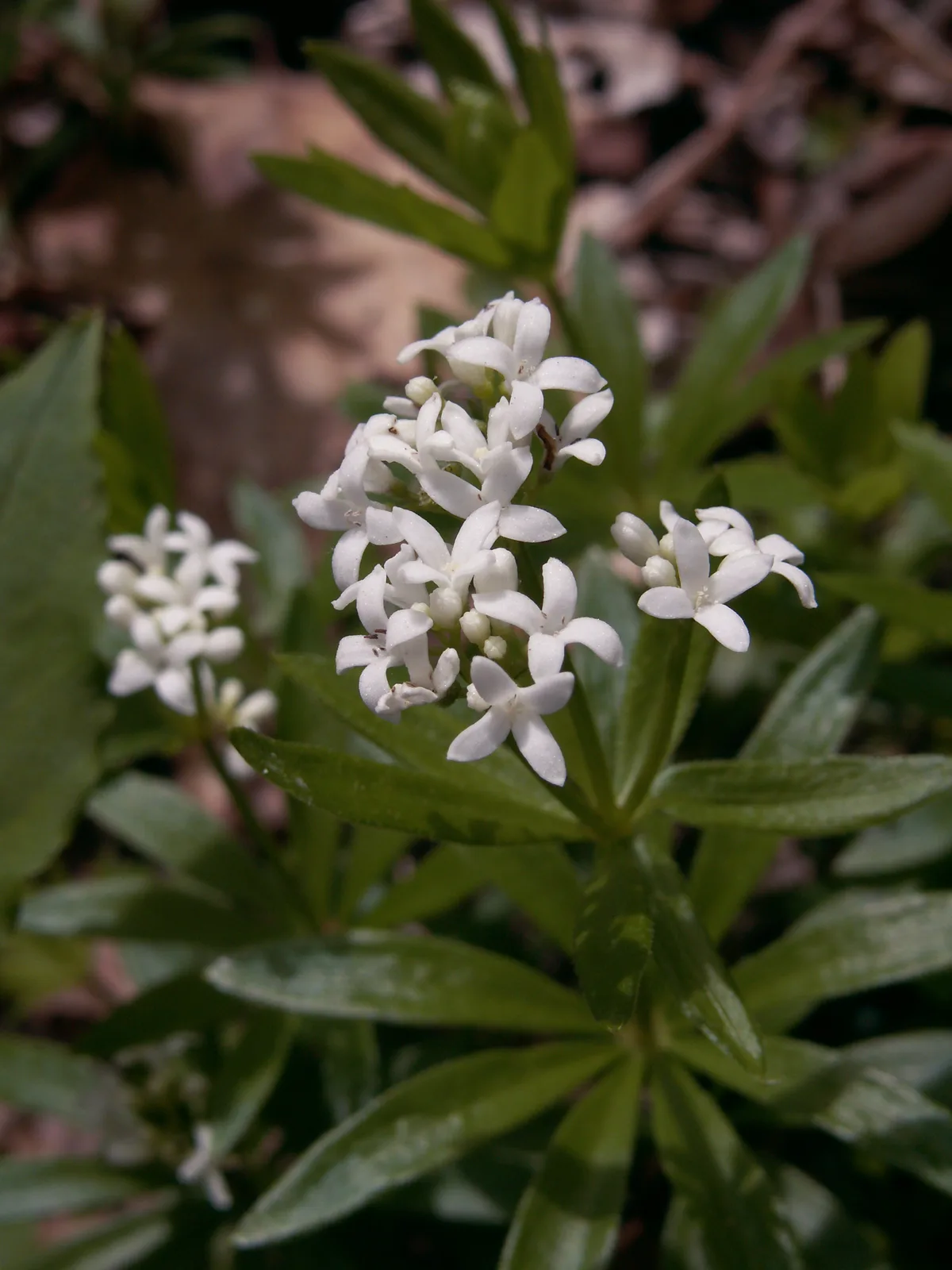
Sweet woodruff is a low-growing, shade-loving woodland herb whose leaves, gathered in spring, develop a warm, sweet aroma as they wilt and dry. The scent and flavor come largely from coumarin, which intensifies on drying and lends the herb its signature hay-and-almond character.
How woodruff is prepared
Used chiefly as a steeping and flavoring herb rather than a fermenting agent. It flavors aromatized spring wine and punch, syrups added to sour wheat beer, herbal teas and soft drinks, and various brandies and liqueurs. In modern no- and low-alcohol drinks it appears as a green-tinged syrup, infusion, or flavoring for sodas, mocktails, and lightly fermented spring beverages.
Other preparations
In depth
A foraged woodland herb
Sweet woodruff is a creeping perennial of the bedstraw family that carpets shaded European forests, sending up whorls of narrow leaves and tiny white flowers in spring. Native across a broad band of Europe and reaching into Western Siberia, the Caucasus, and East Asia, it has long been a herb to gather rather than buy. Its appeal in drinks rests almost entirely on aroma: the fresh plant is nearly scentless, but as the cut foliage wilts and dries it releases coumarin, giving off a warm bouquet of new-mown hay, honey, and bitter almond. This transformation is why traditional recipes call for the herb to be picked just before flowering and allowed to wilt before steeping, and why woodruff is treated as an infusing agent rather than a fermentable ingredient.[1]
German May wine and spring punch
The most enduring beverage built on woodruff is the German aromatized spring wine known by names such as Maibowle, Maiwein, Maitrank, and Waldmeisterbowle. The drink is made by steeping wilted sweet woodruff in a light white wine until the herb's sweet, hay-like scent dominates, and it is served in the spring, traditionally around May Day. European regulation has even defined the category by requiring a predominant woodruff character. The wine is often dressed up into a punch by adding sugar, brandy, and sparkling wine or carbonated water, and because strawberries ripen at the same season they are commonly floated in the bowl. The custom is firmly tied to German-speaking Central Europe but reaches beyond it; the town of Arlon in southern Belgium treats Maitrank as a local specialty, and German immigrant communities in the United States have kept the May wine tradition alive.[2]
Woodruff syrup in Berlin's sour wheat beer
In northern Germany, woodruff entered the world of brewing not as a fermenting herb but as a flavoring poured into the glass. Berliner Weisse, a cloudy, low-strength sour wheat ale soured with lactic acid bacteria, dates to at least the sixteenth century and became Berlin's most popular drink by the late nineteenth century. Its tart, lightly carbonated base is traditionally softened with sweet fruit syrups served at the table, and alongside raspberry the classic choice is a bright-green woodruff syrup, in German Waldmeistersirup. The syrup tempers the beer's sourness and gives it the herb's honeyed, grassy note, and this serving ritual remains one of the most recognizable uses of woodruff flavor in any beverage.[3]
Infusions, soft drinks, and modern low-alcohol uses
Beyond wine and beer, woodruff has flavored a range of lighter and non-alcoholic drinks. It has long been used in sweet juice punches, herbal teas, and brandy, and it lends its character to soft drinks, including the Georgian tarragon-style soda tarhun, as well as syrups, jellies, and ice creams. The same coumarin that defines its flavor also complicates its use: industrial sweetened products in Germany were restricted in the 1970s after coumarin proved toxic to laboratory rodents, although it has not been shown to harm humans at ordinary doses. As a result, much commercial woodruff flavor is now produced artificially, while alcoholic and adult products may still contain limited amounts of the natural herb. For today's no- and low-alcohol makers, woodruff offers a distinctly springtime, nostalgic flavor for syrups, sodas, mocktails, and gently fermented or sparkling spring drinks that echo the old May wine bowls without the alcohol.[1]
References
- [1]EncyclopediaGalium odoratum — Wikipedia↑§1↑§4
- [2]EncyclopediaMay wine — Wikipedia↑§2
- [3]EncyclopediaBerliner Weisse — Wikipedia↑§3