Tomato
A savory, umami-rich fruit eaten as a vegetable, the tomato is pressed, juiced, or clarified into a base or accent for an unusually wide family of drinks, from juices to cold soups to spiced beer and clam-tomato cocktails.
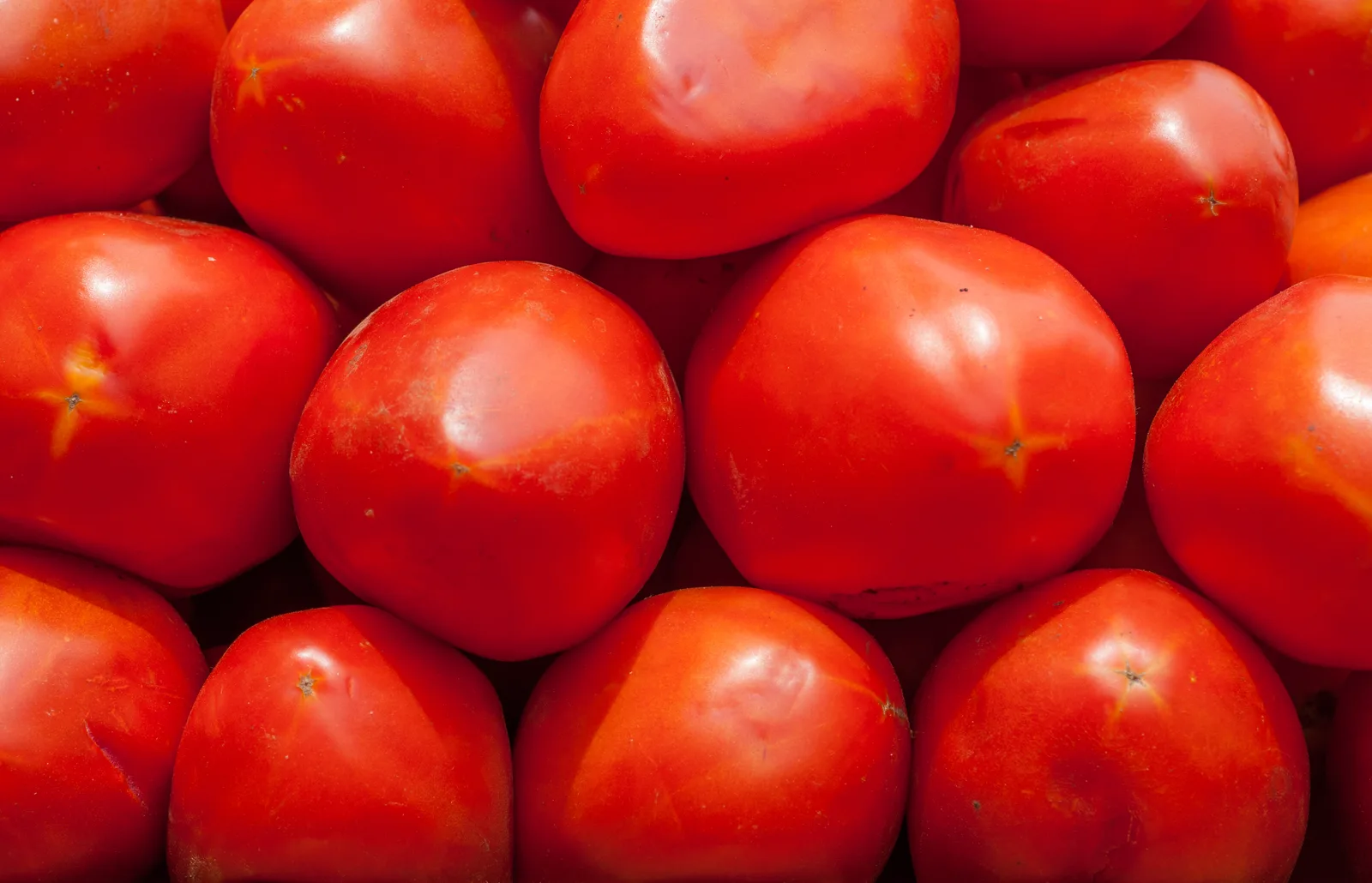
How tomato is prepared
Tomato is consumed as a chilled juice, blended into the drinkable cold soup gazpacho, and built into savory cocktails such as the Bloody Mary, the Canadian Caesar (with clam broth), and the Mexican michelada, where it is mixed with beer; modern bars also ice-clarify it into a clear umami water for cocktail blends.
Ice Clarification
A clarifying method that freezes a purée or juice and lets it thaw through a filter, yielding a crystal-clear, intensely flavored liquid.
In depth
Origins in the Americas
The tomato is native to the western coast of South America and was brought into cultivation by farmers in Mexico and Central America well before European contact; by around 500 BCE it was grown across southern Mexico. The Aztecs raised many varieties, and early Spanish observers described markets piled with tomatoes of every size and color, used chiefly in cooked sauces rather than drinks. While these Mesoamerican uses were culinary rather than beverage-focused, they established the tomato's savory, sauce-friendly character that would later make it a natural cocktail base. The Spanish carried the fruit across the Atlantic in the 16th-century Columbian exchange, after which it spread through Europe, the Caribbean, the Philippines, and onward across Asia.[1]
Gazpacho: the drinkable cold soup of Iberia
In the southern Iberian Peninsula, the tomato gave rise to one of the earliest traditions of consuming it in liquid form. Gazpacho began as a peasant preparation of bread, garlic, olive oil, vinegar, and water, but in the 19th century cooks added tomato to create the familiar red version that spread internationally. Served chilled and often poured or sipped rather than spooned, this raw blended vegetable soup straddles the line between food and drink, and is enjoyed especially in summer across Spain and Portugal. It remains the clearest example of the tomato treated as a refreshing, savory beverage in a European context.[2]
Tomato juice as a beverage in its own right
Tomato was not widely drunk as a juice until the 20th century. By most accounts the strained liquid had previously been turned into sauce, syrup, or wine rather than consumed straight, and tomato juice was first served as a drink in the United States in the late 1910s, becoming a commercially marketed product in the mid-1920s and a popular breakfast beverage soon after. Producers typically season it with salt and spices, and it is now made largely from tomato paste in the United States. Plain chilled tomato juice became a familiar restaurant appetizer, and it endures as a favorite among airline passengers, where the cabin environment appears to heighten its umami flavor.[3]
The Bloody Mary and its savory cocktail family
Tomato juice anchors the most famous savory cocktail of the modern era, the Bloody Mary, which pairs it with vodka, lemon juice, Worcestershire sauce, hot sauce, celery salt, and pepper. The drink emerged in the 1920s or 1930s, with competing origin claims in Paris and New York, and grew into a brunch and hangover-cure staple combining a vegetable base, salt, and spirit. Its variations are numerous: gin yields a Red Snapper, tequila a Bloody Maria, and an alcohol-free version made with extra tomato juice or mix is known as a Virgin Mary or Bloody Shame. The format is endlessly customized, from elaborate garnishes to regional touches such as a small beer chaser in parts of the upper Midwest.[4]
The Canadian Caesar and clam-tomato blends
In Canada, tomato found a distinctive partner in clam broth. The Caesar, invented in Calgary in 1969, mixes vodka with a clam-and-tomato juice, Worcestershire sauce, hot sauce, and spices, served in a celery-salt-rimmed glass; the clam component is what sets it apart from a Bloody Mary. The drink became Canada's signature cocktail and is overwhelmingly consumed there, with the majority of North America's clam-tomato juice going into Caesars. The clam-tomato base itself, a seasoned hybrid of tomato juice concentrate and dried clam broth, traces commercial experiments back to the 1930s and reached its modern form in the mid-1960s; an alcohol-free Caesar is called a Virgin Caesar.[5]
The michelada and tomato in Mexican beer culture
In Mexico, tomato meets beer rather than spirits. The michelada is a beer-based drink built with lime juice, salt, chili-based and other savory sauces, and spices, served in a chilled, salt-rimmed glass; many versions also incorporate clam-tomato juice. It belongs to a broader family of cervezas preparadas, including the simple tomato-and-beer mix known as a Red Eye in Western Canada and as a cerveza preparada in Mexico. Adding a fuller set of Caesar-style spices to a clam-tomato beer produces the version called sangre de cristo. From the 2010s onward, large brewers began bottling premixed michelada- and chelada-style beers, carrying tomato-tinged beer cocktails to a wider audience.[6]
Contemporary craft and clarified uses
Modern bartenders have extended the tomato's reach beyond classic savory cocktails. Drawing on its strong umami character, they ice-clarify or filter tomato into a clear, savory water that lends depth to blended drinks without the opacity or weight of juice, and they fold tomato into both alcoholic and zero-proof builds. Alongside these techniques, the established roster of tomato drinks endures: chilled juice, drinkable gazpacho, and the Bloody Mary, Caesar, and michelada families, each of which now supports widely accepted non-alcoholic versions that keep the tomato base and seasoning while omitting the spirit or beer.[3]
References
- [1]EncyclopediaTomato — Wikipedia↑§1
- [2]EncyclopediaGazpacho — Wikipedia↑§2
- [3]EncyclopediaTomato juice — Wikipedia↑§3↑§7
- [4]EncyclopediaBloody Mary (cocktail) — Wikipedia↑§4
- [5]EncyclopediaCaesar (cocktail) — Wikipedia↑§5
- [6]EncyclopediaMichelada — Wikipedia↑§6