Shiso
Also known as: perilla
Shiso is an aromatic herb in the mint family, grown in red, green, bicolor, and ruffled forms. Its leaves, seeds, sprouts, and flowers all carry a distinctive fragrance that makes it valuable both as a culinary garnish and as a flavoring and coloring agent for drinks.
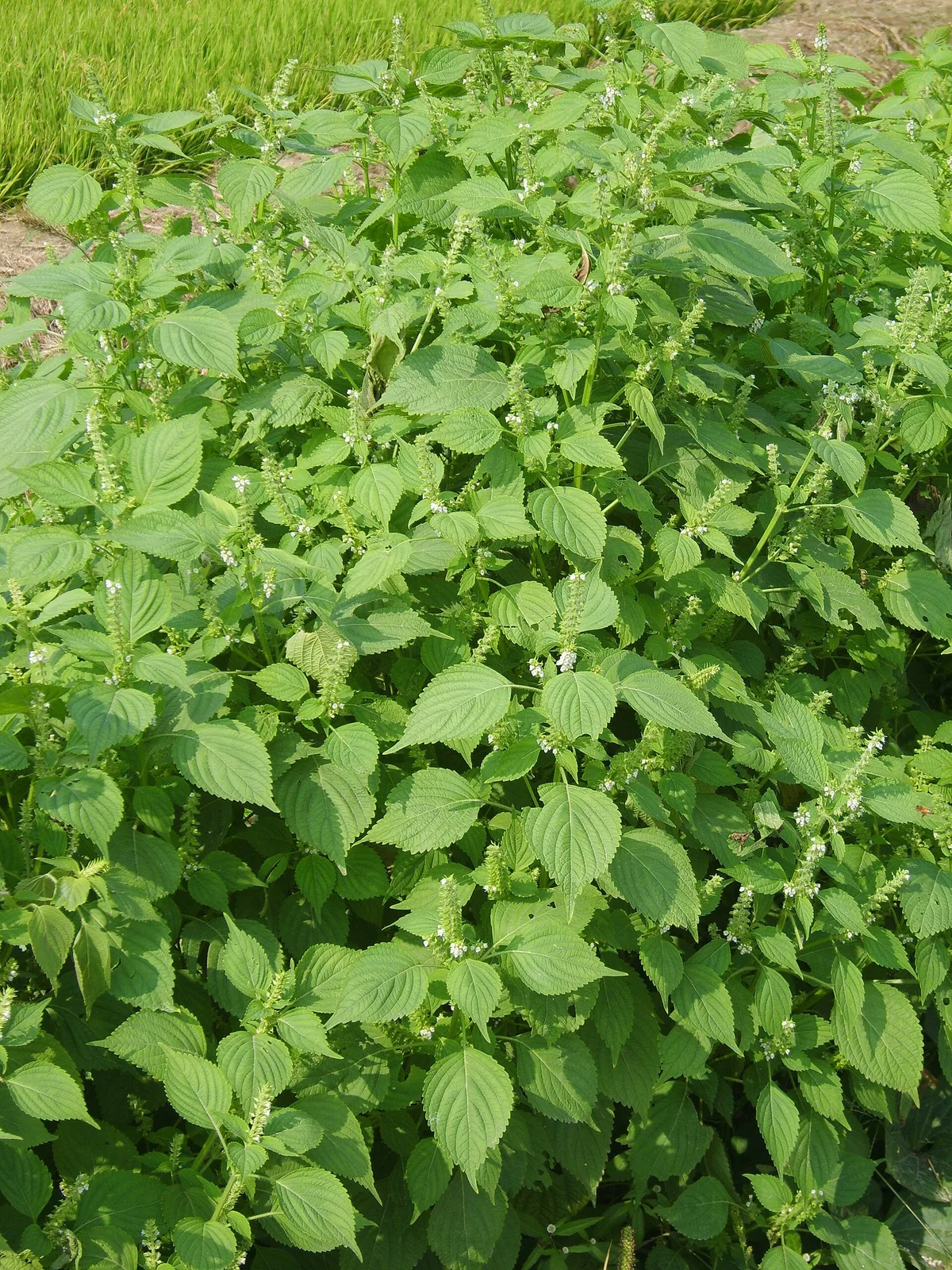
Usage in beverages
Shiso appears in beverages chiefly as an infusion and coloring agent: red shiso is steeped to make a sweet summer juice in Japan, it has flavored seasonal commercial soft drinks, and its leaves are increasingly steeped, muddled, or distilled to flavor modern infusions, sodas, and no- and low-alcohol cocktails.
In depth
Origins in China and the East Asian materia medica
Shiso traces back to the mountainous borderlands of China and India, where the broader perilla plant was cultivated in antiquity and recorded in early medical writing around the sixth century. In Chinese practice the herb, known as zisu, was prized as much for its supposed protective qualities as for its fragrance, and it became customary to pair it with fish and crab in the belief that it could counter the ill effects of seafood. While this early use centered on food and medicine rather than drinks, it established shiso as an aromatic steeping herb whose leaves released both color and scent when soaked—the same properties that later made it useful in beverages.[1]
Red shiso juice in Japan
After reaching Japan around the eighth to ninth centuries, shiso became deeply woven into the country's food culture, and one of its clearest beverage uses developed there. The red-leaved variety, akajiso, turns a brilliant crimson when steeped in acidic liquid, the same reaction that dyes pickled plums. In summer, Japanese households traditionally steep red shiso to make a sweet, vividly red juice or cordial, often sharpened with something tart and sweetened to taste. This homemade drink remains a seasonal favorite and is the most direct expression of shiso as an infused beverage: a bright, herbal, ruby-colored refreshment drawn entirely from steeping the leaves.[1]
Shiso in commercial Japanese soft drinks
Shiso's flavor has also reached industrial beverage production in Japan. In the summer of 2009 a major soft-drink maker released a seasonal green-colored carbonated drink flavored to evoke shiso, capitalizing on the herb's strong association with summer and its instantly recognizable aroma. Such limited-run novelty sodas reflect a broader Japanese habit of building seasonal flavored drinks around familiar culinary herbs and ingredients, and they show how shiso moved from the home kitchen into mass-market non-alcoholic beverages, where its distinctive scent could signal both freshness and the season.[1]
Shiso as a flavoring in steeped Japanese liqueurs
The Japanese tradition of steeping fruit, herbs, and aromatics in a neutral spirit—most famously umeshu, made by infusing unripe ume plums with sugar in shochu—provides a natural home for shiso. Because red shiso is already a partner to ume in pickling, the same crimson leaves are sometimes added to plum-based steeped drinks to lend color and herbal depth. While such infusions are traditionally alcoholic, the underlying method translates readily to low- and no-alcohol versions: ume, sugar, and shiso steeped in water, tea, or a lightly fermented base yield a tart, fragrant cordial. This lineage links shiso to the wider East Asian practice of soaking botanicals to capture both their aroma and pigment.[2]
Shiso across Korea and Southeast Asia
Beyond Japan, shiso and its close relatives are used across the region in ways that touch on drinks and infusions. In Korea, where the plant is called soyeop or chajogi, it is less central than its sister cultigen but is still gathered as a wild herb and pickled. In Laos, red shiso lends fragrance to rice-noodle dishes, and in Vietnam the more strongly scented tía tô is a common aromatic herb. This Southeast Asian familiarity with shiso as a perfuming leaf underpins its appearance in regional herbal preparations and steeped drinks, and it reflects a shared culinary logic in which fragrant leaves are infused to flavor and tint liquids.[1]
Shiso in contemporary craft and low-alcohol drinks
In recent decades shiso has become a favored botanical in specialty and craft beverages worldwide, helped by its growing recognition outside Asia since the 1990s. Its perillaldehyde-driven aroma—green, minty, and faintly spiced—makes it a striking addition to sodas, sparkling infusions, iced teas, and the herb-forward, spirit-free drinks that define modern no- and low-alcohol bars. Leaves are muddled, steeped, or distilled to capture their scent, while red shiso doubles as a natural pink-to-crimson colorant. In this contemporary setting shiso plays the role once reserved for basil or mint, lending a complex, unmistakable herbal signature to mocktails and craft soft drinks.[3]