Rhubarb
Rhubarb is the tart, fleshy leaf stalk of a hardy perennial in the buckwheat family, used in beverages much as a fruit would be: pressed for juice, stewed into syrups and compotes, steeped as an infusion, and fermented into wines and sodas. Its bracingly sour, clean flavor and its blush-to-crimson color make it a favorite base for spring and summer drinks.
How rhubarb is prepared
Rhubarb is fermented into country fruit wines, steeped into the Finnish honey-sweetened soda sima, cooked into compotes and kompot whose syrup is drunk as a beverage, and macerated or pressed into cordials, sodas, and tart spring soft drinks. Its sourness and pink hue also make it a recurring flavoring in bittersweet aperitif-style infusions.
Lacto-Fermentation
Fermentation by lactic-acid bacteria, which convert sugars into lactic acid for a clean, savory acidity.
Other preparations
In depth
From Silk Road medicine to a drinkable ingredient
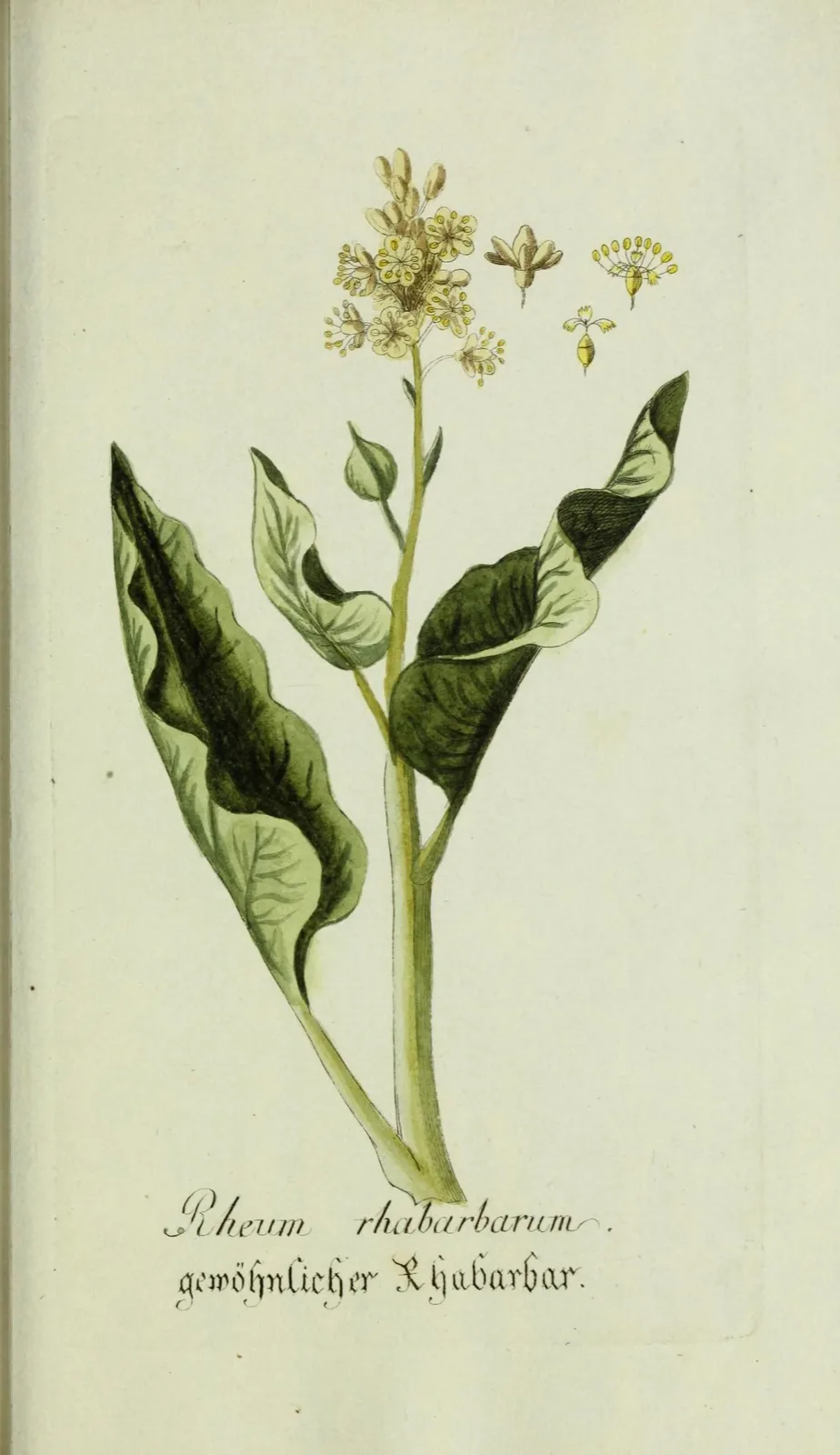
For most of its recorded history, rhubarb reached Western tables not as a vegetable but as a costly imported root used in medicine. The Chinese knew it as "the great yellow" and used its root as a remedy for some two thousand years, and the dried root traveled west along trade routes during the Islamic era, arriving in medieval Europe through ports such as Aleppo and Smyrna, where it became known as "Turkish rhubarb," and later via Russia. Its high price kept it in the realm of apothecaries and luxury commerce. Only in 18th- and 19th-century England, once sugar became cheap enough to tame the stalk's fierce acidity, did rhubarb shift from medicinal root toward a culinary ingredient that could be stewed, sweetened, and ultimately turned into drinks.[1]
Rhubarb compote and the kompot tradition
One of the oldest routes by which rhubarb entered the glass is through compote, a European preparation of fruit gently cooked in sweetened, spiced syrup. While the fruit itself is eaten as a dessert, the surrounding syrup readily becomes a beverage, and this crossover is especially clear in Eastern Europe. There, dried or fresh fruit cooked in sugar water yields kompot, whose liquid is drunk on its own, chilled or warm. Rhubarb fits this tradition naturally: stewed with sugar and warming spices such as ginger, cinnamon, or nutmeg, it produces a tart, rosy syrup that can be diluted with water and served as a refreshing spring drink. The same sweetened rhubarb base also underlies cordials and homemade sodas.[2]
Northern European fermented rhubarb: wine and sima
In cool-climate regions where grapes struggle, rhubarb became a popular base for fermented "country" wines. Like other fruit wines, rhubarb wine is made by extracting juice or stewing the stalks, then fermenting the must; because rhubarb is naturally low in fermentable sugar and very high in acid, home winemakers typically dilute it with water and add sugar to bring both the sweetness and the sharpness into balance before pitching yeast. This tradition has long been strongest among home winemakers in Scandinavia and North America. A distinctively Finnish use is sima, a lightly fermented, honey- or sugar-sweetened spring beverage traditionally tied to May Day, which is also made in a rhubarb version that lends the drink a tart, pink character.[3]
Rhubarb in bitter aperitifs
Rhubarb's astringent, faintly medicinal edge has earned it a place in the family of bitter aperitif liqueurs, where bittering botanicals are infused into a sweetened alcoholic base to stimulate the appetite. Italian bitter apéritifs of the spritz tradition, for example, characteristically combine bittering agents such as gentian and cinchona bark with rhubarb, producing the dry, herbaceous-citrus profile diluted over ice with sparkling wine and soda. This style places rhubarb alongside other classic European amaro and aperitivo botanicals, drawing as much on the plant's old reputation as a digestive root as on its tartness.[4]
Modern spring sodas, cordials, and infusions
Today rhubarb is a staple of the no- and low-alcohol drinks repertoire, prized for its clean tartness and natural blush color. It is commonly cooked into cordials and syrups that are stretched with still or sparkling water to make house sodas, lemonades, and shrubs, and it is infused cold to make tart spring refreshers. Because culinary rhubarb is one of the first crops harvested in temperate climates—appearing in early spring, including the prized forced, candlelit-grown stalks of England's Yorkshire "Rhubarb Triangle"—it has a strong seasonal identity in beverage menus. In North America it is frequently paired with strawberry, echoing the classic pie, to round its sharpness in juices, sodas, and mocktails.[1]