Red Currant
Also known as: red currants, redcurrant
Small, glossy, scarlet berries borne in pendulous clusters, prized in drinks for their vivid acidity and translucent jewel-like color.
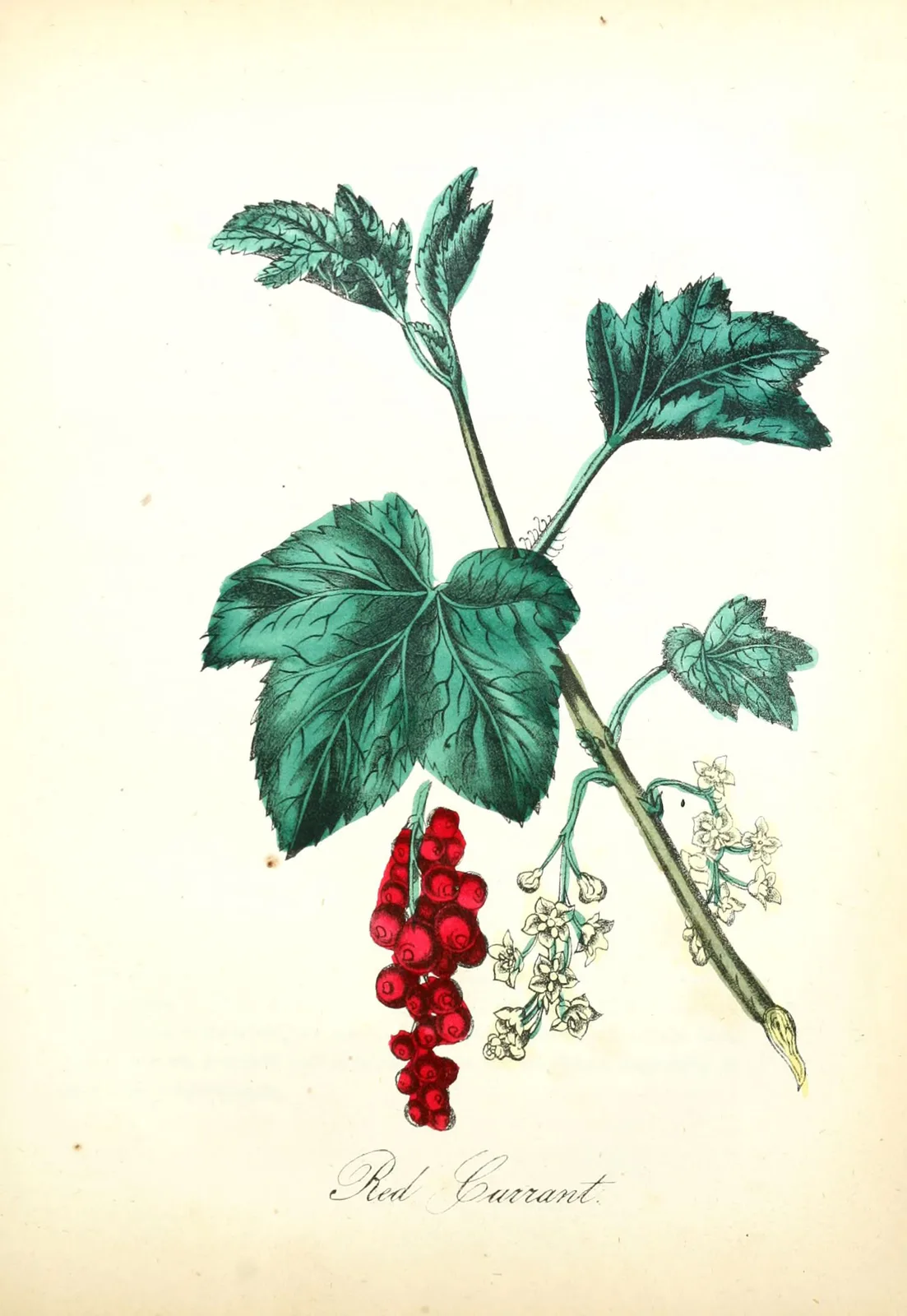
How red currant is prepared
Used to make fruit wines, syrups and nectars for sodas (such as the German Johannisbeerschorle), cordials, fruit soups and dessert drinks like kissel, vinegar-based shrubs, and as a tart fruit accent in cocktails and aperitif-style drinks. Its juice also flavors fermented and infused beverages.
Other preparations
In depth
Origins in cool-climate Europe
The redcurrant (Ribes rubrum) is a shrub native to western Europe whose bright, translucent red berries ripen in clusters from mid- to late summer. Though gathered from the wild for centuries, the large-fruited forms valued today were bred in Belgium and northern France during the 17th century, and selection has continued ever since. The berries are markedly tart, with a high content of organic acids and polyphenols that gives them their refreshing sharpness. This combination of acidity and modest sweetness has made the redcurrant a natural candidate for drinks across the cooler latitudes of Europe, where it thrives in conditions too cold for fine grapes.[1]
Redcurrant fruit wine in the northern winemaking tradition
In regions where grapes cannot reliably ripen, redcurrants and their paler sibling the whitecurrant have long been turned into fruit wines. These so-called country wines are popular among home winemakers and in cool-climate areas such as Scandinavia and northern continental Europe. Redcurrant wine is relatively straightforward to make: the fruit's natural chemical balance allows it to clarify on its own without added agents. Because the berries carry only modest fermentable sugar, winemakers must add sugar or honey to reach a workable alcohol level, while the fruit's strong acidity is typically tempered with water. The result is a light, tart wine that, like most fruit wines, is generally best enjoyed young.[2]
Refreshment drinks and dessert beverages in German-speaking and Slavic lands
Beyond fermentation, the redcurrant has a firm place in non-alcoholic drink culture across central and eastern Europe. In German-speaking countries, syrup or nectar made from the berry is combined with soda water to make a spritz-style refresher known as Johannisbeerschorle; the German name for the fruit, Johannisbeere or 'John's berry', reflects a tradition that the currants ripen around St. John's Day at midsummer. In Russia the berries are ubiquitous in compotes and in kissel, a sweet, lightly thickened fruit drink-dessert also made from cherries, cranberries, and other berries. In Scandinavia and northern Germany redcurrants flavor fruit soups and the soft summer puddings known as rødgrød or rote Grütze.[1]
A fruit base for kvass and folk fermented drinks
In the bread-fermenting traditions of eastern Europe and the Baltic, berries including redcurrants served as flavoring and fermentable material for low-alcohol drinks. Kvass, the cloudy, sweet-and-sour fermented beverage of northeastern Europe, was historically brewed from rye bread or malt but readily took on fruit and berry additions; by the late 19th century commercial producers recorded scores of varieties flavored with fruits such as apple, pear, raspberry, and cherry. In rural Lithuania the related drink gira could be made from almost anything fermentable, berries among them, alongside the more usual rye bread and malt. Tart redcurrants fit naturally into this family of household ferments enjoyed cold in summer.[3]
Currants in the aperitif and cocktail idiom
The currant family is woven into European aperitif culture, most famously through the Kir, a French cocktail in which a measure of blackcurrant liqueur is topped with white wine and drunk before a meal. While that classic leans on the blackcurrant, the redcurrant belongs to the same fruit tradition and is used as a tart accent and garnish in mixed drinks and seasonal punches. Its sharp acidity and ornamental clusters make it a popular finishing touch when fresh fruit is wanted to balance sweeter components, and its juice can stand in for citrus-style acidity in drinks where a clean red-fruit note is desired.[4]
Shrubs and the modern revival of vinegared fruit drinks
Redcurrants are well suited to the shrub, a vinegared fruit syrup used as a drink base. In the older preserving method, vinegar was poured over berries and left to infuse before the liquid was strained and sweetened into a tart syrup that could be mixed with still or sparkling water as a soft drink, or used as a cocktail mixer. Berries were the traditional fruit of choice for these preparations, and the redcurrant's natural acidity and color make it an ideal candidate. After fading with the spread of home refrigeration, shrubs returned to bars and cafes from around 2011, riding the wider enthusiasm for fermented and low-sugar drinks; today seasonal-fruit shrubs, including red-fruited ones, are offered as bright, vinegar-edged alternatives to soda and as a substitute for bitters in cocktails.[5]
References
- [1]EncyclopediaRedcurrant — Wikipedia↑§1↑§3
- [2]EncyclopediaFruit wine — Wikipedia↑§2
- [3]EncyclopediaKvass — Wikipedia↑§4
- [4]EncyclopediaKir (cocktail) — Wikipedia↑§5
- [5]EncyclopediaShrub (drink) — Wikipedia↑§6