Quince
An intensely fragrant, hard, golden-yellow pome fruit, too tart and astringent to eat raw, prized in beverages for its perfume and high pectin content rather than its modest yield of juice.
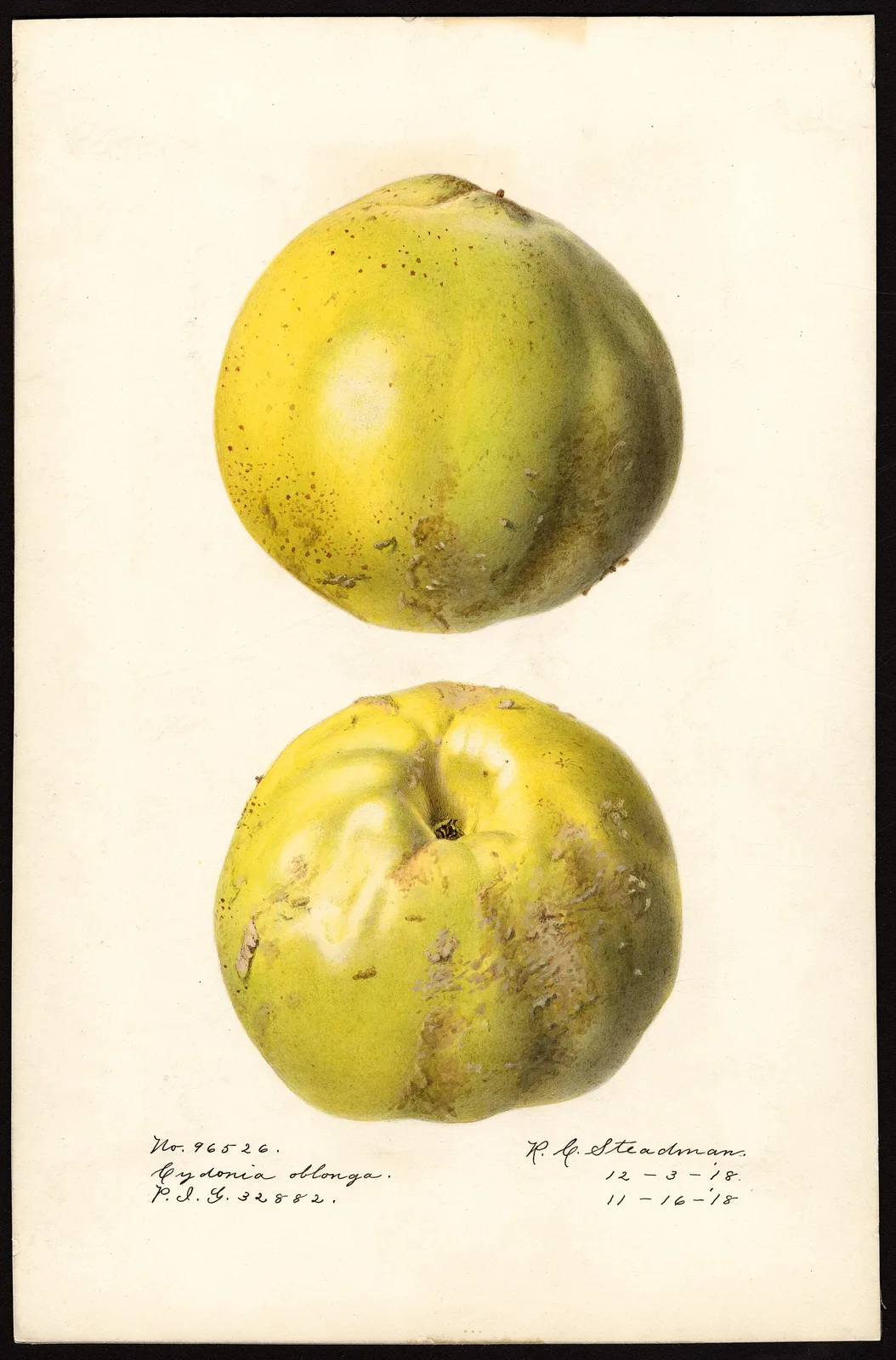
How quince is prepared
Quince is fermented and distilled into Balkan fruit brandy, fermented into early colonial fruit wines, infused into cordials and ratafias, and used as an aromatic fruit note in meads, fruit kvass, and aromatized aperitif wines; its strong scent and pectin make it valued as a flavoring rather than a high-yield juice fruit.
Water Kefir Fermentation
A short fermentation with water-kefir grains -- a symbiotic culture of bacteria and yeasts -- that adds gentle effervescence, body, and a soft lactic creaminess without significant alcohol.
In depth
Ancient origins and the first sweetened quince preparations
Long before it entered Europe's cellars, the quince had spread west from its homeland near the Caspian Sea, thriving in the heat of the Mesopotamian plain where apples would not. Because the raw fruit is hard, tart, and astringent, the earliest uses leaned on sweeteners and reduced wine. The Roman recipe collection attributed to Apicius advised keeping unbruised quinces, stems and leaves intact, submerged in honey and concentrated wine, a method that effectively produced a perfumed, syrupy liquid alongside the preserved fruit. The Greeks, who linked the fruit to Kydonia on Crete and to Aphrodite, likewise stewed quince with honey, laying the groundwork for the sweet honey-and-fruit preparations later cultures would dilute or ferment into drinks.[1]
Balkan quince brandy
In southeastern Europe the quince became the basis of a celebrated fruit eau-de-vie, the quince form of rakija. Ripe fruit of the sweeter varieties is washed, cleared of rot and seeds, then crushed or minced and combined with sweetened water and yeast to ferment over several weeks. The fermented mash is distilled once to yield a spirit of roughly 20 to 30 percent alcohol, or twice to reach around 60 percent, after which the runs are blended and reduced with water to a drinkable strength near 42 to 43 percent. The result preserves much of the fruit's floral aroma. The quince's standing in the region runs deeper than the still, as a tree is by tradition planted at the birth of a child as a symbol of fertility, love, and life.[1]
Colonial quince-drink in the Americas
Settlers carried the quince to North America in the seventeenth century, where it became a fixture of household gardens. From the fruit colonists fermented a beverage of their own: in early-eighteenth-century Carolina the naturalist John Lawson recorded a fermented quince-drink or quince liquor, which he rated above any other drink the country offered while noting its reputed purgative effect. This colonial quince wine sits among the era's other domestic fruit ferments and shows how readily the high-pectin, intensely flavored fruit lent itself to small-scale home brewing wherever quince trees grew. The same New England gardens that supplied fruit for the all-day boiling of quince cheese would also have furnished fruit for such homemade drinks.[1]
Iberian quince cheese and the world of marmalade
On the Iberian Peninsula quince was cooked slowly with sugar into a firm, sweet paste known in Spanish as dulce de membrillo and in Portuguese as marmelada, the word from which English marmalade derives. While the paste itself is a confection rather than a drink, its preparation reflects a deep store of concentrated, sweet quince at the heart of these cultures, and similar reductions of cooked quince and sugar have long been thinned with water or spirits to make sweet, aromatic beverages. From the Portuguese marmelo and its relatives the tradition spread across France, Italy, Hungary, Serbia, the Levant, and Latin America, carrying the quince's perfume into a broad family of sweetened preparations that bridge the line between preserve and drink.[2]
Spiced and sweetened wines: hippocras and its kin
In medieval and early-modern Europe, wine was routinely sweetened and steeped with spices and fruit to produce hippocras, a drink made by infusing cinnamon, ginger, cloves, and other aromatics in sweetened wine and straining it clear through a conical cloth filter. From the seventeenth century onward, French recipes for these spiced wines increasingly incorporated fruits such as apples and oranges. Fragrant autumn pomes like the quince fit naturally into this lineage of fruit-and-spice wines, where the fruit's honeyed scent could deepen a warming, aromatic cup. The tradition fed directly into later spiced and mulled wines and helped shape the family of sweet, aromatized drinks in which quince found a place.[3]
Quince as a fruit note in meads
In the world of honey-based ferments, fruit is commonly added to deepen flavor, and aromatic pomes like the quince fall squarely within this practice. A mead fermented with fruit is called a melomel, while one combining honey with orchard fruit such as apples yields a cyser, where the balance of honey and fruit sugars defines the style. The quince's floral perfume and abundant pectin make it a fitting candidate for such fruited meads, contributing aroma even where its juice is modest. Because mead spans dry to sweet and still to sparkling, and because melomels historically served to preserve summer fruit into winter, a perfumed pome like quince sits comfortably among the apple, berry, and stone-fruit additions that have long flavored honey wine.[4]
A regional companion: the pomegranate parallel
The quince's place among Persian and Mediterranean fruit drinks is illuminated by its near neighbor the pomegranate, which shares the same broad center of origin around Iran and the Caucasus and was domesticated there several millennia ago. Pomegranate juice has long been a common beverage across West Asia and Europe, and its thickened, sweetened form gave rise to grenadine and to syrups used in nonalcoholic drinks and cocktails. The two fruits traveled overlapping routes and entered overlapping drinking cultures, where intensely flavored, tart-sweet fruit was prized for juices, syrups, and aromatic preparations. Seeing how the pomegranate became a staple beverage fruit helps explain why the more perfumed but less juicy quince was treated chiefly as a flavoring for ferments, cordials, and syrups rather than pressed for drink on its own.[5]