Pink Peppercorn
The dried, rose-colored drupe of South American Schinus trees, sold under the name pink peppercorn for its peppery aroma despite having no relation to true pepper. It is a member of the cashew family rather than the Piper genus.
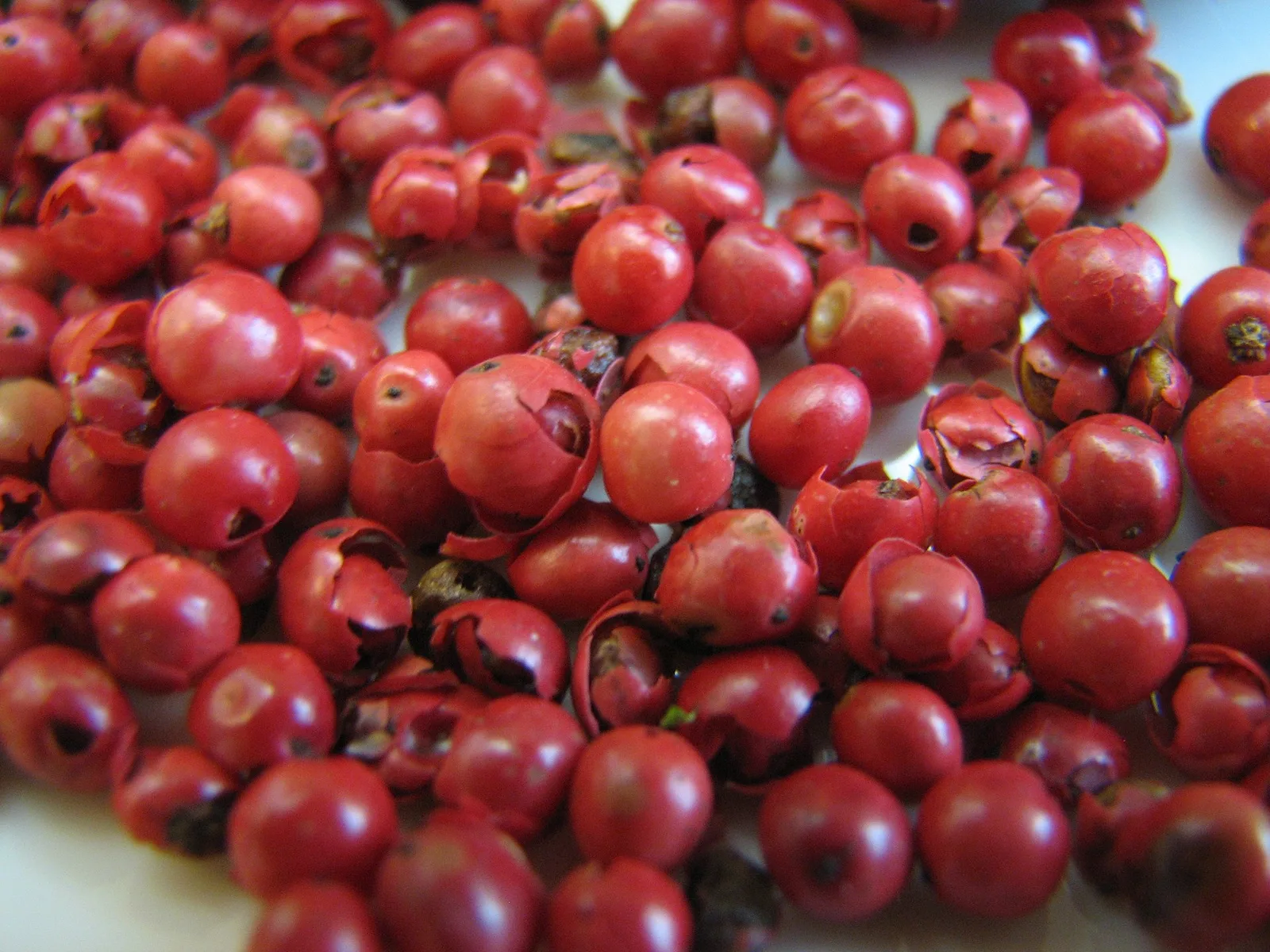
How pink peppercorn is prepared
Historically fermented into the maize-and-molle beer chicha and infused into sweet fruit drinks by Andean peoples; today crushed or infused as an aromatic botanical in syrups, sodas, tonics, shrubs, infused waters, and the non-alcoholic spirits, sparkling botanicals, and craft tisanes of the low- and no-alcohol category, often paired with citrus, juniper, or rose.
Water Kefir Fermentation
A short fermentation with water-kefir grains -- a symbiotic culture of bacteria and yeasts -- that adds gentle effervescence, body, and a soft lactic creaminess without significant alcohol.
In depth
Origin: an Andean berry, not a true pepper
What is sold as pink peppercorn is not related to the black pepper of the Piper vine at all. The name refers to the small, bright rose-colored drupes of South American Schinus trees, chiefly the Peruvian peppertree (Schinus molle) and the closely related Brazilian pepper (Schinus terebinthifolia). Both belong to the cashew family, and the berries were called peppercorns simply because they resemble and faintly taste like the spice. The Peruvian species is native to the arid Andes, where its bark, leaves, and berries are aromatic when crushed, a quality that made the fruit attractive for flavoring drinks long before it entered the Western pantry. Because of this cashew-family lineage, the berries can pose a risk to those with tree-nut allergies, and neither Schinus species currently holds generally-recognized-as-safe status with food regulators in the United States.[1]
Pre-Columbian Andes: molle berries in chicha
The earliest and best-documented role of the Peruvian peppertree in beverages is as a fermentation ingredient in the ancient Andes. Archaeological evidence shows that the Wari, a state of the Middle Horizon roughly between 600 and 1000 AD, used the sweet drupes of Schinus molle extensively to brew chicha, a fermented drink of profound social and ceremonial importance. At sites in southern Peru, this molle-based brew was sometimes combined with seeds of the vilca tree to produce a far more potent, mind-altering drink reserved for feasting and leadership ritual. Chicha made from molle thus represents one of the oldest known traditions of brewing a beverage around the berry now marketed as pink peppercorn.[1]
Inca fruit drinks and syrups
The Inca continued and refined the use of the molle berry in non-distilled drinks. They worked the sweet outer pulp of the ripe fruit by rubbing the berries gently so as not to release the bitter inner seed, then strained the mixture and let it rest for a few days to yield a beverage. The same sweet fruit was also boiled down into a syrup or stirred into maize to make a nourishing gruel. This careful separation of the sugary skin from the harsher core is an early example of the technique still implied by modern pink peppercorn drinks, where the berry's fragrance and gentle sweetness are wanted but its sharper, resinous notes are restrained.[1]
Broader chicha tradition across Latin America
The molle-based brews of the Andes belong to the wider family of chicha, the fermented and non-fermented beverages of the Andes and Amazonia. While maize chicha de jora became the most common form, chicha was made from many plants, and the practice connected drink to community, ritual, and social status throughout the region. The molle drink sits within this spectrum: like other chichas, it could be lightly fermented for refreshment or brewed more strongly for ceremony, and its preparation and serving carried meaning beyond mere thirst. This long Latin American culture of plant-based fermented drinks is the deepest historical context for the berry's beverage use.[2]
Spread, naming, and the European spice trade
As the Brazilian pepper and Peruvian peppertree were carried around the world as ornamental plants, their berries entered the European spice market, where the Brazilian species came to be sold as baies roses de Bourbon and the French term baie rose, or pink berry, took hold. This French framing positioned the berry as a delicate culinary and perfumery ingredient, and it is by way of this European reception that pink peppercorn reached modern drink-makers. The berries are usually sold dried with their vivid pink color intact, and less often pickled in brine, where they take on a duller, greenish cast. Extracts of the Peruvian species have a recorded history of use as a flavoring in drinks and syrups, anticipating its current place on the soft-drink and cordial shelf.[3]
Present day: an aromatic for no- and low-alcohol drinks
In contemporary specialty beverages, pink peppercorn is prized less for heat than for its perfume: a sweet, piney, gently spicy aroma that lifts citrus, berry, and floral notes. It is crushed or infused into syrups and shrubs, steeped into tonic and soda bases, and used as a signature botanical in non-alcoholic spirits, sparkling botanicals, and craft tisanes, where it offers complexity without alcohol or strong bite. It pairs naturally with juniper, rose, grapefruit, and strawberry, echoing both its botanical character and its historical link to sweet fruit drinks. Makers do treat it with some caution because of its cashew-family allergen risk and its lack of GRAS status, but as a low-and-no ingredient it has become a fashionable way to add color and fragrance to a glass.[4]
References
- [1]EncyclopediaSchinus molle — Wikipedia↑§1↑§2↑§3
- [2]EncyclopediaChicha — Wikipedia↑§4
- [3]EncyclopediaSchinus terebinthifolia — Wikipedia↑§5
- [4]EncyclopediaPink peppercorn — Wikipedia↑§6