Kukicha
Kukicha, also called twig tea, stalk tea, or bocha, is a Japanese green tea brewed not from the prized leaf buds but from the stems, stalks, and twigs of the tea plant that are sorted out during the production of leaf teas such as sencha, matcha, and gyokuro. Because it is composed of plant parts that most teas discard, it yields a pale, light-bodied infusion with a character unlike that of conventional leaf greens.
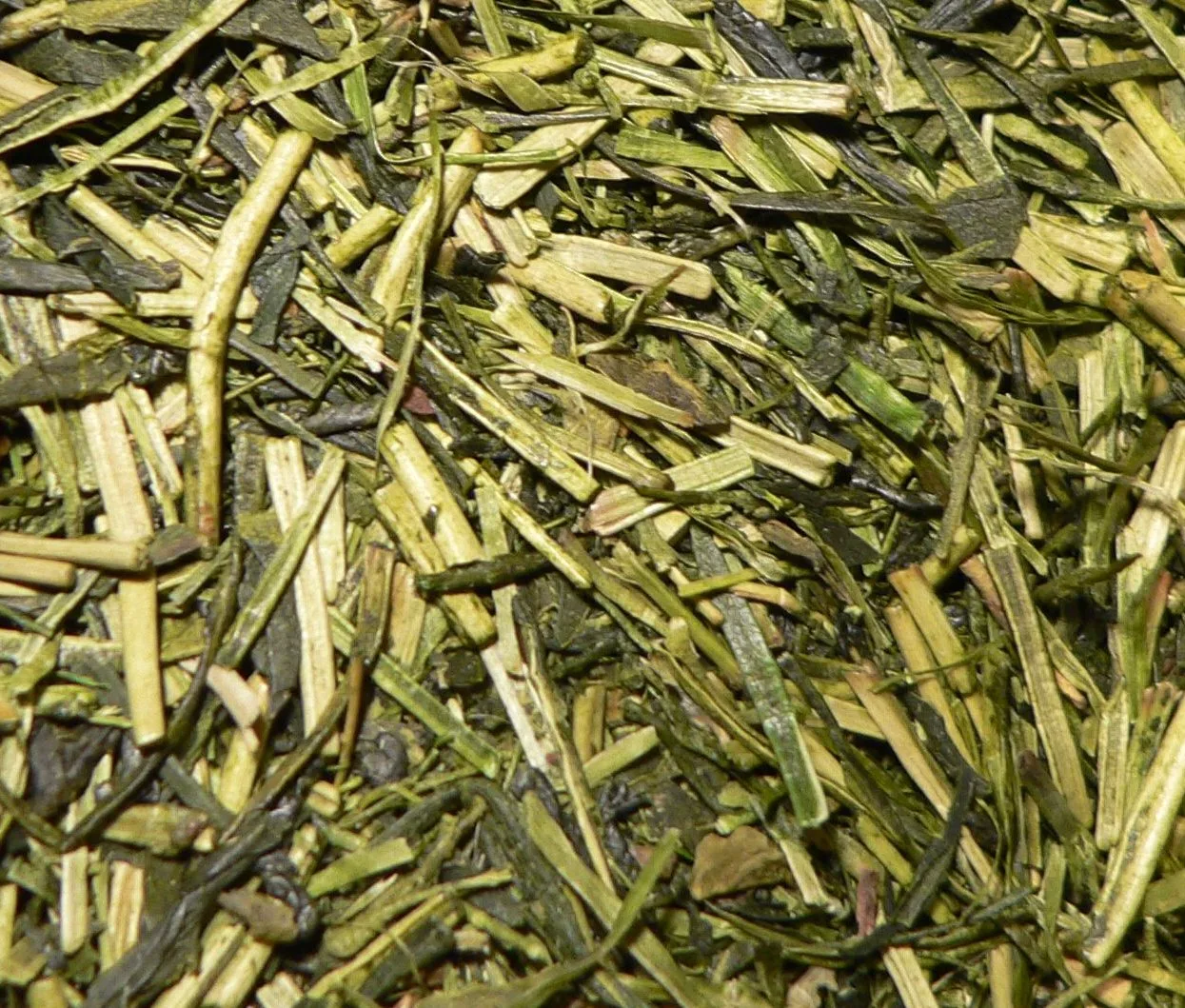
How kukicha is prepared
Brewed as a hot infusion in water around 70-80 C, steeped briefly and re-steeped several times; higher grades from gyokuro stems are prized as karigane. Roasted to make a twig-based hojicha, served iced, and used as a soft, lightly caffeinated tea suited to evening drinking and to children and the elderly.
Tea Fermentation
The controlled microbial or enzymatic transformation of tea leaves, an experimental R&D direction for developing complex flavors beyond distillation alone.
In depth
A tea born from the off-cuts
Kukicha, written with characters meaning twig tea and also known as bocha, originates in Japan as a thrifty use of the parts of the tea bush that most other teas leave behind. Rather than relying on tender leaf buds, it is blended from the stems, stalks, and twigs of Camellia sinensis that are separated out when finer leaf teas are sorted and refined. Because these plant parts photosynthesize less than the leaves, they carry their own balance of aromatic compounds, giving the finished drink a light body, a fresh green scent, and a mildly nutty, faintly sweet taste that sets it apart from conventional green teas. It is usually offered as a green tea, though more oxidized versions also exist.[1]
By-product of Japan's leaf-tea tradition
Kukicha cannot be understood apart from the leaf teas it accompanies. The bulk of its raw material comes from the production of sencha, Japan's most widely drunk green tea, and from matcha. When the stems and twigs come instead from gyokuro, the high-grade shaded tea, the resulting twig tea is given the finer name karigane, or shiraore when it comes from the Kyushu region. Historically karigane referred specifically to gyokuro-derived twig tea, but the term has broadened over time to mean any kukicha of superior quality. These gyokuro-sourced stems tend to be richer in the savory-sweet amino acid theanine while carrying less caffeine, lending their brew a smoother, sweeter cup than ordinary kukicha.[2]
Brewing and the multi-infusion habit
As a drink, kukicha is treated gently. It is steeped in water held below boiling, generally between about 70 and 80 C, and green versions are infused for under a minute, since hotter water or longer steeping draws out bitterness as it does in any green tea. A single measure of twigs is commonly carried through three or four successive infusions, each yielding a slightly different cup. This places it within the broader Japanese practice of infused green teas such as sencha, where higher-quality material is brewed cooler and briefly but repeatedly, and where the warmth of the water shapes whether the result tastes mellow or sharp.[3]
Roasted into a twig-based hojicha
Kukicha also feeds into one of Japan's most distinctive roasted teas. While hojicha is most often made by firing bancha, the late-season common-grade green tea, over charcoal, it is also produced from sencha and from kukicha twigs. Roasting at high temperature turns the material reddish-brown and trades the grassy notes of an ordinary green tea for a toasty, nutty, slightly caramel-like flavor, while reducing both astringency and caffeine. A twig-based roasted tea of this kind is mild and low in stimulants, which has made hojicha a favored choice for the evening meal, for drinking before sleep, and for serving to children and older people. Powdered forms are also whisked into steamed milk drinks.[4]
Within the wider world of Japanese green tea
Kukicha belongs to a family of Japanese green teas that share a common processing logic distinct from Chinese practice. Japanese green teas are typically steamed soon after picking to halt oxidation before being rolled and dried, which gives them a greener liquor and a more vegetal, sometimes seaweed-like character than the pan-fired greens of China. The unrefined processed tea, known as aracha, is sorted and graded, and it is during this sorting that the stalks and stems destined for kukicha are separated from the leaves used for sencha and other grades. Green tea itself originated in China and spread across East Asia, but the systematic harvesting of twigs into a tea of their own is a particularly Japanese refinement.[5]
Macrobiotic adoption and modern reach
Beyond Japan, kukicha found a distinct second life through the macrobiotic dietary movement, in which it became one of the preferred everyday teas. Its low caffeine content, gentle flavor, and reputation as a soothing, balancing drink suited macrobiotic principles and helped introduce the tea to Western audiences who might otherwise never have encountered a twig tea. Today kukicha is enjoyed both as an inexpensive daily green tea and, in its karigane and shiraore grades, as a more refined specialty, while its roasted twig form continues to be served as a caffeine-light alternative. It remains a quietly versatile member of the no- and low-alcohol beverage world, drunk hot, iced, or whisked into milk-based drinks.[1]
Part of Green Tea