Kaffir Lime
Also known as: makrut lime
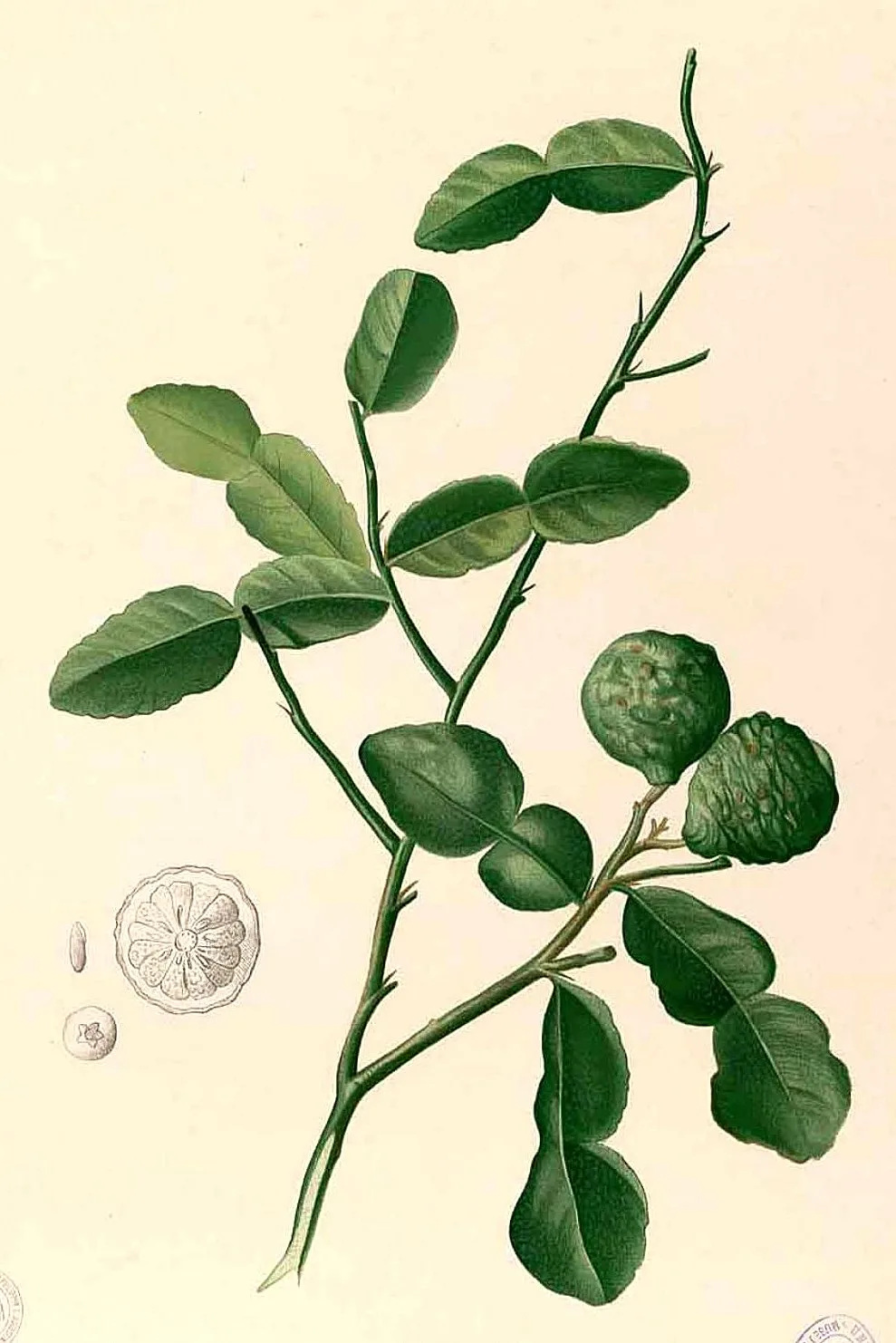
A small, bumpy-skinned citrus fruit native to tropical Southeast Asia, valued in drinks for its intensely aromatic, double-lobed leaves and fragrant rind rather than its sour, slightly bitter juice.
Usage in beverages
Used chiefly as an aromatic: leaves and shredded peel are steeped into infusions, teas, herbal tonics, and coconut-based drinks, twisted into iced and sparkling refreshers, and historically infused into spirits and rums in the Indian Ocean islands; today it is a favored botanical in craft sodas, syrups, and zero-proof cocktails.
In depth
Origins in Southeast Asia
Native to the tropical forests and cultivated gardens of Southeast Asia, this citrus has been known for centuries by names that emphasize its rough, warty skin and arrow-shaped leaves, including makrut in Thailand, limau purut in Malay, jeruk purut in Javanese, and kroch saech in Cambodia. European naturalists first documented it in the late eighteenth century, and the contested English name 'kaffir lime' surfaces in colonial-era texts from Ceylon in the late nineteenth century, though many writers now favor the neutral terms makrut or Thai lime. While the plant is best known for flavoring food, its defining feature for drinks is aroma: both the crushed leaves and the rind release an intense, floral-citrus fragrance dominated by citronellal, which makes them ideal for steeping and infusing rather than juicing.[1]
Infused spirits and rums of the Indian Ocean islands
Beyond its homeland, the fruit traveled west to the Indian Ocean islands of Réunion, Mauritius, and Madagascar, where it is known as combava. There its fragrant zest became a characteristic flavoring for the local creole table, and notably for infused rums. In this tradition the peel is steeped in sugarcane spirit, lending the rum a bright, perfumed citrus note alongside other tropical botanicals. Mauritian and Réunionnais rum culture is known for this style of macerated, aromatic spirit, in which the lime's zest is one of several fruit and herb additions used to build a smoother, sweeter, fragrant character.[1]
Coconut milk as a drinkable base
The coconut milk that carries the lime's aroma in soups is itself a foundational beverage ingredient across Southeast Asia, Oceania, South Asia, and East Africa. Extracted by pressing grated coconut flesh, it ranges from rich cream to thin milk and is increasingly sold as a drinkable milk substitute. In drinks that pair the two, shredded makrut leaf is steeped into warm or sweetened coconut milk to give a creamy base a fresh, perfumed citrus lift without adding acidity. This combination, long present in the region's coconut-based desserts and warm drinks, has carried into modern dairy-free lattes and blended refreshers that lean on coconut milk for body and the lime leaf for fragrance.[2]
Teas and citrus-forward iced drinks of Thailand
In Thai drinking culture, tea is the dominant everyday beverage, made from strongly brewed black tea sweetened with sugar and condensed or evaporated milk and served hot or, more famously, iced. Among its lighter cousins are citrus-forward variations such as a lime-flavored iced tea, sweetened with sugar and brightened with juice and sometimes mint. Into this landscape of fragrant, refreshing iced drinks the makrut lime fits naturally: its leaves and zest are steeped into herbal teas and citrus coolers to add an intense, floral citrus aroma, complementing the region's taste for sweet, perfumed, and cooling drinks.[3]
Contemporary craft sodas, syrups, and zero-proof cocktails
In recent decades the lime's leaf has spread far beyond Southeast Asia into the global craft-beverage scene, prized precisely because its perfume registers without the bitterness of the juice. Bartenders and beverage makers steep the leaves into simple syrups, cordials, and shrubs, infuse them into sodas and tonics, and twist them into both spirited and alcohol-free cocktails for a distinctive floral-citrus aroma. In the growing world of no- and low-alcohol drinks, the leaf is especially valued as a botanical that adds complexity and a sense of exotic freshness to sparkling refreshers, mocktails, and herbal tonics, while the zest contributes a lime-and-flower nose. Because the peel and pulp contain furanocoumarins that can sensitize skin to light, makers typically rely on the leaf or restrained amounts of zest in infusions.[1]
References
- [1]EncyclopediaKaffir lime — Wikipedia↑§1↑§2↑§5
- [2]EncyclopediaCoconut milk — Wikipedia↑§3
- [3]EncyclopediaThai tea — Wikipedia↑§4