Huacatay
Also known as: wakatai, black mint, Peruvian black marigold
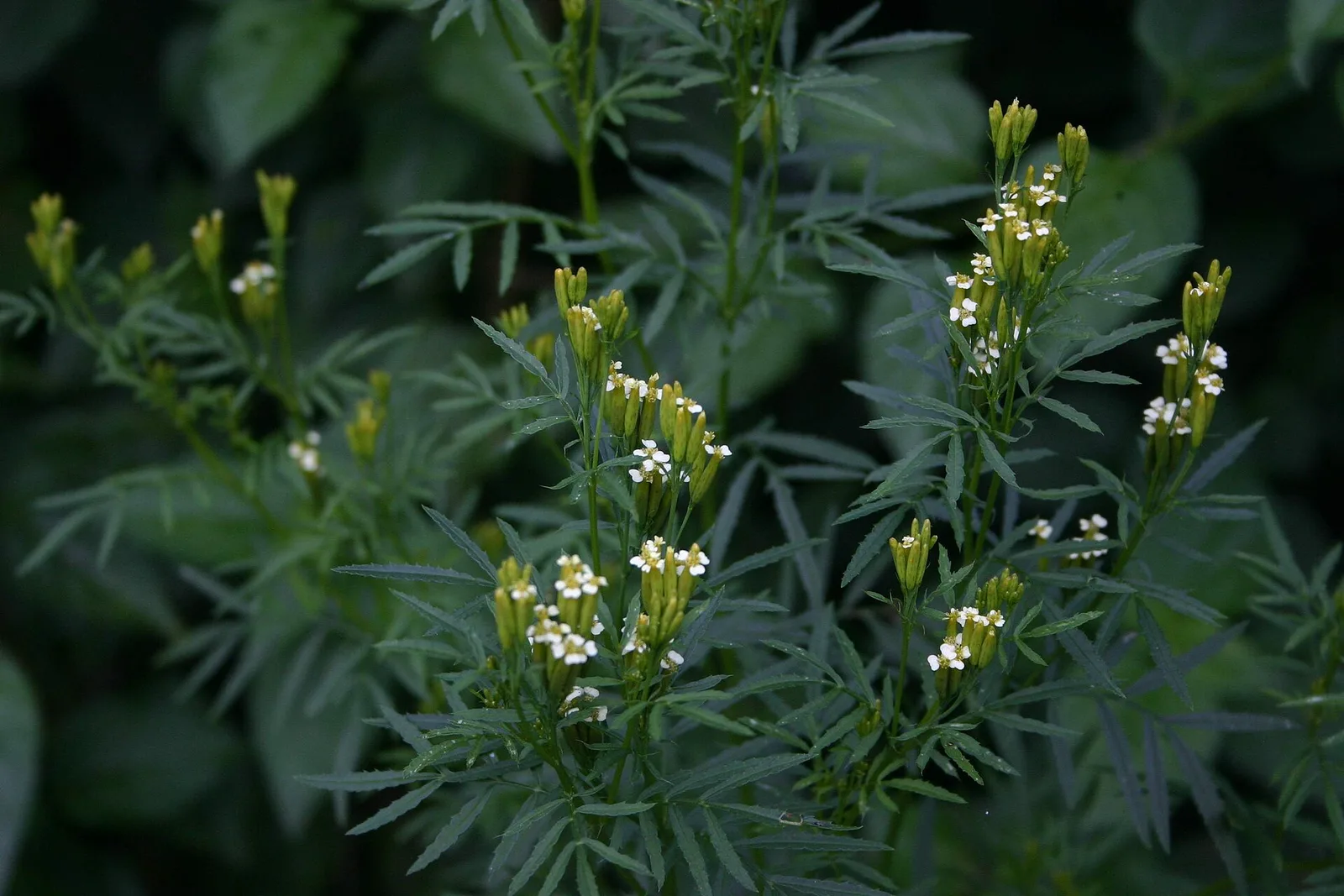
Huacatay is an aromatic herb of the marigold family native to the Andes, with strongly scented leaves that carry notes of mint, basil, and citrus. Sold fresh, dried, or as a dark green paste sometimes labeled black mint, it has been a culinary herb since pre-Columbian times and lends a pungent, herbaceous depth to foods and drinks across the central Andes.
Usage in beverages
Most directly, huacatay leaves are steeped to make a warming herbal tea in the Andes. As a fragrant herb it also belongs to the wider Andean tradition of flavoring infusions and refreshments with native plants, and modern bartenders and beverage makers use it as an herbal accent in non-alcoholic and low-alcohol drinks. Marigold oil extracted from the plant has additionally been used as a flavoring in the soft drink industry.
In depth
Andean origins and early use
Huacatay is the Andean name for Tagetes minuta, a tall marigold native to the southwestern half of South America. People in the region have eaten and used the plant since pre-Columbian times, and after Spanish colonization it spread far beyond its homeland, naturalizing across Europe, Asia, Africa, Australasia, and North America. In its home territory it is known by many names — wacatay and wakataya among Quechua speakers, and chinchilla, suico, anisillo, and black mint elsewhere — reflecting how deeply rooted it is in local plant lore. While it is best known today as a culinary herb in Peru, Ecuador, Bolivia, and parts of Chile, its strongly aromatic leaves have long lent themselves to drinks as well.[1]
The leaf as a brewed infusion
The most direct beverage use of huacatay is as a simple herbal tea: the fresh or dried leaves are steeped in hot water to make a fragrant infusion. An extract of the plant, sometimes called marigold oil, has also been used as a flavoring agent in the soft drink industry, carrying the herb's pungent, minty-basil character into manufactured drinks. Because the leaves are rich in aromatic oils, they release their scent readily, making them well suited to the steeping methods used for herbal infusions generally.[1]
Herbal infusions as a beverage category
Huacatay tea belongs to the broad family of herbal infusions — sometimes called tisanes — which are made by steeping or decocting plant material other than the true tea plant in water. Such infusions can be drawn from leaves, stems, flowers, or roots, served hot or brewed cold over several hours, and many that rely on oily, aromatic leaves benefit from longer steeping so the volatile oils have time to release. Most herbal teas of this kind are naturally caffeine-free, valued instead for aroma and flavor, and huacatay's intensely scented foliage places it among the more pungent options in this category, comparable in spirit to mint or other aromatic-leaf infusions.[2]
Andean fermented and refreshing drinks
Huacatay grows up in the same Andean drink culture that produced chicha, the fermented and non-fermented beverages of the Andes and Amazon. Chicha is most often a corn beer, chicha de jora, brewed by germinating maize and fermenting the wort in earthenware vats, but the tradition also embraces many cultigens and wild plants and freely admits aromatic flavorings. Its non-fermented cousin, chicha morada, is made by boiling purple corn with pineapple, cinnamon, and cloves to yield a sweet, spiced refreshment. Within this living tradition of infusing native plants and spices into both fermented and soft drinks, an aromatic Andean herb like huacatay sits naturally as a regional flavoring.[3]
Mate, yuyos, and added herbs
In the wider South American practice of drinking infusions, it is common to combine a base brew with additional herbs for flavor or perceived health benefits. In the mate tradition of the Southern Cone, drinkers often add yuyos — herbs obtained from a local herbalist — to the gourd, using the mate as a foundation for a personalized herbal blend. This habit of layering aromatic native plants into an everyday infused drink mirrors how a pungent herb such as huacatay can be folded into Andean beverages, whether as part of a brewed infusion or as a fresh accent.[4]
Contemporary recognition and drink-making
Huacatay is now counted among the most distinctive ingredients of Peruvian cuisine, named alongside aji amarillo peppers and Peruvian corn as a marker of the country's culinary identity. Since the 1970s, Peru has worked to bring its once-overlooked native plants back into prominence, and government-backed gastronomy initiatives have raised the international profile of indigenous ingredients. As that interest has grown, the herb's complex minty, basil-like profile has drawn the attention of modern beverage makers, who use it as an herbal accent in non- and low-alcohol drinks and as a way to bring an unmistakably Andean character to contemporary infusions and refreshments.[5]
References
- [1]EncyclopediaTagetes minuta — Wikipedia↑§1↑§2
- [2]EncyclopediaHerbal tea — Wikipedia↑§3
- [3]EncyclopediaChicha — Wikipedia↑§4
- [4]EncyclopediaMate (drink) — Wikipedia↑§5
- [5]EncyclopediaPeruvian cuisine — Wikipedia↑§6