Gyokuro
Gyokuro is a premium Japanese green tea distinguished by being grown under shade for roughly twenty to thirty days before the first flush is harvested. This shading sharply raises the leaf's L-theanine and chlorophyll content while lowering catechins, producing a deep green infusion with intense umami, savory sweetness, and very little bitterness or astringency. It is processed much like sencha—steamed, rolled, and dried—but its cultivation and refined brewing set it apart, and it ranks among the most expensive and esteemed teas made in Japan.
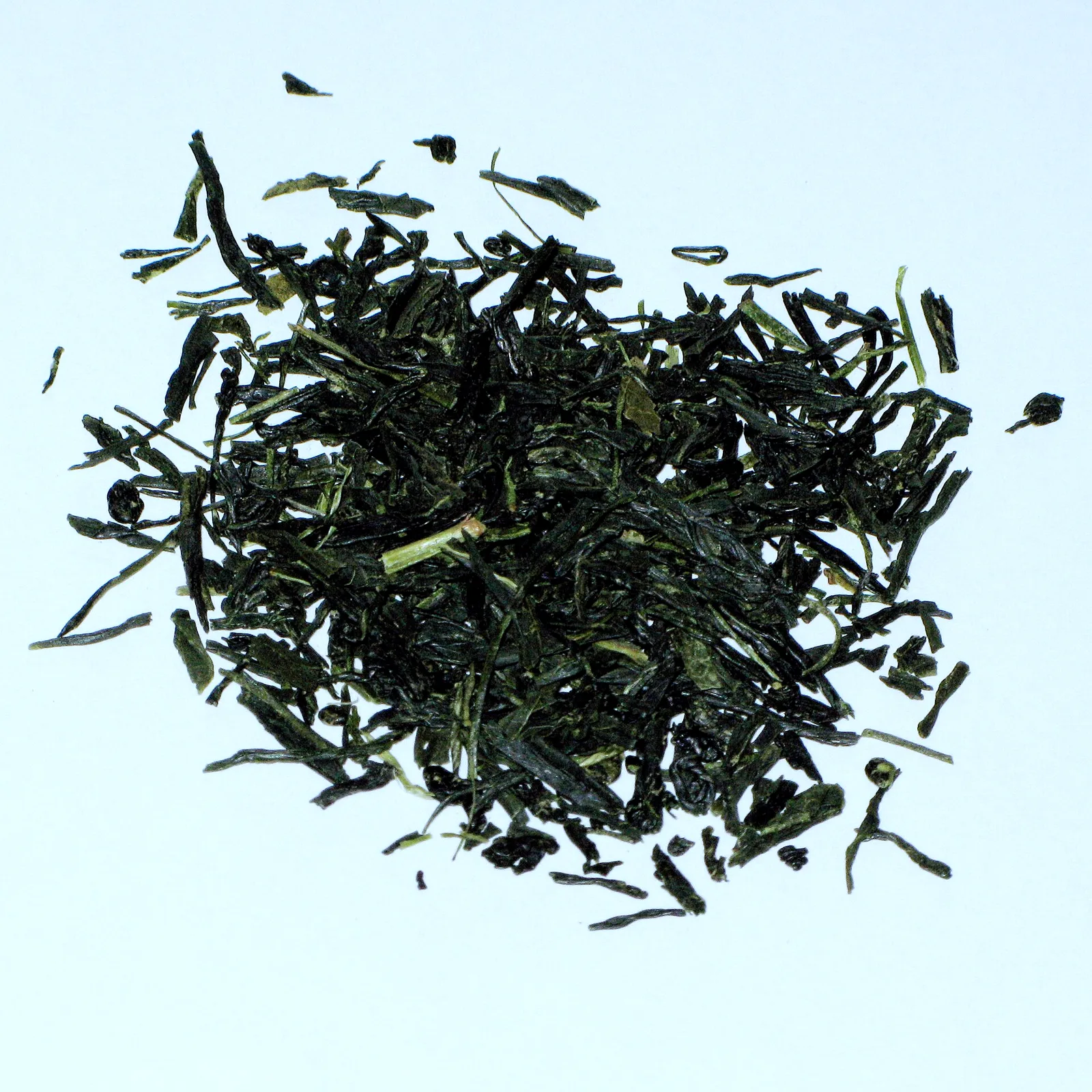
Usage in beverages
Brewed as a hot infusion using low-temperature water and a high leaf-to-water ratio, often re-steeped several times; central to Senchadō tea practice and, in the modern era, occasionally adapted into cold brews and contemporary green-tea drinks.
In depth
Origins in Edo-period Japan
Gyokuro emerged in Japan in the 1830s, when a Japanese tea merchant noticed that farmers were draping netting over their tea plants—originally to guard the new shoots against frost—and that this covering transformed both the flavor and the aroma of the resulting tea. The shaded leaf yielded a sweeter, more savory drink than ordinary sun-grown tea, and the new style was carried to Edo, where it was quickly embraced. The name, written with characters meaning 'jewel dew' or 'jade dew,' captures the prized character of the brew. The technique was further refined in the decades that followed, and by the early Meiji period the production method had been brought to maturity, establishing gyokuro as a distinct and coveted category of Japanese green tea.[1]
How shading shapes the drink
What sets gyokuro apart as a beverage is the long period of shading—conventionally about twenty days, and often up to thirty—applied to the plants before the first-flush leaves are picked. Tea covered for fewer than twenty days is instead classed as kabuse tea, whose flavor falls between gyokuro and ordinary sencha. Deprived of full sunlight, the plant retains more L-theanine and accumulates more chlorophyll and caffeine, while producing fewer catechins. The practical result for the cup is a deeply green infusion heavy with umami and a calming savory sweetness, with the harshness and astringency of sun-grown green tea largely subdued. Growers may build scaffolds over the field or drape covering material directly on the bushes, raising the degree of shade in stages, and the higher grades are shaded most heavily and for the longest.[1]
The traditional Japanese brewing ritual
Gyokuro is prepared quite differently from everyday green teas, and the method itself is part of the experience. Brewers use markedly cooler water—often somewhere between 40 and 70 degrees Celsius—together with a generous quantity of leaf relative to water, roughly five grams to 150 milliliters. Because the tightly rolled leaves need time to unfurl, the first steep runs a couple of minutes, after which the same leaves can be re-infused several more times for only twenty or thirty seconds each. Small handle-less teapots such as houhin and small bowls are favored. Practitioners of Senchadō often employ a multi-step approach: water cooled in a separate vessel is used first to draw out sweetness, followed by hotter water that extracts the more bitter notes, with some schools adding an intermediate-temperature step for astringency.[1]
Gyokuro and the way of sencha
Gyokuro occupies a place of honor within Senchadō, the Japanese 'way of sencha,' a more relaxed counterpart to the matcha-centered tea ceremony. The practice took shape from the late seventeenth century onward, when Chinese merchants in Nagasaki demonstrated the brewing of steeped leaf tea in the manner of the Ming court; over the following century it spread, especially among literati who gathered in informal settings to enjoy tea alongside the appreciation of painting, calligraphy, and imported objects. Although Senchadō centers on sencha, the high-grade gyokuro class is the tea most associated with its refined gatherings. Like the Chinese gongfu approach, the ceremony has a codified set of utensils and a careful, deliberate manner of preparing, presenting, and savoring the tea.[2]
A regional luxury and its by-product teas
Gyokuro remains a tea of place and prestige. More than forty percent of it is grown in Yame in Fukuoka Prefecture, whose tea has dominated national gyokuro competitions, while the Uji area around Kyoto—Japan's oldest tea-growing region—produces a celebrated Ujicha gyokuro, and Mie Prefecture has expanded its output as well. Hand-picked gyokuro commands the highest prices, and the leftover stems, stalks, and twigs separated out during processing are not discarded but made into a fine twig tea known as karigane or shiraore. Because these woody parts photosynthesize less, they are especially rich in theanine and lower in caffeine, giving the resulting brew a distinct, mildly sweet and nutty character that offers a more affordable way to taste the gyokuro lineage.[3]
Gyokuro in the wider world of green tea
Within the broader family of green teas made from Camellia sinensis, gyokuro stands as one of the clearest expressions of how cultivation shapes a drink. It belongs to the same shade-grown tradition that produces matcha, whose tencha leaves are likewise grown out of direct sun to heighten umami and color; both reflect a Japanese refinement of techniques that emphasize sweetness over bitterness. As a steeped leaf tea, gyokuro is treated like other fine Japanese green teas—drawn cooler and shorter than lesser grades, with more leaf and several brief re-infusions—rather than being whisked as a powder. Today, alongside its traditional hot preparation and ceremonial use, gyokuro features in a global green-tea culture that increasingly explores cold brewing and modern serving styles, even as the finest grades remain prized for their concentrated, savory character.[4]
Part of Green Tea