Gooseberry
A small, translucent berry of the genus Ribes, prized in beverage-making for its sharp acidity and crisp green character. Its tartness makes it especially suited to fermented and infused drinks, where its natural acid balance helps build a stable base.
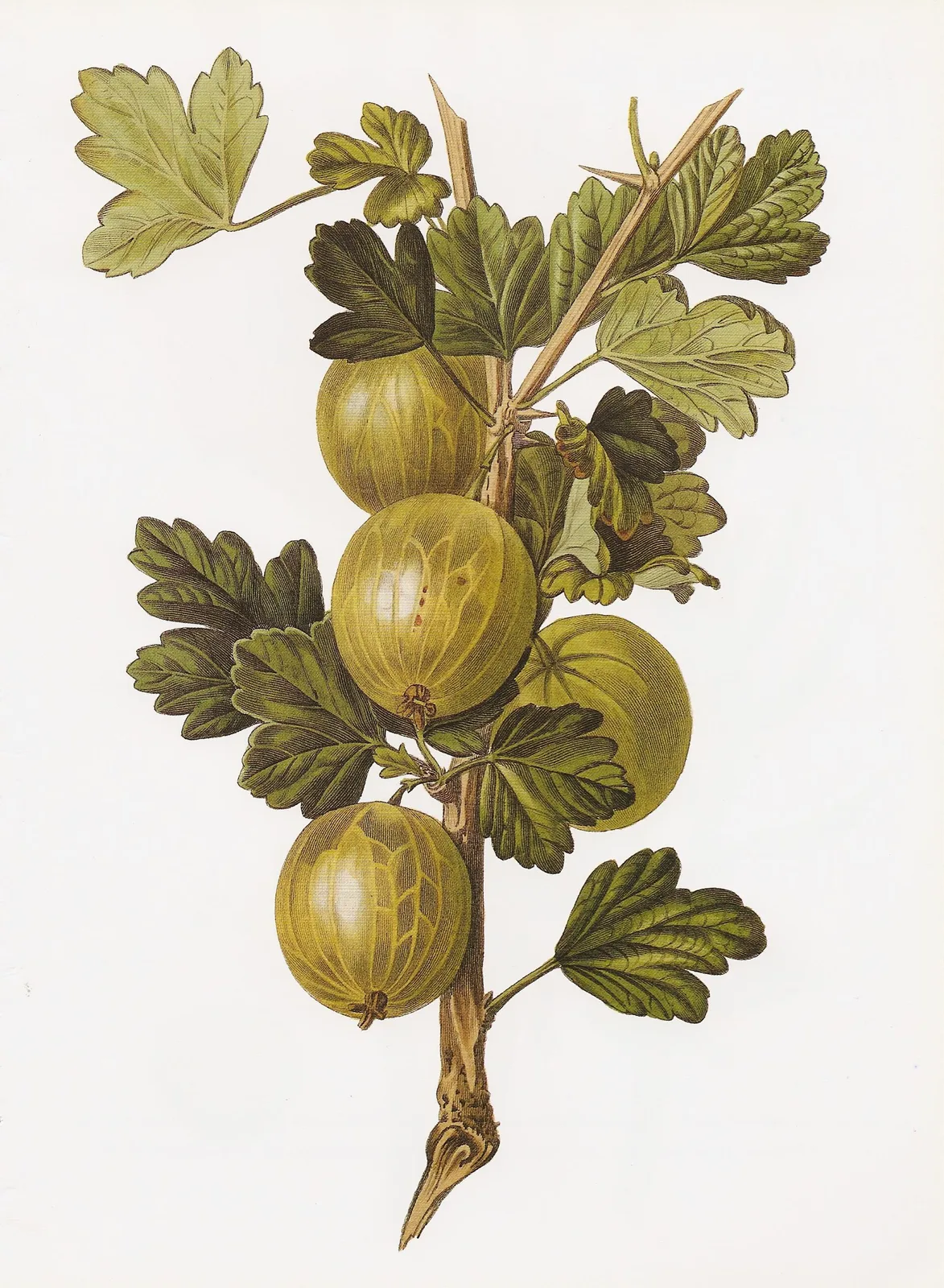
How gooseberry is prepared
Used to flavor sodas, flavored waters, and milk drinks; brewed into teas; and fermented into country-style fruit wines. Its high acidity and modest sugar make it a natural base for home winemaking and for tart cordials and infusions, and it can also flavor fruit beers.
Other preparations
In depth
Origins in European garden culture
The gooseberry (Ribes uva-crispa) is a spiny shrub native to Europe, the Caucasus, and parts of northern Africa, bearing small berries that may be green, red, yellow, white, or purple. By the middle of the sixteenth century it was a familiar object of English garden cultivation, described in early herbals and noted in garden rhymes of the period. Dutch gardeners are credited with raising the first improved varieties, and toward the end of the eighteenth century English cottagers, especially in Lancashire, bred numerous cultivars from seed. This deep rooting in the cool, damp gardens of northwestern Europe explains why the fruit became a staple ingredient in regional drinks rather than a Mediterranean one: the climate of the British Isles and Scandinavia suited it far better than the hot summers of southern Europe.[1]
Gooseberry in soft drinks, teas, and flavored waters
Beyond the kitchen, gooseberries have long been turned to flavoring beverages. The tart, slightly grassy fruit is used to flavor sodas, flavored waters, and even milk-based drinks, and it can be steeped to make fruit teas. Picked early, before full ripeness, gooseberries are at their most sour, a quality that suits them well to drinks where a bright acidic lift is wanted. Because the fruit is rich in vitamin C and carries a vivid green note, it lends itself to refreshing, lightly tart non-alcoholic preparations that echo the cordials and pressés made from other northern hedgerow fruits and flowers.[2]
Country wines and the cool-climate fermenting tradition
Gooseberry is one of the classic ingredients of fruit wine, the fermented beverage made from fruit other than grapes and known in Britain as country wine. Such wines have always been popular with home winemakers and in cool-climate regions like North America and Scandinavia, where good wine grapes are difficult to grow. Gooseberry sits comfortably in this tradition alongside blackcurrant, redcurrant, blackberry, raspberry, and strawberry. Like many berries, it must usually be adjusted at fermentation: its naturally high acidity is tempered by topping the mash with water, while the modest sugar content is supplemented with added sugar or honey so the wine ferments to a satisfactory strength. The result is a sharp, crisp wine that captures the fruit's green character.[3]
Currant and berry wines as close kin
The gooseberry's role in beverages is best understood beside its close relatives, the redcurrant and whitecurrant, which belong to the same genus and are likewise fermented into wines in cool northern areas where high-quality grapes are scarce. These currant wines are valued for being simple to produce, with natural chemical balances that allow them to clarify themselves without added fining agents, though their low carbohydrate content means sugar or honey must be added. Gooseberry shares this profile: low in fermentable sugar but high in acid, it makes a tart base that home and small-scale winemakers prize for the same reasons. The whole family of Ribes fruits thus forms a coherent northern winemaking tradition built on acidity rather than ripeness.[3]
Fruit beers and brewed adjuncts
Fruit added to beer as a flavoring is an old and widespread practice, most famously in Belgium, where lambics are refermented with cherries to make kriek or with raspberries to make framboise. Within this broader tradition of brewing with fruit, berries of the Ribes family are natural candidates for adding tartness and color to brewed drinks. English brewing history records ales and beers flavored with hedgerow fruits and berries, and gooseberry's sharp acidity makes it well suited to the kind of crisp, sour fruit beer styles that pair fruit with fermentation. As a tart, low-sugar berry it adds brightness without heavy sweetness, complementing rather than dominating the underlying brew.[4]
Berries in fermented low-alcohol drinks like kvass
In the fermented, low-alcohol beverage cultures of northeastern and eastern Europe, berries and fruits are common flavorings. Kvass, the cloudy, sweet-and-sour cereal drink of the Slavic and Baltic world, is traditionally based on rye bread or malt but has long been varied with fruit and berries; recorded historical variants include apple, pear, raspberry, and cherry versions, and in rural Lithuania gira was sometimes made with apples or berries rather than grain alone. A tart berry such as gooseberry fits comfortably into this family of lightly fermented, refreshing drinks, where modest alcohol and a bright sourness are prized. It illustrates how northern berries cross easily between wine, beer, and the gently fermented soft drinks of the region.[5]
Modern use in no- and low-alcohol beverages
Today the gooseberry survives in beverages both as a heritage country-wine ingredient and as a flavor in the modern non-alcoholic and craft drink world. Its green, sharply acidic, faintly grassy profile gives makers a distinctive tart note for sodas, sparkling waters, cordials, and infused teas, and it can be inoculated with wine yeast to build a highly acidic fermented base for low- and no-alcohol styles. As cool-climate and foraged ingredients enjoy renewed interest, the gooseberry's natural acidity, its place in the Ribes berry family, and its long association with northern European garden and fermenting traditions keep it a useful and characterful component of specialty beverages.[2]
References
- [1]EncyclopediaRibes uva-crispa — Wikipedia↑§1
- [2]EncyclopediaGooseberry — Wikipedia↑§2↑§7
- [3]EncyclopediaFruit wine — Wikipedia↑§3↑§4
- [4]EncyclopediaFruit beer — Wikipedia↑§5
- [5]EncyclopediaKvass — Wikipedia↑§6