Goldenrod
Goldenrod is a late-summer flowering plant whose golden plumes, leaves, and flowers are steeped to make aromatic infusions and used as a flavoring and bittering agent in fermented and brewed drinks. The genus carries a delicate, faintly anise-like and honeyed character that has made it a recurring botanical in herbal teas and craft beverages.
How goldenrod is prepared
Goldenrod is most often used as an herbal tea, steeped fresh or dried in hot water, and the sweet, anise-scented species are especially prized for this. It also appears as a flavoring and bittering botanical in fermented and brewed drinks, including herb-flavored meads and small-batch wildflower brews, and its nectar yields a distinctive honey used in beverages.
Other preparations
In depth
A North American wildflower at the root of the tradition
Goldenrod is the common name for around a hundred or more species of the genus Solidago, members of the daisy family that bloom in golden sprays during late summer and early autumn. The great majority are perennials native to North America, thriving in meadows, prairies, and open fields, with only a handful native to South America and Eurasia. Because the many species share similar bright yellow flower heads, they are notoriously hard to tell apart, yet their shared late-season abundance and aromatic foliage made them an obvious candidate for the kind of wild-harvested drinks that have long drawn on the plant world. The young leaves are edible, and certain species carry a pronounced sweetness and anise scent that distinguishes their flavor in the cup.[1]
Indigenous and folk uses that shaped its drinking character
Long before goldenrod became a novelty botanical, Native American cultures put it to practical use, gathering the seeds of some species for food and chewing leaves and roots to ease sore throats and toothaches. These medicinal and food traditions are the cultural soil from which goldenrod's beverage use grew, since the same fragrant leaves and flowers steeped for relief were a natural basis for a warm drink. The most aromatic of the North American species, the sweet or anise-scented goldenrod, is especially associated with this kind of pleasant, flavorful infusion, and it remains a recognized regional herb today.[1]
European goldenrod as a healing infusion
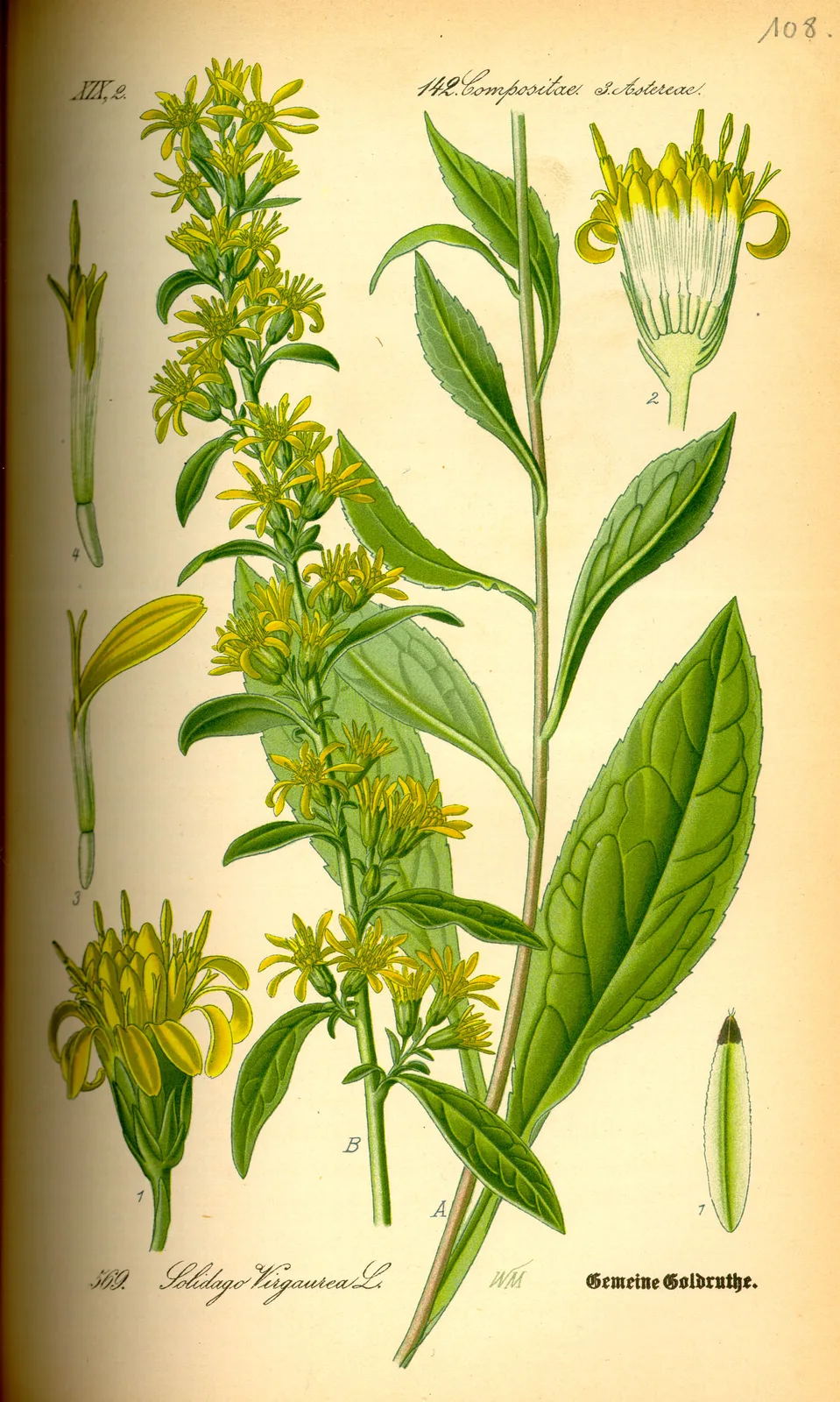
In the Old World, European goldenrod, Solidago virgaurea, took on its own place in herbal practice, brewed as a tonic intended to soothe the kidneys and bladder and to counter inflammation. Herbalists historically prepared the plant's inflorescences as a water-based preparation, and modern assessments of the species have catalogued a range of biological activities attributed not to any single compound but to the whole herbal extract. This medicinal infusion tradition put goldenrod squarely among the many plants drunk as remedy-flavored beverages, a category that overlaps heavily with the broader world of herbal teas.[1]
Goldenrod within the herbal tea tradition
Herbal teas, or tisanes, are beverages made by steeping or simmering plant material other than the true tea plant in hot water, and goldenrod belongs comfortably in this family of drinks. Like other flowers, leaves, and stems used for infusions, goldenrod can be steeped fresh or after drying, and the brewing time and temperature are adjusted to draw out its delicate, faintly anise floral aroma. Most such infusions carry no caffeine and are valued for flavor and for the mild physical effects ascribed to the plant. Goldenrod tea can be served plain or, as with many tisanes, sweetened or blended with other botanicals.[2]
A bittering and flavoring botanical in fermented honey drinks
Goldenrod's relevance reaches beyond simple infusion into the world of fermented beverages, particularly mead. A mead flavored with herbs or spices is called a metheglin, and brewers have long reached for aromatic plants such as meadowsweet, hops, lavender, and chamomile to season honey wine; goldenrod, as a fragrant late-summer herb, fits naturally into this gruit-like repertoire of botanicals used to flavor and lightly bitter a brew. Honey-based fermented drinks have ancient roots across Europe, Africa, and Asia, and the modern revival of mead-making has renewed interest in unusual herbal additions, giving goldenrod a place among the many plants steeped or fermented alongside honey.[3]
Goldenrod honey and its role in beverages
Even where the flower itself is not steeped, goldenrod shapes drinks through the honey its nectar produces. Goldenrods are strong sources of nectar for bees, and during a vigorous flow they yield a light, often nearly clear, spicy-tasting monofloral honey, though honey gathered with other nectars mixed in tends to be darker and more robust. Curiously, the honey carries a rank odor and taste while it is still ripening, mellowing into a much milder product once finished. This goldenrod honey can serve as the fermentable base or the sweetener in mead and other honey-forward drinks, carrying a trace of the plant's late-season character into the glass.[1]
Goldenrod in today's craft and low-alcohol beverages
Goldenrod began to win acceptance in cultivated gardens only in recent decades, shedding its old reputation as a mere weed, and that rehabilitation has paralleled a wider revival of foraged and botanical drinks. As interest grows in no- and low-alcohol specialty beverages, the plant appears in artisanal herbal infusions, in flavored sparkling and fermented drinks, and as a wild seasoning in small-batch brewing, where makers prize its honeyed, anise-tinged aroma. Its long history as both a folk remedy and a nectar source continues to inform how it is presented in the cup, positioning goldenrod as a distinctly seasonal, regional botanical within the modern landscape of craft and herbal beverages.[1]