Fig Leaf
The large, deeply lobed leaf of the common fig tree, used in beverages chiefly as an infusion that releases a green, grassy aroma with a distinctive note reminiscent of coconut and warm wood.
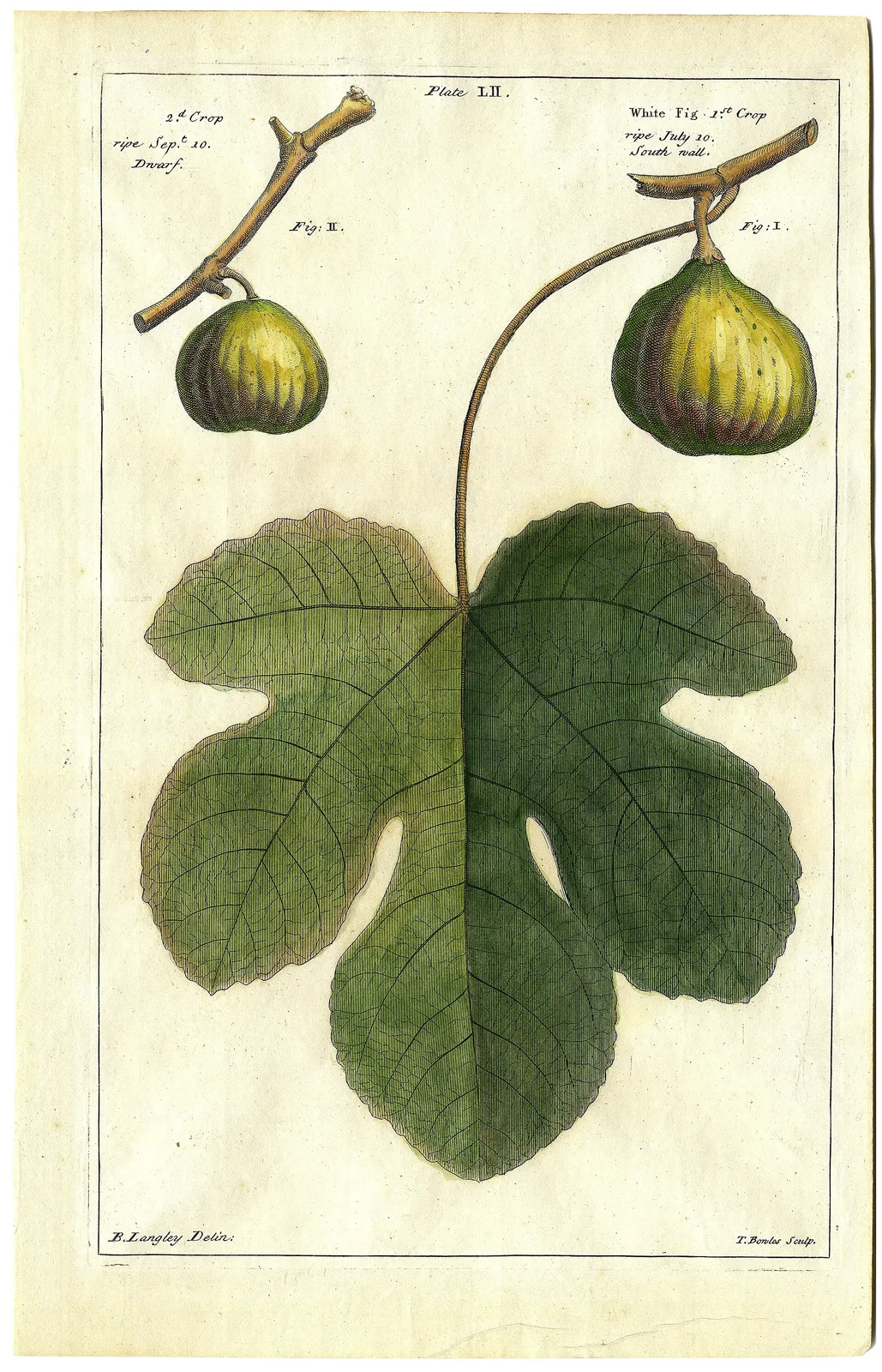
How fig leaf is prepared
Most often steeped as a hot or cold infusion (a tisane), and also used to flavor syrups, cordials, and infused waters; in low- and no-alcohol drinks it lends a coconut-and-green-leaf aroma to spritzes, soft aperitifs, and non-alcoholic riffs on fruit wines and steeped drinks.
Other preparations
In depth
Origins in the Mediterranean and western Asia
The fig (Ficus carica) is one of the oldest cultivated plants known, with evidence of deliberate planting in the Jordan Valley reaching back roughly eleven thousand years, before the domestication of cereals. Native to the Mediterranean and to western and southern Asia, the tree was a staple across ancient Israel, Greece, and Rome, valued above all for its fruit. Its broad, deeply lobed leaves were a constant presence in the same cultivated landscapes, and while the fruit dominated culinary and economic life, the aromatic leaf entered local kitchen and folk traditions as a wrapping and flavoring material. This deep regional rootedness is the backdrop against which the leaf's later use in drinks should be understood: it is a by-product of one of humanity's first orchard crops.[1]
Folk medicine and the leaf's aromatic reputation
Across the Mediterranean, the milky sap and green parts of the fig were folded into folk-medicinal practice, used for treating skin complaints and other ailments. Because the leaf and shoots carry concentrated aromatic and active compounds not found in the ripe fruit, the foliage developed a reputation distinct from the sweetness of the fig itself. That aromatic distinctiveness, a green scent carrying coconut and woody undertones, is precisely the quality that later made the leaf attractive for steeping. Care is warranted, however: the sap and leaves contain furanocoumarins such as psoralen, so the leaf is handled and processed rather than consumed raw in quantity, which has shaped how it is prepared for drinks.[1]
Fig leaf as a leaf-infusion (tisane)
In the broad family of herbal infusions, any edible plant part, including leaves, may be steeped in hot or cold water to make a caffeine-free tisane, and fig leaf falls squarely within this tradition. Because leaves coated in oils and aromatic compounds release their character slowly, fig leaf is typically steeped in just-off-the-boil water for several minutes, or infused cold over a longer period, to draw out its green, coconut-scented aroma without bitterness. Prepared this way it yields a pale, fragrant cup that may be taken plain or, as with many tisanes, sweetened or blended with other herbs and fruit. As a home and regional drink in Mediterranean households, the dried or fresh leaf has long been used in this simple steeped form.[2]
Use in country wines and fruit-and-herb ferments
The fig leaf also sits within the older tradition of country wines, the broad category of wines and ferments made from fruits, flowers, and herbs rather than grapes. In home and rural beverage-making, aromatic leaves and botanicals have long been steeped and fermented to capture their scent, and fig leaf lends itself to this practice for the same coconut-and-green-leaf character that distinguishes its tisane. Whether infused into a base before fermentation or steeped into a finished drink, the leaf contributes aroma rather than body. These rustic, low-alcohol fruit-and-herb preparations form a direct ancestor to the modern wave of infused specialty beverages that highlight the leaf.[3]
Modern specialty and low-alcohol drinks
In contemporary craft and no- and low-alcohol beverage culture, fig leaf has been rediscovered as a prized aromatic. Its signature note, a green, grassy scent layered with coconut and a soft woody sweetness, makes it a natural fit for non-alcoholic aperitifs, spritzes, cordials, and infused syrups that aim for complexity without alcohol or added sugar overload. Makers steep the leaf into hot or cold infusions, fold it into simple syrups, or use it to scent sparkling waters and soft drinks, often pairing it with citrus, stone fruit, or other herbs. Within the modern movement toward sophisticated alcohol-free drinking, fig leaf offers a distinctive, dessert-like aroma that reads as both familiar and unexpected.[2]
References
- [1]EncyclopediaFig — Wikipedia↑§1↑§2
- [2]EncyclopediaHerbal tea — Wikipedia↑§3↑§5
- [3]EncyclopediaCountry wine — Wikipedia↑§4