Cacao
Also known as: cocoa
Cacao is the seed of the tropical tree Theobroma cacao, the source of chocolate and a family of related drinks. While the dried, fermented seeds (cocoa beans) yield the roasted, ground material behind most chocolate beverages, the fruit's surrounding pulp has its own long history as a drink in its own right.
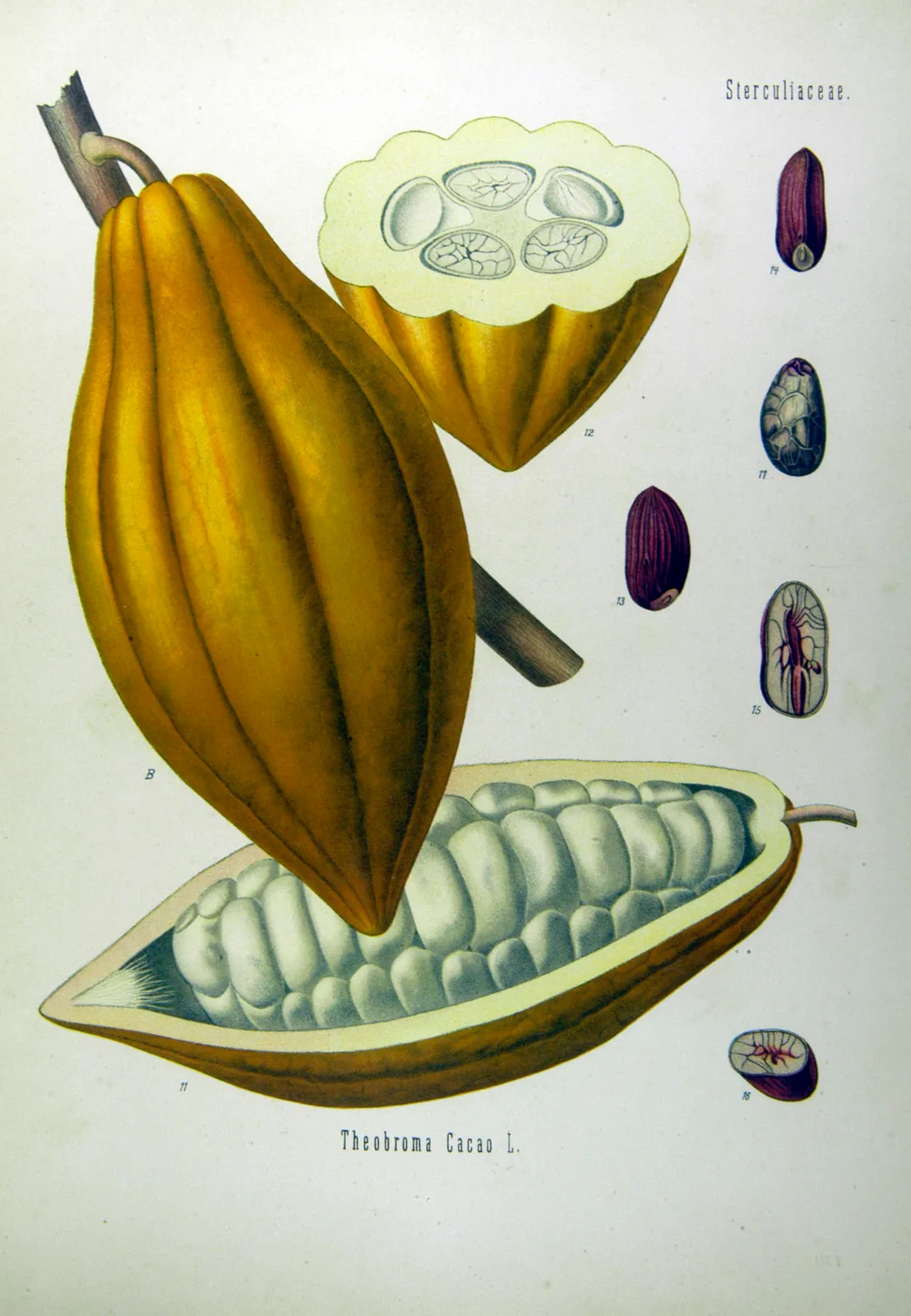
Usage in beverages
Used both as fermented fruit pulp (drunk fresh as juice or fermented into alcoholic chicha) and as roasted, ground beans whisked into water or milk. It appears in pre-Hispanic frothed chocolate drinks, maize-and-cacao beverages such as atole, champurrado, tejate, pozol, tascalate, pinolillo and popo, in European-style hot chocolate, and as a flavoring in countless modern hot and cold drinks.
In depth
Origins in South America: the fruit before the bean
Long before cacao was associated with chocolate, it was valued as a fruit. The tree was domesticated in the upper Amazon of present-day southeast Ecuador some five thousand years ago, and across much of South America the traditional cacao drink was made not from the seed but from the sweet pulp that surrounds it inside the pod. This pulp could be drunk fresh as a juice or left to ferment into chicha, an alcoholic beverage. The same sugary pulp ferments readily on its own, and there is evidence that early Mesoamerican peoples such as the Olmecs turned it into an alcoholic drink, making cacao one of the oldest beverage plants of the Americas in both its non-alcoholic and fermented forms.[1]
Mesoamerican chocolate: the frothed ceremonial drink
In Mesoamerica cacao came to be prized chiefly as the basis of a bitter, frothy drink made from roasted, ground beans. Archaeological traces of cacao beverages date back to the Classic period, and by the time of the Maya and Aztecs chocolate was a luxury surrounded by ritual. The drink was typically unsweetened, flavored with additives such as vanilla, earflower and chili, and finished with a thick, dark foam raised by pouring the liquid repeatedly from one vessel to another at a height. Cacao beans served as currency and as tribute, and the drink was reserved largely for rulers, priests, warriors and nobles, who took pride in it over commoners' drinks such as pulque.[2]
Cacao at the Aztec table
Among the Nahua peoples of the Valley of Mexico, cacao drinks stood at the summit of beverage prestige. While the everyday population relied on water, maize gruels (atolli) and fermented agave drinks, the elite favored chocolate above all, flavoring it with chili, honey and a long list of spices and herbs. Cacao beverages appeared at the most important social occasions: child-naming ceremonies, weddings and funerary feasts among the wealthy regularly featured chocolate alongside tamales and other foods. It was customary for an Aztec banquet to conclude with chocolate served in a calabash cup with a stirring stick, underscoring how closely the drink was bound to ceremony and status.[3]
Maize-and-cacao drinks: atole and champurrado
A distinctive and enduring strand of cacao drinking combines the seed with maize. Atole is a warm, masa-based beverage of Mesoamerican origin, and its chocolate version is known as champurrado. Made from corn dough or corn flour, water or milk, unrefined cane sugar (piloncillo) and chocolate—often scented with cinnamon, aniseed or vanilla—champurrado is whisked to a froth with a wooden molinillo until aerated. Thick and sustaining, it is traditionally taken at breakfast or as an afternoon snack and is especially associated with the Day of the Dead and the Christmas-season Posadas, when it is served alongside tamales. Classic Maya painted vessels already named cacao and atole as their two principal contents, showing how deep this pairing runs.[4]
Regional Mexican and Central American traditions
Beyond champurrado, many regional cacao drinks survive. Tejate, a non-alcoholic maize-and-cacao beverage from Oaxaca dating to pre-Hispanic times and still popular among Mixtec and Zapotec communities, blends toasted corn, fermented cacao beans, toasted mamey pits and the fragrant cacao flower (rosita de cacao) into a paste that is hand-mixed with cold water; the cacao flower rises to form a prized pasty foam, and the drink is served cold, plain or lightly sweetened. In Guatemala, home preparations toast and grind cacao for drinks such as tixte, panecito and pinol, often combining it with the related species pataxte (Theobroma bicolor), annatto, spices and toasted corn. Elaborate ritual preparations, served by themselves or as bases for feast-day drinks like pozunke, depend on a labor-intensive pouring technique to draw up a cherished cocoa-butter foam. Other traditional cacao drinks across the region include tascalate, pozol, popo and pinolillo.[5]
From New World drink to European cup
Chocolate reached Europe in the sixteenth century, when Spanish observers encountered the Aztec drink—reputedly first in the court of Moctezuma around 1520. The first recorded shipments of cocoa beans followed by the 1580s. An acquired taste at first, the drink was reworked for European palates: sweetened with cane sugar, served warm and scented with familiar spices, and believed to be both an aphrodisiac and a medicine. Through the seventeenth century it spread across the continent, carried in part by religious orders, and remained a beverage of the wealthy supplied by colonial plantations. Until the nineteenth century chocolate was overwhelmingly something to be drunk rather than eaten; only with industrial advances—the hydraulic cocoa press, milling, conching and milk chocolate—did solid chocolate displace the cup as the dominant form.[2]
Cacao in beverages today
Cacao remains a versatile beverage ingredient worldwide. Across South and Central America the older traditions persist, with cacao still consumed in champurrado, tejate, pozol, tascalate, pinolillo, popo and other regional drinks, and the fruit pulp still enjoyed as juice or fermented. Internationally, cacao reaches drinkers most often as hot chocolate and chocolate milk, and as a flavor in coffee-based drinks such as the caffè mocha. In bar culture, cacao lends its character to chocolate liqueurs and to crème de cacao, a sweet liqueur used in many classic mixed drinks. The growth of bean-to-bar and craft cacao has also renewed interest in minimally processed "ceremonial" cacao drinks made simply from ground beans and water, echoing the plant's earliest Mesoamerican uses.[1]
Related
References
- [1]EncyclopediaCacao beverage — Wikipedia↑§1↑§7
- [2]EncyclopediaChocolate — Wikipedia↑§2↑§6
- [3]EncyclopediaAztec cuisine — Wikipedia↑§3
- [4]EncyclopediaChampurrado — Wikipedia↑§4
- [5]EncyclopediaTejate — Wikipedia↑§5