Blackcurrant
Also known as: black currant, black currants
A small, glossy black berry borne in clusters on a strongly aromatic shrub, prized in drinks for its deep purple color, tart acidity, and musky, tannic intensity.
How blackcurrant is prepared
Used to make crème de cassis and the wine cocktails built on it, blackcurrant squashes and cordials, fruit wines and country wines, and as a flavoring for fermented low-alcohol drinks such as kvass.
Other preparations
In depth
Origin and early cultivation in Europe
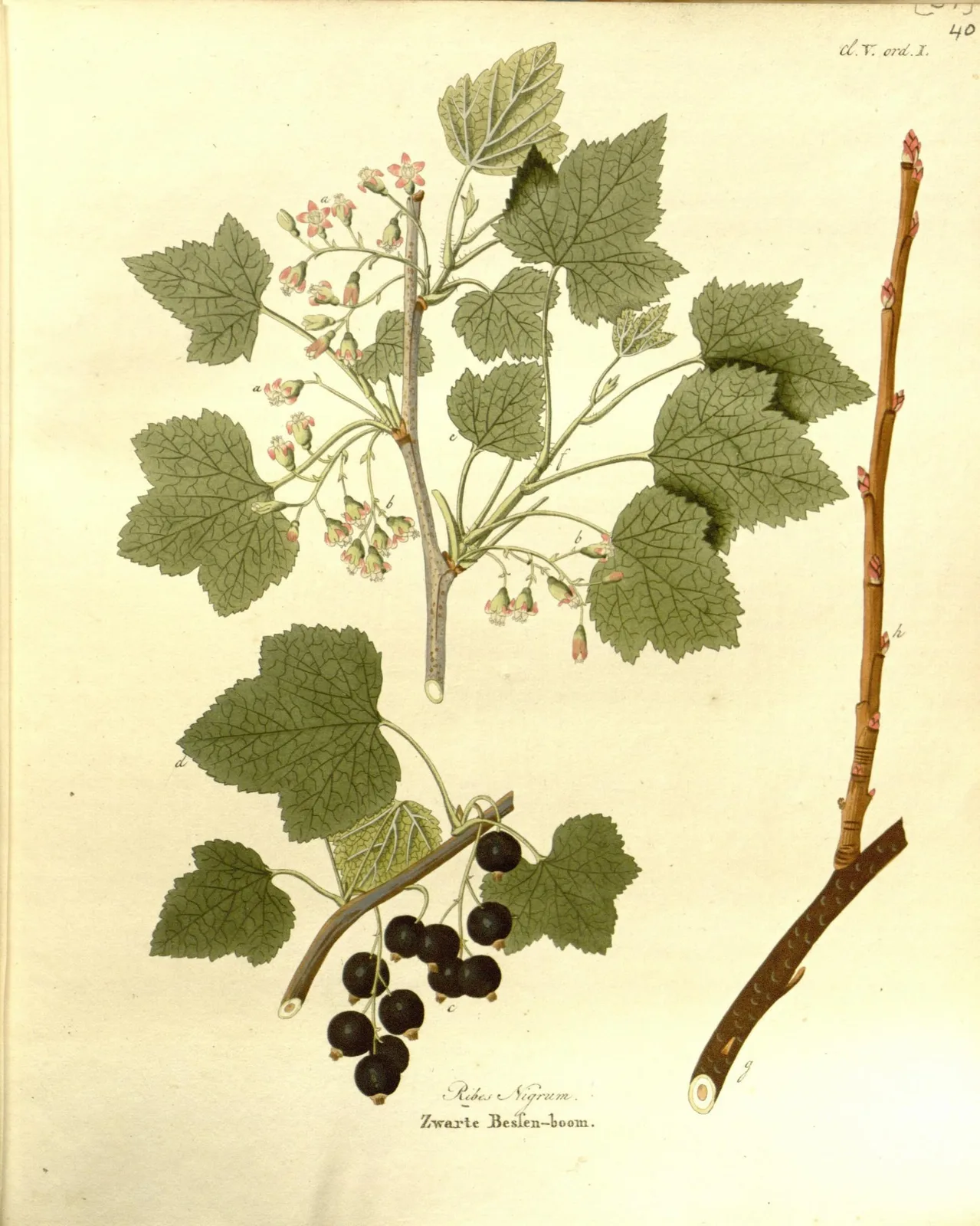
The blackcurrant (Ribes nigrum) is a deciduous shrub native to the cooler, damp regions of central and northern Europe and northern Asia. Every part of the plant carries a strong, musky aroma, and the small black berries that ripen in midsummer are intensely tart and rich in vitamin C. Cultivation in Europe is generally thought to have taken hold during the final decades of the 17th century. Although the berries can be eaten raw, their sharp, tannic character meant they were most often cooked, preserved, or steeped, which set the stage for their long career in syrups, cordials, and fermented drinks rather than as a fresh dessert fruit.[1]
Crème de cassis and the rise of a Burgundian liqueur
The most influential beverage use of the blackcurrant is crème de cassis, a sweet, dark red liqueur made by crushing the berries, steeping them in alcohol, and adding sugar. The modern form of the drink appeared in 1841 in Burgundy, where it displaced an older preparation known as ratafia de cassis. Burgundy, and the city of Dijon in particular, remains the heartland of production, and a protected designation now guards the regional origin and the proportion of fruit used. Today France produces the great majority of the world's cassis, much of it built on local blackcurrant varieties; the quality of the liqueur depends heavily on the cultivar and the richness of the berries.[2]
The Kir and its family of wine cocktails
Crème de cassis became internationally familiar largely through the Kir, a French aperitif in which a small measure of the blackcurrant liqueur is topped with white wine, traditionally a Burgundian Aligoté or another dry white. Once known as blanc-cassis, the drink took the name of Félix Kir, a mid-20th-century mayor of Dijon who served it to visiting delegations and helped promote two regional products at once. A whole family of variations grew up around it: the Kir Royal made with Champagne or sparkling wine, the red-wine Communard, and versions swapping in cider or other fruit liqueurs. Cassis also lends its dark sweetness to other mixed drinks, from sparkling aperitifs to tequila-based cocktails, securing the blackcurrant a permanent place in cocktail culture.[3]
Blackcurrant cordials and the British soft-drink tradition
In Britain the blackcurrant found a parallel life as a non-alcoholic cordial and squash. In the 1930s researchers in the Bristol area developed a concentrated blackcurrant syrup, naming it after the plant's botanical name, Ribes nigrum. The fruit's exceptional vitamin C content gave it real significance during the Second World War, when imported citrus became scarce: the British government encouraged blackcurrant growing and distributed blackcurrant syrup to young children as a vitamin supplement. This wartime role cemented the berry's reputation as a wholesome ingredient, and diluted blackcurrant cordials, carbonated blackcurrant sodas, and the warm spiced drink known as hot blackcurrant remain staples of British and Commonwealth beverage culture.[4]
Blackcurrant in fruit and country wines
Across the cooler regions of Europe and North America, where high-quality wine grapes are difficult to grow, blackcurrants have long been fermented into fruit wines, often called country wines in Britain. Like other berries, blackcurrants carry plenty of acid and color but a relatively modest amount of fermentable sugar, so winemakers typically supplement them with sugar or honey and dilute the must with water to soften the sharp acidity before fermentation. The result can range from dry table wines to richer, sweeter dessert styles. The same musky, tannic depth that defines cassis gives these home and small-scale wines a concentrated, distinctly dark-berry character.[5]
Blackcurrant as a flavoring in fermented low-alcohol drinks
In northeastern and Eastern Europe, the blackcurrant also appears as a flavoring agent in traditional fermented low-alcohol beverages. Kvass, the cloudy, sweet-and-sour drink made by fermenting rye bread or rye malt, has historically been produced in a wide range of fruit and berry variants, and berries such as currants are among the additions used alongside more common fruits like apple, pear, and cherry. Because kvass ferments only briefly and retains very little alcohol, it offers a natural vehicle for the tart, aromatic punch of blackcurrant, extending the berry's reach from liqueurs and cordials into the world of grain-based folk beverages.[6]
References
- [1]EncyclopediaBlackcurrant — Wikipedia↑§1
- [2]EncyclopediaCrème de cassis — Wikipedia↑§2
- [3]EncyclopediaKir (cocktail) — Wikipedia↑§3
- [4]EncyclopediaRibena — Wikipedia↑§4
- [5]EncyclopediaFruit wine — Wikipedia↑§5
- [6]EncyclopediaKvass — Wikipedia↑§6