Beetroot
Also known as: beet
The deep-red taproot of the garden beet, valued in drinks for its earthy sweetness, mineral depth, and vivid crimson pigment. It is pressed for juice, lacto-fermented into a tart sour, and brewed into low-alcohol ferments.
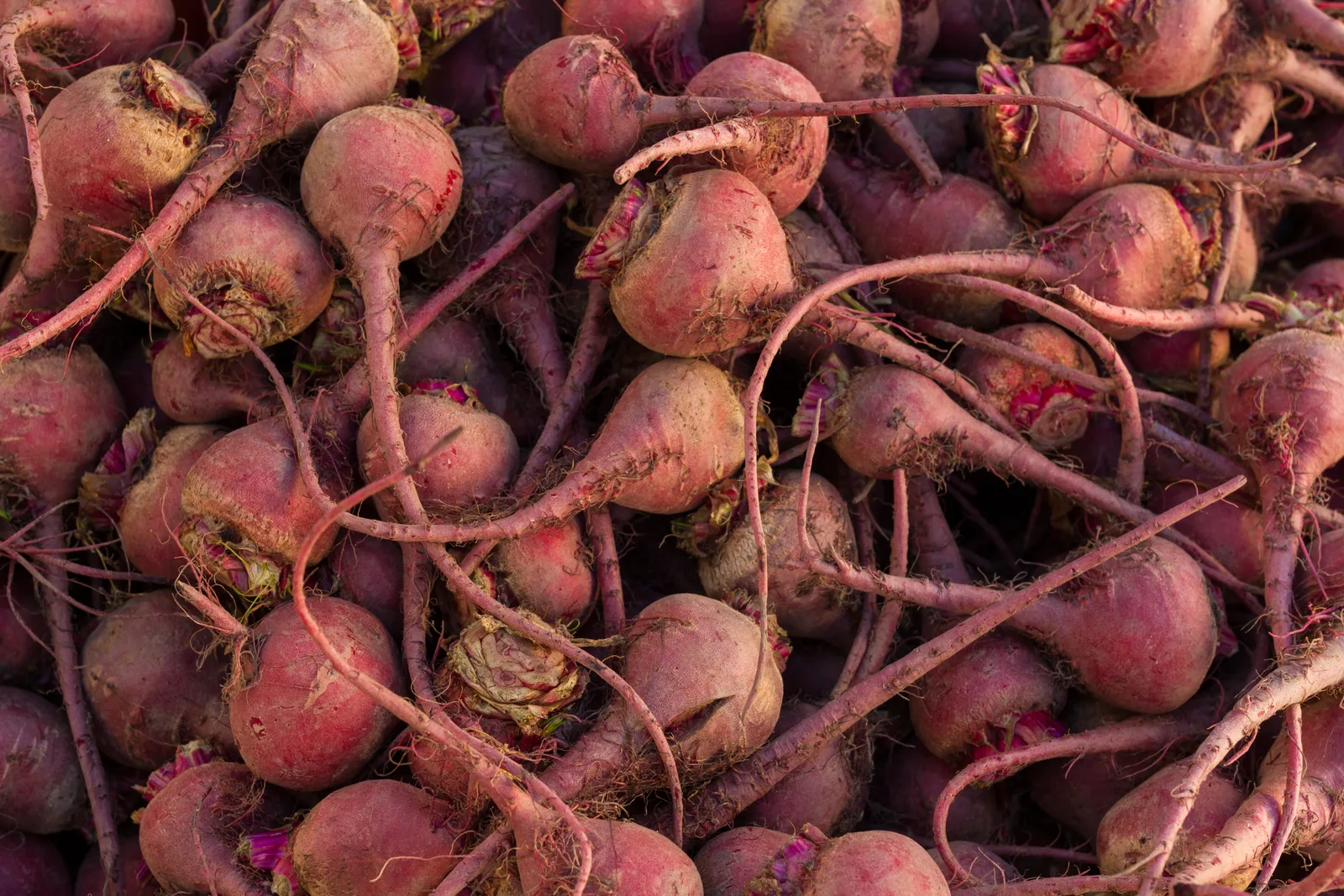
How beetroot is prepared
Beetroot is lacto-fermented into a sour brine (beet kvas) drunk on its own or used to color and sour soups; pressed into juice for sweet-sour chilled drinks; brewed into a beetroot variant of bread kvass; and made into country wines. Its pigment is also used to tint other beverages.
Lacto-Fermentation
Fermentation by lactic-acid bacteria, which convert sugars into lactic acid for a clean, savory acidity.
In depth
Roots in the ancient Mediterranean and a coloring agent for wine
Beetroot began as a leaf crop in the ancient Middle East and was cultivated by the Egyptians, Greeks, and Romans, who by the imperial era had also come to value its swelling root. While its earliest culinary fame lay in greens and stews, the root's intensely staining juice eventually found a place in drinks. By the middle of the seventeenth century, European winemakers were using beetroot juice to deepen the color of wine, an early instance of the root being enlisted not for flavor but for the crimson it lends to a glass.[1]
Beet kvas: a fermented sour drink of Ukraine
In Ukraine a distinctive non-grain kvass is made from beetroot rather than rye bread. Sliced beets are covered with water and left to ferment, the resident bacteria turning some of the root's sugars into lactic and acetic acids and yielding a deep-red, tart, lightly viscous liquid. This beet kvas could be drunk on its own as a refreshing, gently sour beverage and also kept the population supplied with a wholesome drink at a time when clean water was scarce. The same tradition produced fruit kvases from dried pears and apples steeped for weeks, drinks once popular at banquets.[2]
Beet sour as the soul of borscht, a soup served as a drink
The most important beverage-adjacent use of beetroot is the beet sour that gives borscht its defining sweet-and-sour taste. Sliced beets are covered with lukewarm pre-boiled water and left to ferment for several days, sometimes hastened with stale rye bread, until the liquid turns deep red, tangy, and slightly thickened. Known in Slavic languages as kvas and in Yiddish as rosl, this sour was traditionally prepared days in advance and added to the soup near the end of cooking. Borscht itself ranges from a hearty stew to a clear broth thin enough to sip from a twin-handled cup, blurring the line between soup and drink, and in its Polish clear form it is often served as a hot beverage at dinner parties.[3]
Chilled beet soups drunk cold across Eastern Europe
In Lithuania, Poland, and Belarus, cold beet soup—šaltibarščiai or chłodnik—is made by blending beet sour or beet juice with kefir, buttermilk, soured milk, or yogurt, producing a vivid pink, drinkable liquid served refrigerated in summer. Originating in the shared culinary world of the Polish–Lithuanian Commonwealth, it began as an everyday peasant food and rose to noble tables, and remains an enormously popular warm-weather staple celebrated today with its own festival. In the American Catskills, Ashkenazi Jewish cooks pushed this idea further, blending puréed beets with sugar, salt, citric acid, and sour cream into a chilled, sippable drink sometimes described as a beet smoothie.[3]
Beetroot in Russian cold-soup and kvass-based drinks
Russian cuisine places beetroot within its family of cold, kvass-based and chilled summer drinks. Svekolnik, or kholodnik, is a cold borscht of beet sour or beet juice mixed with sour cream, buttermilk, kefir, or yogurt, served chilled over chopped beet, cucumber, and egg. Botvinya, another cold soup, uses young beet greens together with two kinds of kvass, while many nineteenth-century Russian borscht recipes were themselves built on kvass, the country's ancient fermented bread drink. These dishes sit at the intersection of soup and beverage, thin and cooling enough to drink, and they show how beetroot was folded into Russia's broader tradition of fermented, kvass-grounded refreshments.[4]
Beetroot country wine and modern juice revival
Beyond fermentation for soups, beetroot has long been used to make country wine, the sweet root providing fermentable sugars for home and small-scale vintners. In recent decades beetroot juice has gained fresh prominence as a stand-alone health drink, valued for the naturally occurring nitrates that account for its blood-pressure-lowering reputation. Pressed beet juice also appears blended with ginger and other roots in artisanal bottled ferments, and its stable red betanin pigment continues to be used to tint and color other beverages. This modern wave of cold-pressed juices and revived ferments has returned beetroot to the drinks shelf in the no- and low-alcohol category.[1]