Bay Leaf
Also known as: bay laurel
The aromatic leaf of the bay laurel, a stiff evergreen leaf that lends drinks a savory, resinous, faintly clove-like and herbal note. Several unrelated plants share the name, but the most widely used in beverages is the Mediterranean bay laurel.
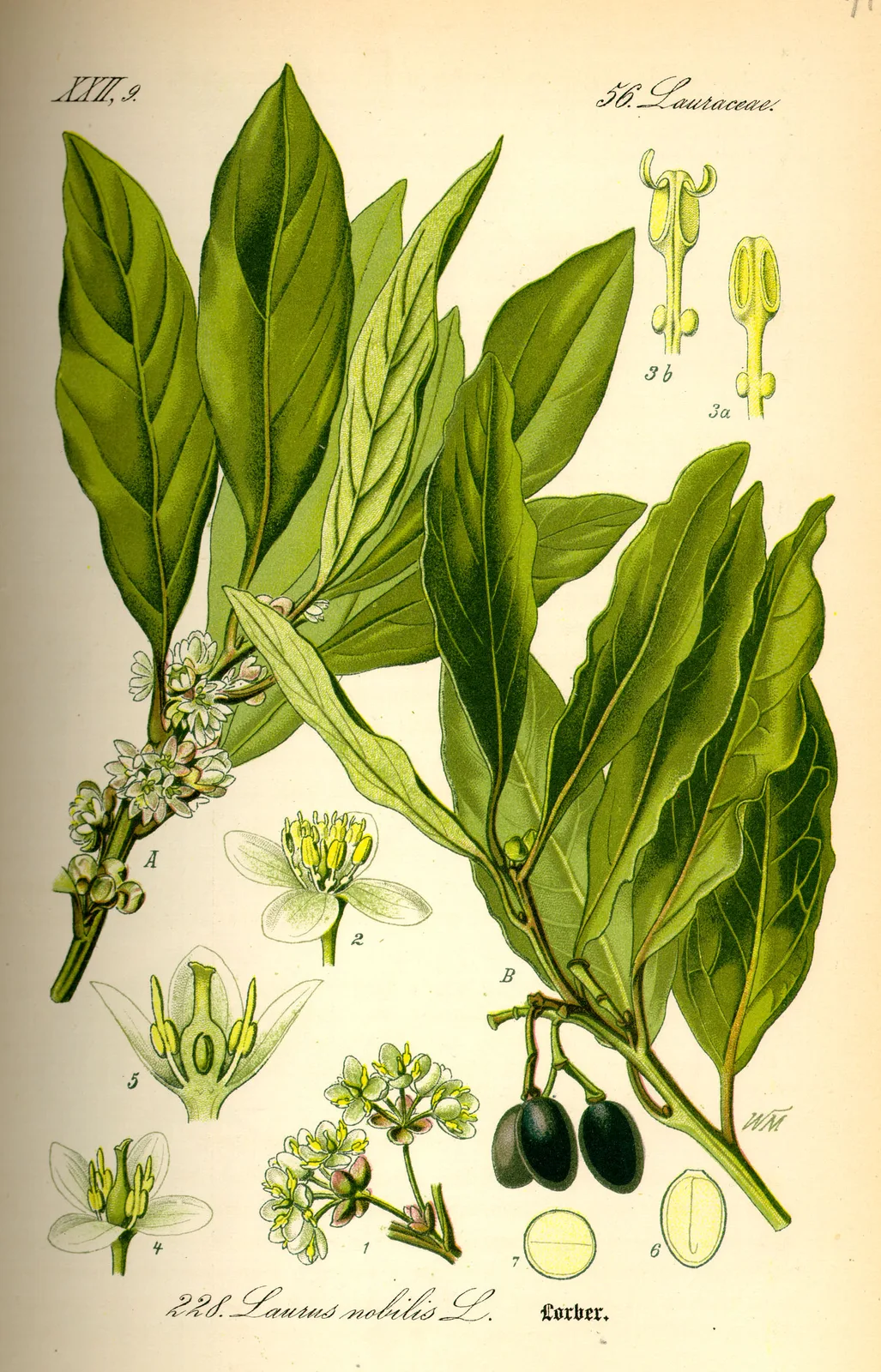
How bay leaf is prepared
Bay leaf appears in spiced and mulled wines and warm winter punches, in medieval spiced-wine traditions such as hippocras, among the laurel-berry herbs once used in gruit ales, and as a simple steeped infusion or tisane. A related but distinct West Indian bay leaf is the basis of the spiced spirit blend known as bay rum.
Water Kefir Fermentation
A short fermentation with water-kefir grains -- a symbiotic culture of bacteria and yeasts -- that adds gentle effervescence, body, and a soft lactic creaminess without significant alcohol.
In depth
Ancient Mediterranean roots and ritual associations
Long before it flavored any drink, the bay laurel was woven into the ceremonial life of the ancient Greek and Roman worlds. The tree was sacred to Apollo, its leaves shaped into the victor's wreath, and at the oracle of Delphi the priestess was reputed to chew laurel to enter her prophetic trance. Native to the Mediterranean and a remnant of the humid laurel forests that once blanketed the region, the plant was prized for an aroma that was always more pronounced than its sharp, bitter taste. These same qualities, fragrant, resinous, and faintly cooling from its high eucalyptol content, are what later made the leaf a natural candidate for steeping into wine and warm drinks rather than merely seasoning food.[1]
Spiced and heated wine in the Roman world
The Romans developed a lasting taste for wine that was warmed and seasoned with spices, a practice recorded as early as the second century BC. Carried with the legions across Europe to the Rhine, the Danube, and the British frontier, these recipes laid the groundwork for the entire European tradition of spiced wine. Aromatic leaves and barks were steeped to soften wine thought to be too cold and dry in the humoral thinking of the day, and bay leaf sat comfortably among the warming botanicals used for the purpose. From this Roman habit descend the many regional mulled wines that still flavor European winters.[2]
Medieval hippocras and spiced wine
By the late Middle Ages, spiced and sweetened wine had become a refined drink in its own right, known across Europe as hippocras or piment. Made by steeping ground spices in sweetened wine and then straining the mixture through a conical cloth filter, the so-called Hippocratic sleeve, it leaned chiefly on cinnamon, ginger, cloves, grains of paradise, and long pepper. Medieval English and French cookery manuscripts that recorded these recipes drew on the broad warm-spice palette of the period, the same family of aromatics, including bay, that flavored festive drinks. Hippocras was served at banquets, valued as a digestive, and traded as a luxury gift before falling from fashion by the eighteenth century.[3]
Laurel berries in gruit ales of northern Europe
Before hops became the standard bittering and preserving agent for beer, brewers across the area that is now the Netherlands, Belgium, and northwestern Germany flavored their ales with gruit, a proprietary mixture of herbs. Core ingredients such as sweet gale, yarrow, and mugwort were supplemented by a rotating cast of adjunct aromatics, and laurel berries appear among them alongside juniper, ginger, caraway, and other spices. Each gruit maker guarded a distinct recipe, and the control of these herb blends was tightly licensed and taxed. Although hops largely displaced gruit by the fifteenth and sixteenth centuries, the modern craft revival of unhopped botanical beers has renewed interest in laurel and the other plants once steeped into ale.[4]
West Indian bay and the spirit-based bay rum
In the Caribbean, a different plant carries the bay name, the West Indian bay tree, whose leaves were distilled with rum beginning around the 1840s in the Danish West Indies. The resulting bay rum was primarily a cologne and aftershave, often rounded out with lime oil, cloves, and cinnamon, but its alcoholic base gave it a second life as a drink. During Prohibition in the United States, high-proof bay rum sold for external use became a back-door source of beverage alcohol, a practice immortalized in a 1933 blues recording. The common culinary bay laurel is an unrelated species, though it can be used to make a similar, if not identical, aromatic preparation.[5]
Modern mulled drinks and spice blends
Today bay leaf survives most visibly in the warm, festive drinks that echo its Roman and medieval ancestry. Mulled wines across Europe, from German Glühwein to Nordic glögg and the many boiled-wine traditions of central and eastern Europe, draw on a shifting roster of warming spices in which a bay leaf is a frequent steeping ingredient, lending savory depth alongside cinnamon, clove, and citrus. Non-alcoholic mulled juices and spiced punches follow the same approach. The leaf also reaches drinks indirectly through spice blends such as garam masala, where Indian bay leaf is a standard component, and which season warm spiced milk and tea-based beverages across South Asia and its diaspora.[2]
Bay leaf as a simple infusion
Apart from blended and fermented drinks, bay leaf is also brewed on its own as a fragrant tisane. Because prolonged boiling draws out bitterness and can overwhelm the cup, the leaves are typically simmered only briefly, around three minutes, to release their herbal, faintly floral aroma. Fresh leaves give a stronger scent, while dried ones need longer steeping to match it. This straightforward infusion, sometimes combined with other spices, sits within the broader category of herbal teas and offers a clean illustration of the leaf's resinous, slightly clove-like character isolated from wine or spirits.[6]