Basil
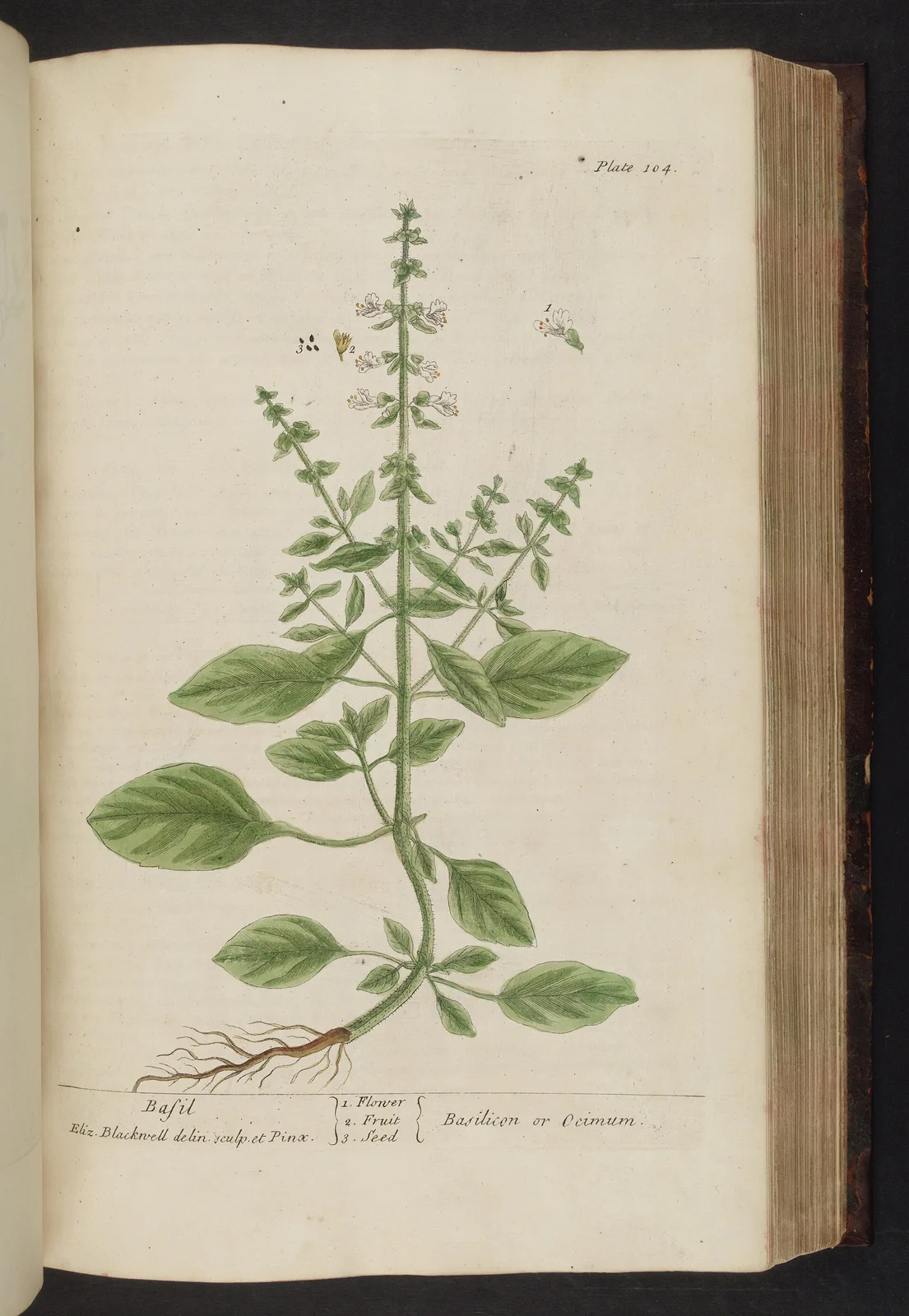
Basil is an aromatic herb of the mint family (Lamiaceae) grown around the world, with dozens of cultivars whose scents range from sweet and clove-like to anise, citrus, and cinnamon. In beverages, both its fragrant leaves and its mucilage-forming seeds are put to use, the former for infusions and the latter for textured cold drinks.
Usage in beverages
Basil appears in beverages chiefly as a fresh-leaf infusion (teas, syrups, shrubs, and muddled drinks) and as soaked, gelatinous seeds that add texture to milk- and syrup-based cold drinks such as falooda. Holy basil is brewed as a stand-alone herbal tea, and various basils are also used aromatically in flavored waters and modern mixed drinks.
In depth
Origins of a royal herb
Basil traces its roots to the warm tropics that run from Central Africa through India to Southeast Asia, where it grew long before cultivation carried it across the globe. The genus name Ocimum derives from a Greek word for smell, and the common name descends from a Greek term meaning 'royal' or 'kingly,' a reflection of the esteem in which the fragrant plant was held. Because the species crosses readily and exists in dozens of varieties—sweet (Genovese), Thai, lemon, cinnamon, and others—each carries a distinct aroma profile driven by compounds such as linalool, methyl chavicol, and eugenol. These aromatic differences are exactly what make basil so versatile in drink-making, since a brewer or mixer can choose a clove-leaning, anise-leaning, or citrus-leaning leaf to suit a beverage.[1]
Basil seeds in Persian and South Asian cold drinks
One of the oldest and most distinctive beverage uses of basil involves not the leaf but the seed. When basil seeds are soaked in water they swell into a soft, gelatinous coating, and this property has been prized across West, Central, and South Asia. They appear in the Iranian sharbat-e-rihan and in similar chilled, sweetened refreshers, while in Kashmir a basil-seed sharbat called babre beole is a traditional way to break the Ramadan fast. The seeds add body and a pleasant texture to syrup- and water-based drinks, making them as much about mouthfeel as flavor.[1]
Falooda and the milk-and-seed tradition
The best-known beverage built around basil seeds is falooda, a cold drink-dessert with Persian roots in faloodeh that developed into its present form under the Mughals and spread across South and Southeast Asia. Traditionally it layers rose syrup, vermicelli, and sweet basil seeds (often called sabja) into chilled milk, frequently topped with kulfi. Regional versions abound: the Burmese phaluda combines basil seeds with grass jelly, egg pudding, ice cream, sweetened milk, and rose syrup, while related drinks such as the Malaysian and Singaporean bandung and the Thai nam maenglak—made with lemon basil seeds, jelly, and tapioca pearls—show how widely the soaked-seed format has traveled. In Sri Lanka, falooda is a popular dairy refreshment combining basil seeds, jelly, and flavored milk under a scoop of ice cream.[2]
Holy basil (tulsi) as a herbal tea
In South and Southeast Asia, holy basil (Ocimum tenuiflorum), known as tulsi, occupies a different niche from sweet basil and is best known in drinks as a herbal infusion. Cultivated for religious, medicinal, and aromatic purposes, tulsi is widely brewed as a herbal tea and is a familiar component of Ayurvedic practice. Its leaves carry a spicy, clove-like character owing to a high eugenol content, giving the tea a warm, peppery aroma quite distinct from the sweeter culinary basils. Because it is not made from the tea plant, a tulsi infusion is a true tisane—steeped from leaves in hot water and typically caffeine-free.[3]
Basil as a fresh-leaf infusion
Beyond named traditions, basil lends itself naturally to infusion, the process of steeping plant material in water, oil, or another solvent to extract its aromatic compounds. Fresh basil leaves can be steeped in hot or cold water to make a tisane, infused into syrups, or added to flavored and infused waters alongside ingredients such as citrus, cucumber, and mint. Because basil's volatile aromatics are delicate and degrade with prolonged heat, gentle or brief steeping preserves the herb's sweet, peppery top notes—an approach that suits cold infusions and lightly warmed preparations particularly well.[4]
Thai basil and Southeast Asian aromatics
Thai basil (Ocimum basilicum var. thyrsiflora), with its purple stems and narrow leaves, is the anise- and licorice-scented variety most associated with Southeast Asian cooking, and its bold, slightly spicy aroma also makes it a natural candidate for drinks. More robust under heat than sweet basil, it holds its fragrance well in warm syrups and infusions, and its pronounced anise character pairs with citrus and tropical fruit in chilled refreshers and modern mixed drinks. The same aromatic intensity that makes Thai basil a defining note in regional cuisine translates readily into beverage applications when its leaves are bruised or steeped.[5]
Basil in shrubs and the modern drinks revival
In contemporary Western beverage culture, basil has found a home in shrubs—acidulated drinking vinegars made by infusing fruit, herbs, and spices into a sweetened vinegar syrup. The shrub format, which dates to the preservation practices of 17th-century England and colonial America, enjoyed a strong revival in American and other bars beginning around 2011, and rising interest in kombucha and other fermented drinks helped spread it further as a low-sugar alternative to soda. Fresh basil is a common herbal infusion for these vinegar-based syrups, which can be mixed with still or sparkling water for a soft drink or used as a tangy, citrus-free souring agent in cocktails. This places basil firmly within the toolkit of present-day no- and low-alcohol drink-making.[6]
References
- [1]EncyclopediaBasil — Wikipedia↑§1↑§2
- [2]EncyclopediaFalooda — Wikipedia↑§3
- [3]EncyclopediaOcimum tenuiflorum — Wikipedia↑§4
- [4]EncyclopediaInfusion — Wikipedia↑§5
- [5]EncyclopediaThai basil — Wikipedia↑§6
- [6]EncyclopediaShrub (drink) — Wikipedia↑§7